Showing posts with label history. Show all posts

Thursday, January 19, 2012

Silence=Violence=Death

via HuffPost Gay Voices, by Warren J. Blumenfeld

A few years ago, the Lesbian, Gay, Bisexual, and Transgender (LGBT) Alliance at a private Boston-area university asked me to give a presentation on LGBT history at one of its weekly meetings.

During my introductory remarks, in passing, I used the term "Stonewall," at which point a young man raised his hand and asked me, "What is a 'Stonewall?'"

I explained that the Stonewall Inn is a small bar located on Christopher Street in Greenwich Village in New York City where, in the early morning hours of June 28, 1969, during a routine police raid, patrons fought back.

This event, I continued, is generally credited with igniting the modern movement for LGBT liberation and equality.

The young man thanked me and stated that he is a first-year college student, and although he is gay, he had never heard about Stonewall or anything else associated with LGBT history while in high school.

As he said this, I thought to myself that though we have made progress over the years, conditions remain very difficult for LGBT and questioning youth today, because school is still not a very "queer" place to be.

In my own high school years during the 1960s, LGBT topics rarely surfaced, and then only in a negative context.

Once my health education teacher talked about the technique of electro-shock treatment for "homosexuals" to alter their sexual desires. In senior English class, the teacher stated that "even though Andre Gide was a homosexual, he was a good author in spite of it."

These references (within the overarching Heterosexual Studies curriculum at my high school) forced me to hide deeper into myself, thereby further damaging my self-esteem and identity.

I consider, therefore, the half-truths, the misinformation, the deletions, the omissions, the distortions, and the overall censorship of LGBT history, literature and culture in the schools as a form of violence.

I am seeing increasingly an emphasis within the schools on issues related to bullying and harassment prevention.

Current prevention strategies include investigation of issues of abuse and unequal power relationships, issues of school climate and school culture, and how these issues within the larger society are reproduced in the schools, among other concerns.

Often missing from these strategies, however, are multicultural curricular infusion. Unfortunately, still today educators require courage to counter opposing forces, for example, the current attacks on Ethnic Studies programs currently underway in states like Arizona.

Throughout the United States, under the battle cry of "preserving traditional American family values," conservative and theocratic forces are attempting to prevent multicultural curricula being instituted in the schools.

On the elementary school level related to LGBT issues, they are targeting books like And Tango Makes Three, by Justin Richardson and Peter Parnell, a lovely true story about two male penguins in the New York City Central Park Zoo raising a baby penguin; also, King and King, by Linda de Haan, about a king meeting his mate, another king.

Not so long ago, the Right went after Daddy's Roommate, written and illustrated by Michael Willhoite, about a young boy who spends time with his father and father's life partner, Frank, following the parents' divorce, and Gloria Goes to Gay Pride by Lesléa Newman, with illustrations by Russell Crocker, a portrait of young Gloria who lives with her two mommies: Mama Rose, a mechanic, and Mama Grace, a nurse.

For LGBT violence- and suicide-prevention strategies to have any chance of success, in addition to the establishment and maintenance of campus "Gay/Straight Alliance" groups, ongoing staff development, written and enforced anti-discrimination policies, and support services,

schools must incorporate and embed into the curriculum across the academic disciplines and at every level of the educational process multicultural perspectives, including LGBT, age-appropriately from pre-school through university graduate-level programs and courses, from the social sciences and humanities, through the natural sciences.

LGBT experiences stand as integral strands in the overall multicultural rainbow, and everyone has a right to information that clarifies and explains our stories.


Read the rest

Thursday, October 6, 2011

LGBT History Month

via GLAAD
This Saturday marked the beginning of the 17th annual celebration of LGBT History Month, a time dedicated to recognizing important moments in the history of lesbian, gay, bisexual and transgender people.

Encompassing a number of historically important days, this October is set to remind both the LGBT and wider communities of important roles LGBT people have taken in creating the social, legal, and political worlds we live in today.

GLAAD encourages media outlets to use this opportunity to explore the place of LGBT people in society and the changes they are making in their communities.

LGBT History Month was created in 1994 by a high school history teacher in Missouri called Rodney Wilson.

The month, which garnered early support from organizations such as GLAAD and the Gay, Lesbian and Straight Education Network (GLSEN), was initially chosen to include the by-then well-established National Coming Out Day on Oct. 11 and the anniversary of the first march on Washington by LGBT people in 1979 on Oct. 14.

The month now also includes Spirit Day on Oct. 20, on which people around the country wear purple in support of LGBT youth; Ally Week, a week in which allies against LGBT bullying are celebrated; and the anniversary of 21-year-old Matthew Shepard's murder on Oct. 12, 1998, which sparked the Matthew Shepard and James Byrd, Jr. Hate Crimes Prevention Act.


Read the rest

Tuesday, July 5, 2011

Homosexuality in history

via boulderweekly, By Davis Accomazzo

But sexual attraction is a spectrum, shades of gray rather than black and white, and therefore, academics, particularly those studying queer theory, have problems with that simplified dichotomy.

 The terms homosexual and heterosexual weren’t coined until the late 19th century, and it’s not like same-sex attraction didn’t exist before then. In fact, history is populated with famous people who fancied members of the same gender. But can you call them gay?

There are two schools of thought on this, according to the Stanford Encyclopedia of Philosophy. On one side are the essentialists, who feel that homosexuality is a “specific, natural kind rather than a cultural or historical product.” On the other side are the social constructionists, who say that homosexuality is a “modern, Western concept” and that “the acceptance of the contemporary heterosexual/homosexual dichotomy is conservative … and forecloses the explorations of new possibilities.”

Basically, you have one side saying homosexuality is natural and genetic, while the other says the labels “homosexual” and “heterosexual” are oversimplifications. So, in order to keep the academics happy, here is a list of famous people in history who, from time to time, enjoyed the “company” of the same gender.

Tuesday, January 11, 2011

Thursday, November 4, 2010

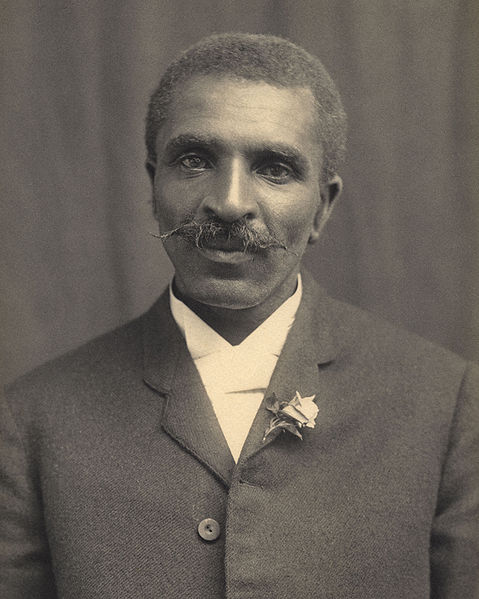
Who's That Queer? [George Washington Carver]

Brought to you by Pistol Pete

George Washington Carver was a groundbreaking agricultural scientist, known for discovering innovative uses for peanuts, sweet potatoes and clay. A black man born during the Civil War, Carver overcame racism to establish himself as a preeminent scientist and renowned academic. Throughout his career rumors about his sexuality ran rampant, and he ultimately left his estate to a close personal and professional partner, Austin Curtis.


Carver never married or expressed interest in dating women, and rumors circulated about his sexuality at Tuskegee Institute while he was an employee. In particular, his enjoyment of giving “therapeutic” peanut oil massages to and engaging in horseplay with handsome men was seen as unusual. Late in his career, Carver established a life and research partnership with another male scientist—Austin W. Curtis, Jr.. The two men kept details of their lives discreet, and as such historians know little about how these men understood their relationship. Nonetheless, the fact that Carver willed his assets to this man (consisting of royalties from an authorized biography by Rackham Holt) testifies to the importance of each other in their lives.

Read the rest.

Wednesday, November 3, 2010

Sex at Dawn: The Prehistoric Origins of Modern Sexuality - Including the Gays!


Come to the University of Chicago November 4 and hear as sex researcher Christopher Ryan, PhD, talks about his new book SEX AT DAWN: The Prehistoric Origins of Modern Sexuality, which has been hailed by sex-advice columnist Dan Savage as “the single most important book about human sexuality since Alfred Kinsey unleashed Sexual Behavior in the Human Male on the American public in 1948.”

Dr. Ryan will talk about how our ancestors lived in egalitarian groups that shared food, child care,... and often, sexual partners. Weaving together convergent, often overlooked evidence from anthropology, archeology, primatology, anatomy, and psychosexuality, Dr. Ryan will describe how far from human nature sexual monogamy really is.

Some of the themes he’ll explore include:

• why long-term fidelity can be so difficult for so many;
• why sexual passion tends to fade even as love deepens;
• why many middle-aged men risk everything for an affair;
• why homosexuality persists in the face of standard evolutionary logic;
• what the human body reveals about the prehistoric origins of modern sexuality.

Event co-sponsored by the Center for Gender Studies and the Office of LGBTQ Student Life of the University of Chicago.

Sex at Dawn: The Origins of Modern Sexuality
Thursday, November 4, 7pm

Office of LGBTQ Student Life

5710 South Woodlawn Avenue

Thursday, September 23, 2010

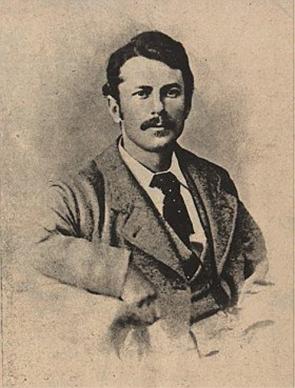
Who's That Queer? [Karl Heinrich Ulrichs]

Brought to you by Pistol Pete

Karl Heinrich Ulrichs
- the first modern theorist of homosexuality - is seen today as a pioneer of modern lesbian, gay, bisexual and transgender movements.


Ulrichs was born in Aurich (Kingdom of Hannover), Germany in 1825. Using the pseudonym Numa Numantius he published in 1864-1865 five booklets under the collective title Forschungen über das Rathsel der mannmännlichen Liebe (Researches on the Riddle of Male-Male Love). They set forth a biological theory of homosexuality, the so-called third sex theory, which he summed up in the Latin phrase anima muliebris virili corpore inclusa (a female psyche confined in a male body).

Using his real name in his next booklet, Ulrichs described his appearance at a Congress of German Jurists in Munich, where on August 29, 1867, he urged repealing the anti-homosexual laws. He was shouted down and not allowed to finish, but this was the first time that a self-acknowledged Urning/homosexual spoke out publicly for his cause. Thus Ulrichs was not only the first theorist of homosexuality, but also the first homosexual to 'come out' publicly.

Ulrichs's series of twelve booklets continued until 1879. His goal was to free people like himself from the legal, religious, and social condemnation of homosexual acts as unnatural, and for this he invented a new terminology that would refer to the nature of the individual and not to the acts performed.

Twice imprisoned for his public protests against the invasion and annexation of Hannover by Prussia in 1866, Ulrichs fought not only for the equal rights of homosexuals, but also for the rights of ethnic and religious minorities, as well as for the rights of women, including unwed mothers and their children.

But his one-man campaign against the legal oppression of homosexuals was unsuccessful. Indeed, the harsh Prussian anti-homosexual law was extended to the unified Germany in 1872.

Ulrichs left Germany in 1880 for voluntary exile in Italy, where he devoted the last years of his life to promoting Latin as an international language through the publication of a little Latin journal (Alaudae) written entirely by himself. He died on July 14, 1895 in Aquila, Italy.

Ulrichs's original biological theory of homosexuality has since been abandoned, but for more than a century some form of biological determinism has prevailed, both in the popular mind and in scientific circles; it has been adopted by both homosexual liberationists and their enemies.

Ulrichs will be best remembered for his courageous stand for the equal rights of all and, as Magnus Hirschfeld wrote, 'as one of the first and noblest of those who have striven with courage and strength in this field to help truth and charity gain their rightful place'.

Read the rest at Gay for Today.
Thursday, May 20, 2010

Who's That Queer [ Edward II]

Brought to you by Pistol Pete


Edward II
of Caernarfon, was King of England from 1307 until deposed in January 1327. His tendency to ignore his nobility in favor of low-born favorites led to constant political unrest and his eventual deposition.


Edward II was the first monarch to establish colleges in the universities of Oxford and Cambridge; he founded Cambridge's King's Hall in 1317 and gave Oxford's Oriel College its royal charter in 1326.

Edward is perhaps best remembered for his murder - the details of which are unsubstantiated by contemporary accounts - and his 'alleged' homosexuality and relationship with his 'favorite', a Gascon knight named Piers Gaveston. Edward also managed to produce an heir - Edward III - another son and two daughters with his wife, Isabella of France, and even produced an illegitimate son.

Read the rest at Gay for Today.

Thursday, January 21, 2010

Who's That Queer [Roy Marcus Cohn]

Brought to you by Pistol Pete

Roy Marcus Cohn was an American lawyer who came to prominence during the investigations by Senator Joseph McCarthy into alleged Communists in the US government, especially during the Army-McCarthy Hearings. A highly controversial figure, he wielded tremendous political power at times.


McCarthy's hired Cohn as his chief counsel, choosing him over Robert Kennedy, reportedly in part to avoid accusations of an anti-semitic motivation for the investigations. Cohn soon gained power nearly equal to McCarthy's in the Senate Permanent Subcommittee on Investigations, becoming known for his aggressive questioning of suspected Communists. Cohn tended to be disinclined to hold the hearing in open forums. This mixed well with McCarthy's preference for holding 'executive sessions' and 'off-the-record' sessions far away from the Capitol in order to minimize public scrutiny and to question witnesses with relative impunity. Cohn was given free rein in pursuit of many investigations, with McCarthy joining in only for the more publicized sessions.

Cohn and McCarthy targeted many government officials and cultural figures not only for suspected Communist sympathies but also for alleged homosexual tendencies, sometimes using sexual secrets as a blackmail tool to gain informants. The men whose homosexuality Cohn exposed often lost jobs, families, and homes: some committed suicide.

In 1984, Cohn was diagnosed with AIDS, and he attempted to keep his condition secret while receiving aggressive drug treatment. He participated in clinical trials of new drugs. He insisted to his dying day that his disease was liver cancer. He died on August 2, 1986, of complications from AIDS at the age of 59. He is buried in Queens, New York.

Source: Gay for Today

Thursday, January 14, 2010

Who's That Queer [Edward Carpenter]

Brought to you by Pistol Pete


Edward Carpenter (29 August 1844 – 28 June 1929) was an English socialist poet, anthologist, early gay activist and socialist philosopher. A leading figure in late 19th- and early 20th-century Britain, he was instrumental in the foundation of the Labour Party. A strong advocate of sexual freedom, living in a gay community near Sheffield, he had a profound influence on both D. H. Lawrence and E. M. Forster.


The 1890s saw Carpenter produce his finest political writing in a concerted effort to campaign against discrimination on the grounds of sexual orientation. He strongly believed that same-sex attraction was a natural orientation for people of a third sex. His 1908 book on the subject, The Intermediate Sex, would become a foundational text of the LGBT movements of the 20th century.

While engaged in this campaign Carpenter developed a keen interest in progressive education, especially providing information to young people on the topic of sexual education, and was a good friend of John Haden Badley, the social reformer and educationalist and would regularly visit Bedales School when his nephew Alfred Francis Blakeney Carpenter was a student there.

Carpenter's later years were characterized not only by continued writings on pacifism, but also activity in the trade-union movement. He was a hero to the first generation of Labour politicians. During the short-lived Labour government in 1924, his 80th birthday was marked by a commemorative greeting signed by every member of the Cabinet.

Source: Wikipedia

Monday, December 14, 2009

Lost to AIDS, but Still Friended

So much was lost when those lives were ripped out of the heart of [Philadelphia]. There were 4,600 men who died from a gay male population of about 26,000.


via New York Times, by Guy Trebay

Like millions of other Americans, Dominic Bash has a Twitter account, an online wall and a network of friends on the Web. His Facebook-style profile features Mr. Bash’s occupation as a hairdresser at the Abbey in Philadelphia, lists his birthday, the names of good friends, his interests and hobbies. It pictures him at his most typical and outrageous — at a Philadelphia gay pride parade, dressed in a lavender feather boa, his long blond hair styled in a braid reminiscent of Madonna, in her Heidi phase.

Mr. Bash’s profile also contains information less customary on social networking sites: the date of his death. Mr. Bash, 46 when he died in 1993, was a member of what a friend refers to as a lost generation of gay men, among the many who died of AIDS before the development of antiretroviral drugs rendered H.I.V. treatable.

“There is a real hunger for information about this period, this history and these lost lives,” said that friend, Chris Bartlett [pictured - a regular LifeLube contributor and wonderful friend], a former classics scholar who has set out to rescue the memories of those lives, specifically 4,600 gay Philadelphia men who perished of AIDS in the 1980s and ’90s. While the memorializing impulse is ancient, the method Mr. Bartlett came up with is as new as the latest app; he has created a social networking site for the dead.

Modest by the standards of memorial Web sites like Tributes.com — a for-profit company that amasses 80 million obituaries — Mr. Bartlett’s site, gayhistory.wikispaces.com, is far from the first AIDS commemoration. But its appearance now links it to a resurgence of attempts to reclaim the memories of thousands who died during a calamitous era, when H.I.V. was still a death sentence. It connects the dead to one another, to a larger community and to groups of potential new “friends” using technology that most of those it commemorates did not live to experience.

“There is absolutely no permanent social marker of the hundreds of thousands who died of AIDS in this country,” said Sarah Schulman, a writer and a director of the Act Up Oral History Project, begun seven years ago to assemble testimonies from the surviving members of the activist group AIDS Coalition to Unleash Power.

“There’s not even a postage stamp.”


Thursday, December 10, 2009

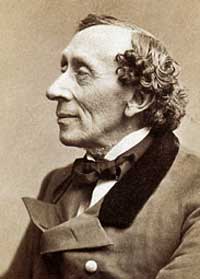
Who's That Queer [Hans Christan Andersen ]

Brought to you by Pistol Pete


The son of a poor shoemaker and an illiterate laundry woman, Hans Christan Andersen was an ill-educated and eccentric boy who arrived penniless aged fourteen in Copenhagen, but managed to charm the wealthy locals into sponsoring his education and on his graduation from high school in 1828 published his first novel in 1829. In 1837, he began writing the fairy tales for which is now known and loved.


Andersen often fell in love with unattainable women and many of his stories are interpreted as references to his sexual grief. Just like his interest in women, Andersen would become attracted to nonreciprocating men. For example, Andersen wrote to Edvard Collin: "I languish for you as for a pretty wench... my sentiments for you are those of a woman. The femininity of my nature and our friendship must remain a mystery." Collin, who did not prefer men, wrote in his own memoir: "I found myself unable to respond to this love, and this caused the author much suffering."

In 1857, Andersen made the acquaintance of fellow Dane Harald Scharff, a handsome twenty-one-year-old ballet dancer. In July 1860, Andersen was in Bavaria where he was pleasantly surprised to meet Scharff again. They kept constant company, and it is probable that Andersen fell in love with Scharff at this time. According to his diary, Andersen did not "feel at all well" when the two young men left Munich on 9 July 1860. A liaison with a celebrated and distinguished man such as Andersen must have held some attraction for the young Scharff, and a correspondence between the two began.


Harald Schraff

Andersen determined to fully open his heart to Scharff. He sent the young dancer a photograph of himself in a languid and seductive pose with a salutation using the intimate “Du” form: "Dear Scharf, here you have again Hans Christian Andersen." The two men exchanged birthday gifts in the early months of 1861.

When Andersen returned to Copenhagen at the start of the new year 1862, Scharff was waiting for him. In his diary entry for 2 January 1862, Andersen noted that Scharff "bounded up to me; threw himself round my neck and kissed me!" In the winter of 1861–62, the two men entered a full-blown love affair that brought Andersen "joy, some kind of sexual fulfillment and a temporary end to loneliness."He was not discreet in his conduct with Scharff, and displayed his feelings much too openly. Onlookers regarded the relationship as improper and ridiculous. In his diary for March 1862, Andersen referred to this time in his life as his "erotic period."


The affair eventually came to an end. Scharff withdrew gradually from the relationship as he focused on his friendship with Eckardt, who had married the actress Josephine Thorberg. In late August 1863, Andersen was a dinner guest at the Eckhardts and sensed Scharff was no longer interested in him as an intimate friend. On 27 August 1863, the poet noted in his diary that Scharff’s passion had cooled and the dancer (whom he at one time described as a "butterfly who flits around sympathetically") wrote in his diary:
"Dinner at the Eckhardts. Scharff's infatuation with me has now passed, "now another object has captured the hero's eye." I'm not dejected about it, as I have been previously at similar disappointments."
In the spring of 1872, Andersen fell out of bed and was severely hurt. He never fully recovered, but he lived until August 4, 1875, dying of insidious causes near Copenhagen. At the time of his death, he was an internationally renowned and treasured artist. He received a stipend from the Danish Government as a "national treasure". Before his death, steps were already underway to erect the large statue in his honour, which was completed and is prominently placed at the town hall square in Copenhagen.


Sources: Gay for Today, Wikipedia

Thursday, December 3, 2009

Who's That Queer

Brought to you by Pistol Pete

Peter Ilych Tchaikovsky was a Russian composer of the Romantic era whose music has made an indelible impression on the world, yet many things seemed to have been stacked against him. The importance of Tchaikovsky's homosexuality and its consequences on the personal expression in his compositions cannot be underestimated. Tchaikovsky's gayness in itself has been known to the West for at least 75 years, gathered from the composer's own writings as well as those of his brother Modest, who was also gay. More debatable is how well he accepted his sexuality or was comfortable with it.


His mother died from Cholera when Tchaikovsky was only 14 years old and this great loss affected the boy deeply. As a boy and also in later life, he suffered from various neuroses and experienced periods of deep depression. Although he learned the piano as a boy, Tchaikovsky was initially to study law and his first profession was as a clerk performing administrative functions. It was only at the age of 23 that he made a career change and decided to study composition at the new St Petersburg Conservatory.

Undoubtedly a major contributor to the composer's bouts of depression was his homosexuality. This is not surprising since at that time in Russia, the state considered certain acts to be crimes carrying the death penalty. At one stage Tchaikovsky married a female admirer, perhaps to conceal his true nature, but the marriage was a disaster. It broke up within a short period of time, and Tchaikovsky suffered a breakdown and attempted suicide.

Tchaikovsky has left us a wealth of great music including Symphonies and Concertos, some Operas and many shorter works. He is particularly remembered for his story-telling music, including Romeo and Juliet and the evocative free-flowing ballet music for Swan Lake, The Nutcracker and Sleeping Beauty.


Source: Gay for Today

Friday, October 23, 2009

Social Networks for the Dead


Last Tuesday,  October 13th, 2009,  I presented at Ignite Philly on my Gay History wiki , which documents the lives of gay men who died of AIDS in Philadelphia since 1981. The presentation was entitled "A social network for the dead and living".  Watch the video to find out more.

The idea behind Ignite is cool:  You get five minutes to make a presentation.  You have twenty powerpoint slides to tell your story,  and those slides change automatically every 15 seconds  (20 slides x 15 seconds each= five minutes).   It's great practice for public speaking, spontaneity, and story telling.  There are Ignites in most big cities in the US, and I recommend that LGBT folks start presenting our visions and stories.  There are many change agents who attend Ignite, so you can get people behind your idea in a big way.

So I presented and the audience reaction was awesome. People were howling, hooting, and even crying.  It's obvious that even though the AIDS epidemic has impacted our LGBT communities in a particularly deep way,  everyone feels the impact deeply when the experience is documented powerfully.

The exciting thing about my presentation is that out of speaking at Ignite, I met a web designer, a web content expert, and a social networking geek who will help me to bring the site to its next level.  So look out... the Gay History Wikispace is movin on up!

[Ignite Chicago]

Thursday, October 1, 2009

Who's that Queer?

Brought to you by Pistol Pete


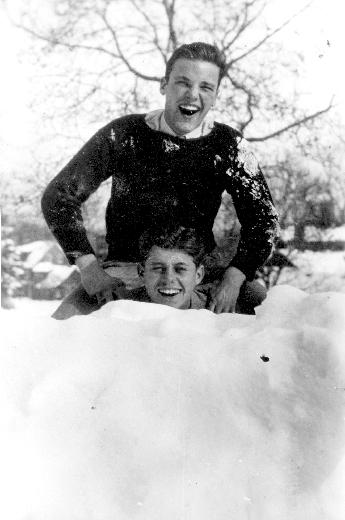
Kirk LeMoyne "Lem" Billings was a prep school roommate and then lifelong close friend of President John F. Kennedy. He had his own room in the White House and was offered several official positions by the president, but preferred to be "first friend." Lem also worked for JFK in the West Virginia and Wisconsin primaries and helped gather delegates at the Democratic convention in Los Angeles when JFK was running for President.


Lem was born in Pittsburgh, Pennsylvania, in 1916 to Frederic Tremaine Billings, a prominent physician and Romaine LeMoyne. The family went back to the arrival of the Mayflower and were ardent abolitionists who championed the education of free black Americans after the Confeder
ate States of America was defeated. Lem's father died in 1933 placing additional strain on the family's finances. Lem had extremely poor eye sight and a high-pitched voice.

Lem and Jack first met at Choate Rosemary Hall in 1933 when Lem was 17 and Jack was 16. From all accounts, they became fast friends, drawn to each other by their mutual distaste for their school and its headmaster, Seymour St. John. "But the bond between Billings and Kennedy became so strong that Billings stayed back a year so that he and Kennedy could graduate from Choate together in 1935," according to David Pitts' 2007 biography Jack and Lem. They continued to Princeton University until Kennedy withdrew for medical reasons. Billings and Kennedy took their summer trip through Europe prior to World War II. They adopted a little dachshund they named Dunker but had to give him up because of Jack's allergies.


In 1942, Lem joined the Ambulance Corps, an organization that had no problem with his eye sight and saw action in North Africa. He later received a commission in the U.S. Naval Reserve and served in the South Pacific eventually getting discharged in 1946. From 1946 to 1948, Lem attended Harvard Business School. Lem had several jobs including selling Coca-Cola dispensers to drugstores, working at a General Shoe store, Emerson Drug Company VP, and an advertising executive at the Manhattan advertising firm Lennen & Newell. He also is responsible for inventing '50s fad drink Fizzies for the Emerson Drug Company. He thought of adding a fruit flavor to disguise the sodium citrate taste.

In Victorian times, Lem might have been described as a "confirmed bachelor," although by the end of his own lifetime he would have been described as gay. In a 2007 book review of Jack and Lem, The New Haven Register interviewed the author and quoted from the book: "Jack made a big difference in my life," Billings said. "Because of him, I was never lonely. He may have been the reason I never got married."
However, the relationship between the two men was friendship. "It’s the story of a really close friendship — and one of the guys just happened to be what we think of today as gay," said David Pitts, author of the book Jack and Lem.

John F. Kennedy was well aware of his friend's sexual orientation, as Billings had conveyed his interest in Kennedy early in their friendship. Kennedy rebuffed his advances sharply but actively continued the friendship for the rest of his life. He sometimes had to explain Jack to Jackie—or vice versa. Jackie Kennedy, who liked Billings for the most part, commented to a White House usher, "He (Lem) has been a house guest every weekend of my married life."


Billings maintained close ties to the Kennedys and their children throughout his life and Lem was like a father to Bobby Jr. after his father's passing.
Lem Billings died in his sleep following a heart attack on May 28, 1981. Lem's dying wish was for the young Kennedy men to carry his coffin to its final resting place. JFK's sister Eunice Kennedy Shriver once said of Lem, “Of the nine or ten men who were close to the president, I would say Lem was number one…It’s hard to describe it as just friendship; it was a complete liberation of the human spirit. I think that’s what Lem did for President Kennedy.”

Source: Wikipedia.org

Tuesday, September 29, 2009

Capturing the Scene at the Belmont Rocks


via WBEZ Chicago Public Radio - and their wonderful Eight Forty-Eight show.

Doug Ischar came to town in the early '80s to study photography at Columbia College Chicago. Soon after arriving, he discovered the thriving gay scene in the area known as the “Belmont Rocks” in the Lakeview neighborhood. Fascinated by what he saw, Ischar decided to document the men and their beach, taking pictures nearly every day in the summers of '84 and '85.

Then the slides were simply packed away. Now nearly 25 years the photos are on display for the first time in an exhibition entitled Marginal Waters at GOLDEN, 816 W. Newport in Chicago.

Alison Cuddy toured the exhibition with Ischar.

Look at more pics. Listen to the story.

Thursday, August 27, 2009

Who's that Queer?

Brought to you by Pistol Pete


Alan Mathison Turing was a British mathematician, logician, cryptanalyst and computer scientist. Turing is often considered to be the father of modern computer science. He provided an influential formalization of the concept of the algorithm and computation with the Turing machine. In 1999, Time Magazine named Turing as one of the 100 most important people of the 20th century for his role in the creation of the modern computer, stating: "The fact remains that everyone who taps at a keyboard, opening a spreadsheet or a word-processing program, is working on an incarnation of a Turing machine."

With the Turing test, he made a significant and characteristically provocative contribution to the debate regarding artificial intelligence asking whether it will ever be possible to say that a machine is conscious and can think. He later worked at the National Physical Laboratory, creating one of the first designs for a stored-program computer, the Automated Computing Engine (ACE), although it was never actually built in its full form. In 1948, he moved to the University of Manchester to work on the Manchester Mark 1, then emerging as one of the world's earliest true computers.

During the Second World War, Turing worked at Bletchley Park, known as Britain’s code-breaking center. Turing devoted much of his time to Hut 8, the section responsible for German naval cryptanalysis. As the department’s head, he devised a number of techniques for breaking German ciphers.

Turing was homosexual, living in an era when homosexuality was considered a mental illness and homosexual acts were illegal. Subsequent to being outed, Turing was charged with gross indecency under Section 11 of the Criminal Law Amendment Act 1885, the same crime that Oscar Wilde had been convicted of more than fifty years prior. At the time, there was acute public anxiety about spies and homosexual entrapment by Soviet agents, and although Turing was never accused of espionage, his prosecution essentially ended his career. He died not long after from what was officially declared self-induced cyanide poisoning, although his mother (and some others) considered the circumstances of his death to be suspicious.

Friday, June 26, 2009

The Gay Pride Charade


by Pistol Pete

I regret the fact that I am young enough that I only know the bastardized version of Gay Pride.

The golden age of the real pride of the 70’s and 80’s seems a lifetime away from the shallow, commercialized sex fest we have today. I mean, getting drunk and rowdy can be fun and all, but should this event stand as the crux of the LGBT movement? I mean really guys, haven’t we strayed just a bit far from the political roots of our forbearers?

I want to be clear that I believe this is a generational problem, not so much a gay problem; and that it’s not everyone in my age group, but simply a careening trend of apathy and self-absorption. I’ll be the first to admit that I loathe my Paris Hilton-loving, money-obsessed, politically-indifferent, self-entitled peers whose deal-breakers are related to body fat percentage, waist and dick size, but curiously not IQ or personality. Call me old fashioned, but I long for the time when people actually gave a shit about each other: when drag queens and trannies led the Stonewall Riots and beat the snot out of an abusive New York City police force, or when angry gay men and women took to the streets to protest an apathetic government response to the AIDS crisis. There was a real sense of community and support amongst LGBT’s, something that is rather absent today.

The gay prides of today feature naked dancing men, corporate floats, political candidates, and the remnants of the gay prides of yester year – HIV/AIDS and LGBT organizations. It’s a cesspool of lascivious activity and highlights all the worst of American society. I know I sound like a crotchety old man, and I wouldn’t particularly care about all that if the 500,000 people that congregate in Boystown would actually do something useful first and then get on to the debauchery, but I know that’s asking too much. Tell them many of the corporations that support the Pride Parade also donate to anti-gay causes, remind them that all those politicians passed a state budget that cut funding to HIV/AIDS services by 50% or more (we still don’t know the final damage, but it is bad), and all you’ll get is a shoulder shrug and a flippant response that Gay Pride is about fun, not politics. God, GET A FUCKING CLUE!

I don’t know what it will take to get my generation to wake up. Perhaps they think that homophobia is dead, or that constantly getting laid will really bring them happiness, or maybe they don’t believe they have any power to change things. But the facts remain: in 2009 we do not have domestic partnerships, civil unions or gay marriage at a federal level; in fact, more than 35 states have gay marriage bans. We do not have an Employee Non-Discrimination Act that includes sexual orientation or gender identity, and we’re still seeing alarming rates of HIV infections among gay men. Indifference I can comprehend, but this generation has a death wish.

I fear what the future of the LGBT movement will look like if the young folks won’t lift a finger except to down their Cosmo. The occasional bout with helplessness, hopelessness, or carelessness is understandable – we are, after all, human beings who are discriminated against every day of our lives. But if we don’t stand up and take ownership of our lives, if we don’t fight for equality and respect, nothing will change – either inside our community or in society at large.

Stonewall at 40: The Voice Articles That Sparked a Final Night of Rioting


via The Village Voice

Earlier this month, the New York Times published for the first time several photographs that were taken on July 2, 1969, the final night of the Stonewall uprising. The Times noted that few photographs exist of the six-day disturbance, so it was significant to find images all these years later that captured some of the action on the uprising's final night. The initial police raid on the Stonewall that started the riots happened five days earlier, on June 28. But on Wednesday, July 2, there was a new wave of anger and rioting. The cause: the Village Voice. That day, two articles appeared on the Voice's front page describing the struggle happening both inside and outside the Stonewall Inn. Voice reporter Howard Smith's piece described how he found himself trapped inside the Stonewall with police officers as they came under violent attack by the crowd -- at one point, Smith wishes he had a gun to defend himself, just like the cops. Writer Lucian Truscott IV reported on the agitated street scene outside the building. "Limp wrists were forgotten," Truscott writes, but his use of words like "faggot" and "faggotry" enraged gay activists. Anger at the pieces ran so high, rioters marched on the Voice office itself. Four decades on, here's another opportunity to see what caused all the fuss.

Read the rest.

Monday, June 22, 2009

The Gay Generation Gap


via New York Magazine, by Mark Harris

Forty years after Stonewall, the gay movement has never been more united. So why do older gay men and younger ones often seem so far apart?

This week, tens of thousands of gay people will converge on New York City for Pride Week, and tens of thousands of residents will come out to play as well. Some of us will indulge in clubbing and dancing, and some of us will bond over our ineptitude at both. Some of us will be in drag and some of us will roll our eyes at drag. We will rehash arguments so old that they’ve become a Pride Week staple; for instance, is the parade a joyous expression of liberation, or a counterproductive freak show dominated by needy exhibitionists and gawking news cameras? Other debates will be more freshly minted: Is President Obama’s procrastinatory approach to gay-rights issues an all-out betrayal, or just pragmatic incrementalism? We’ll have a good, long, energizing intra-family bull session about same-sex marriage and the New York State Senate, Don’t Ask, Don’t Tell and the Employment Non-Discrimination Act, Project Runway and Adam Lambert.

And at some point, a group of gay men in their forties or fifties will find themselves occupying the same bar or park or restaurant or subway car or patch of pavement as a group of gay men in their twenties. We will look at them. They will look at us. We will realize that we have absolutely nothing to say to one another.

And the gay generation gap will widen.

Read the rest.

Check out the LifeLube/Project CRYSP "Generation You" podcast forum on this very topic.
Related Posts Plugin for WordPress, Blogger...

select key words

2007 National HIV Prevention Conference 2009 National LGBTI Health Summit 2011 LGBTI Health Summit 2012 Gay Men's Health Summit 2012 International AIDS Conference ACT Up AIDS AIDS Foundation of Chicago Africa BUTT Bisexual Bisexual Health Summit Brian Mustanski Center on Halsted Charles Stephens Chicago Chicago Black Gay Men's Caucus Chicago Task Force on LGBT Substance Use and Abuse Chris Bartlett Coaching with Jake Congress David Halperin David Munar Dr. James Holsinger Dr. Jesus Ramirez-Valles Dr. Rafael Diaz Dr. Ron Stall ENDA Ed Negron Eric Rofes FTM Feast of Fun Feel the love... Friday is for Faeries Gay Men's Health Summit 2010 HCV HIV HIV care HIV drugs HIV negative HIV positive HIV prevention HIV stigma HIV strategic plan HIV testing HIV/AIDS HPV Howard Brown Health Center IML IRMA Illinois International AIDS Conference Jim Pickett LGBT LGBT adoption LGBT culture LGBT health LGBT rights LGBT seniors LGBT youth LGBTI community LGBTI culture LGBTI health LGBTI rights LGBTI spirituality LGV Leon Liberman LifeLube LifeLube forum LifeLube poll LifeLube subscription Lorenzo Herrera y Lozano Lymphogranuloma Venereum MRSA MSM Monday Morning Perk-Up National AIDS Strategy National Gay Men's Health Summit One Fey's Tale Peter Pointers Pistol Pete PnP PrEP President Barack Obama Presidential Campaign Project CRYSP Radical Faerie STD Senator Barack Obama Sister Glo Sisters of Perpetual Indulgence Susan Kingston Swiss declaration Ted Kerr Test Positive Aware Network The "Work-In" The 2009 Gay Men's Health Agenda Tony Valenzuela Trans Gynecology Access Program Trans and Intersex Association Trevor Hoppe Who's That Queer Woof Wednesday You Tube abstinence only activism advocacy african-american aging issues anal cancer anal carcinoma anal health anal sex andrew's anus athlete ball scene bareback porn barebacking bathhouses bears big bold and beautiful bisexuality black gay men black msm blood ban blood donor body image bottom chubby chaser circumcision civil rights civil union communication community organizing condoms crystal meth dating dating and mating with alan irgang depression disclosure discrimination domestic violence don't ask don't tell douche downlow drag queen emotional health exercise female condom fitness gay culture gay identity gay latino gay male sex gay marriage gay men gay men of color gay men's health gay pride gay rights gay rugby gay sex gay youth gender harm reduction hate crime health care health care reform health insurance hepatitis C hiv vaccine homophobia homosexuality hottie hotties how are you healthy? human rights humor hunk immigration international mr. leather internet intimacy leather community leathersex lifelube survey love lube lubricant masturbation mental health microbicides middle music negotiated safety nutrition oral sex physical health pleasure podcast policy politics poppers porn post-exposure prophylaxis prevention prostate prostate cancer public health public sex venues queer identity racism recovery rectal microbicides relationships religion research safe sex semen sero-adaptation sero-sorting seroguessing sex sexual abuse sexual addiction sexual health sexual orientation smoking social marketing spirituality stigma stonewall riots substance abuse treatment substance use suicide super-bug superinfection syphilis testicle self-examination testicular cancer testing top trans group blog transgender transgender day of remembrance transgendered transmen transphobia transsexual universal health care unsafe sex vaccines video violence viral load writers yoga youtube