Showing posts with label african-american. Show all posts

Monday, February 6, 2012

Artist Thomas Allen Harris on Black Gay Identity

via Advocate, by Neal Broverman

The varied issues of Africans and African-Americans is the point of "AfroPoP: The Ultimate Cultural Exchange," an innovative series that airs on the documentary channel WORLD and is hosted by The Daily Show's Wyatt Cenak.

Each episode is really a full-length documentary telling a different story, from the effort to get Africans hooked on solar energy to a profile on the queen of Calypso music.

Sunday's episodic film, That's My Face, is directed by Thomas Allen Harris, a prolific gay artist and producer who's shown work at the Whitney Biennial and won Guggenheim and Sundance fellowships.

Harris spoke to us about his Brazilian-based film, his childhood in Africa, and some of the projects he's working on through his company, Chimpanzee Productions.

The Advocate: Can you talk about "AfroPoP" and your film in it?
Harris: "AfroPoP" is a series being produced by the National Black Programming Consortium, a part of the minority consortium of PBS.

They’ve had this series for the last three years where they pick a certain number of films for the show. This year there are four different films, and my film, That’s My Face, is one of them. (Click here to find out where "AfroPoP" is airing near you.)

In the movie, I go to the Bahia region of Brazil. I was looking for another way of experiencing myself, kind of like a spiritual journey that Gertrude Stein and James Baldwin had when they went to Europe.

I lived in Europe and knew what that was like, so I went to Brazil. I was looking for what being black in the Americas was like outside of the U.S.

Brazil has more African-Brazilians than the U.S. has African-Americans. It’s also been interesting to me because I partly grew up in East Africa.

The Black-Brazilians were able to keep a lot more of their African roots through language and, most importantly, through religion.

I was very intrigued by their religious practices, some of which are very welcoming to gays and lesbians. It’s very different than what you hear in the press about what’s going in regards to the persecution of gays and lesbians in Africa.

Had you been to Bahia before?
I had been there before so I had experienced it. The time I went to make That’s My Face was the beginning of December.

From December all the way to February in the south coast of Bahia are all these public festivals that are inspired by these African deities and also Carnivale.

I was really doing my search in the middle of all this spectacular stuff. These Bahia festivals are very different than the Carnivale in Rio.

The latter is sort of a show and the Carnivale in Bahia takes over the whole city—all the shops close, with the exception of places selling beer and food.

It becomes a whole different world. Everything was sped up during the festival because the drums play all the night. In Brazil, the drums weren’t outlawed when Africans were brought over, like they were in the U.S.

So people in the U.S. weren’t able to pass on certain aspects of religion and communication. The drum is an important part of religious expression.

Through the drums, people start dancing and enter this trance. It’s transformative, and you’ll see that in the film.

You lived in Tanzania as a child. What do you remember of that time?
I remember people living close to the land. I went to a national school, with the local Tanzanians. We had to clean the toilets and work on the farm.

It was an African socialist country at the time, so the kids had to clean and cook.

When I was growing up there, intimacy between men was permissable.

With my friends, we could walk down the streets holding hands. Even if you hold your hands with brother in the U.S., you could get killed.

There's a very narrow way of how men can act in the U.S. What was also interesting, is that the capital of Tanzania, Dar es Salaam, is so cosmopolitan.

I had friends from India, Uganda, the Philippines, England, China. It was very different than the picture we have in our minds of Africa. It made me really want to see the world and played into me wanting to go to Brazil.

The U.S. and the U.K. have started applying pressure on African nations to end the criminalization of homosexuality. Do you think that’s helping?
It’s really important that the West get clear and articulate that attacks on gays and lesbians are human rights violations. The marriage equality effort here, it legitimizes the struggle in Africa, and also in Eastern Europe and the Middle East.

These countries are using gays and lesbians as scapegoats. In Africa, it’s not simply the African leadership that makes the violent crimes possible, it’s the missionaries who say homosexuality is an evil import from the West.


Read the rest

Thursday, September 8, 2011

You Are Not Alone: Gay Black Men and Depression


via ChicagoNow, by Imagee

I first learned of the documentary "You Are Not Alone," from a website called Healthy Black Men - Healthyblackmen.org is an online health and lifestyle magazine for Black men.  The story that grabbed my attention was one that outlined gay black men and how they're suffering from depression. Antoine B. Craigwell, author and filmmaker, wrote about events and issues of and in the Black gay community, and embarked on a book addressing depression in Black gay men. The stories shared from Black gay men are placed alongside what professionals and Black gay literature have said, and against a background of the effects of culture, ethnicity, religion, and society.

Craigwell announced the launch of Depressed Black Gay Men, a website to raise awareness about depression in gay Black men. After hearing several more stories of pain and suffering from other gay Black men, Craigwell realized that something was wrong and no one was talking about it. Antoine began scouring friends, friends of friends, and as many contacts on Facebook and other social networking sites, including gay sex sites, to find anyone who is Black and gay, suffering from depression and willing to share their stories. It was as if a floodgate had opened and a torrent of stories poured out.

Check out the trailer for the forthcoming documentary, "You Are Not Alone." Courageous Black gay men are breaking their silence and they are speaking out about their depression. It is hoped that a Black gay man, through what he sees and hears in this documentary, could feel emboldened to know he is not alone, and find the courage to reach out for help.

Craigwell wants your support toward the completion of this documentary. It would provide a resource and encouragement for other gay Black men, especially young gay Black men who feel imprisoned, are struggling with their sexual identity and acceptance in a world that rejects them.

These stories are really compelling and I encourage everyone to check them out. Here are their stories:


Friday, June 10, 2011

Are Black Gay Circuit Parties A Hotbed for HIV?

via Living Out Loud with Darian

As the winter months disappear and summer approaches, the change in weather provides the perfect opportunity to strip off all the layers and wear as little as possible as you revel in the compliments of both male and female admirers as they fawn over your chiseled physique.

There’s a list of beach parties, cookouts, and annual events on your calendar and none of it will start until you arrive. Your biggest dilemma is making sure your chosen wardrobe for the weekend will turn heads the minute you step out of your hotel room-pardon me-your suite.

You’re black, gay, single, sexy, and free and you have a plethora of choices, from the breathtaking beaches of Miami and the sexy men of Sizzle, to the sinful allure of Tempted 2 Touch in Las Vegas, to the exotic island of the Dominican Republic, home of Inferno DR. Everything you could possibly want in a vacation experience and more is at your fingertips; men, sex, drugs, alcohol and HIV, an undesirable party favor but available nonetheless.

Black gay circuit parties have long held a reputation for offering more than is appropriate to be placed on advertisements. The organized and costly events taking place during the day may be a draw for some, but the prospect of experiencing multiple sexual encounters over the course of the weekend is at the top of the “to do list” for many attendees.

It should be understood that with any large gathering of people the opportunity to engage in sexual intercourse is always present, besides we are sexual beings with a desire to connect on an intimate level. But with every unprotected sexual encounter there’s a risk of being infected with a sexually transmitted disease, and in the case of black gay men who are heavily impacted by HIV, circuit parties catering to this population can easily become a hotbed for transmission. Well, at least that’s one theory.

Read more.

Thursday, November 4, 2010

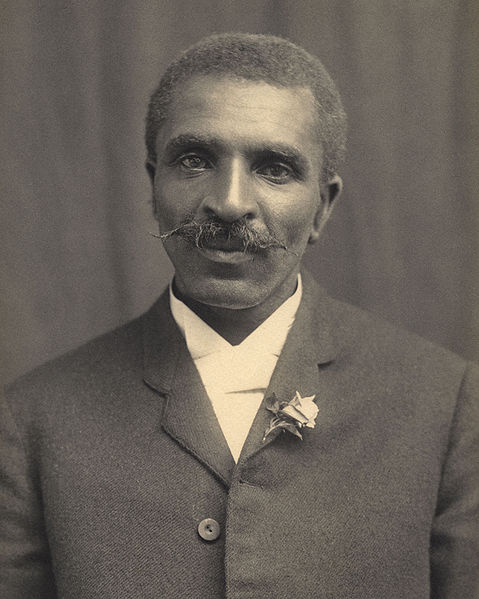
Who's That Queer? [George Washington Carver]

Brought to you by Pistol Pete

George Washington Carver was a groundbreaking agricultural scientist, known for discovering innovative uses for peanuts, sweet potatoes and clay. A black man born during the Civil War, Carver overcame racism to establish himself as a preeminent scientist and renowned academic. Throughout his career rumors about his sexuality ran rampant, and he ultimately left his estate to a close personal and professional partner, Austin Curtis.


Carver never married or expressed interest in dating women, and rumors circulated about his sexuality at Tuskegee Institute while he was an employee. In particular, his enjoyment of giving “therapeutic” peanut oil massages to and engaging in horseplay with handsome men was seen as unusual. Late in his career, Carver established a life and research partnership with another male scientist—Austin W. Curtis, Jr.. The two men kept details of their lives discreet, and as such historians know little about how these men understood their relationship. Nonetheless, the fact that Carver willed his assets to this man (consisting of royalties from an authorized biography by Rackham Holt) testifies to the importance of each other in their lives.

Read the rest.

Thursday, August 26, 2010

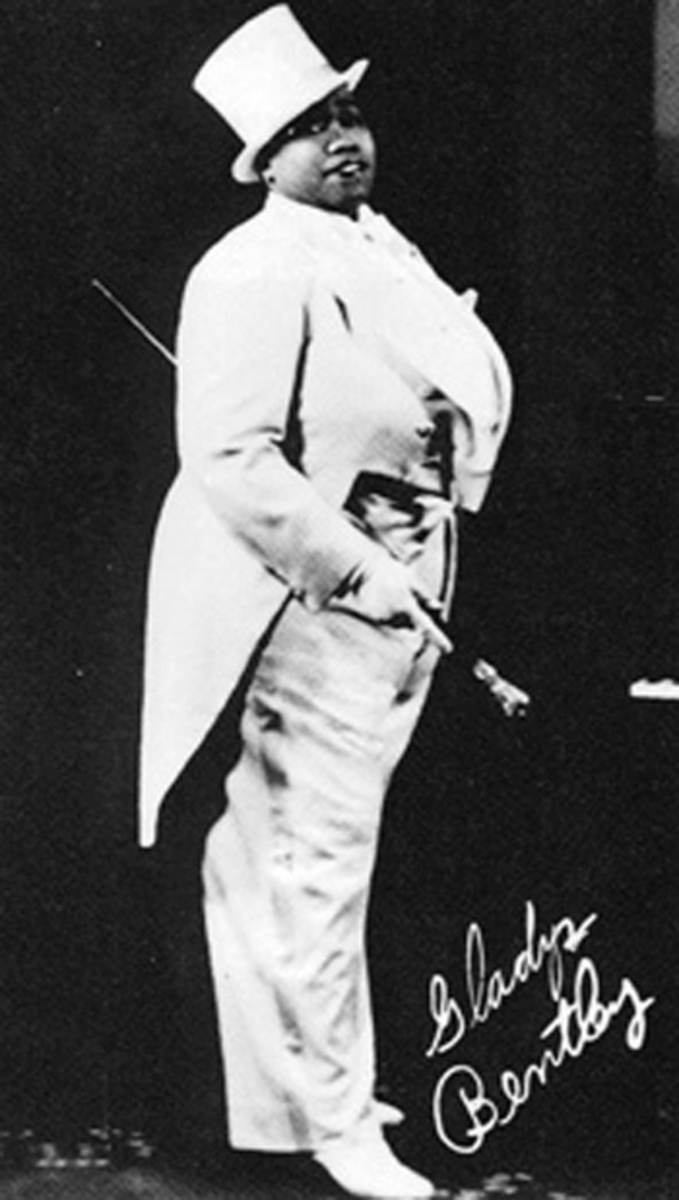
Who's That Queer [Gladys Bentley]

Brought to you by Pistol Pete

Gladys Bentley was a blues singer during the Harlem Renaissance. She was a 250 pound woman dressed in men's clothes (including a signature tuxedo and top hat), who played piano and sang her own raunchy lyrics to popular tunes of the day in a deep, growling voice while flirting outrageously with women in the audience.

She appeared at Harry Hansberry's "Clam House" on 133rd Street, one of New York City's most notorious gay speakeasies in the 1920s, and headlined in the early thirties at Harlem's Ubangi Club, where she was backed up by a chorus line of drag queens. Bentley was openly lesbian during her early career, but during the McCarthy Era she started wearing dresses, married a man (who later denied that they ever married), and studied to be a minister, claiming to have been "cured" by taking female hormones.

Read the rest at Wikipedia

Tuesday, August 24, 2010

Older Gay and Bisexual Men Needed for UIC Research Study


Are you 55 years of age or older and African American or Latino? We need your input!

We are recruiting men to participate in a focus group discussion or an individual interview.

Focus groups will last 90 min and you will receive $10 in compensation. Individual interviews will last 1 hr and you will receive $20 in compensation. Focus group and interviews will be conducted in either English and/or Spanish depending on participant’s preference, and audio tape-recorded.

If you are interested please call us at 312-996-6346 or e-mail: valles@uic.edu to see if you qualify.

________________________________________

La Salud de Hombres Gay y Bisexuales de Edad Mayor

Estamos buscando hombres gay y bisexuales de edad mayor para participar en un estudio sobre la salud, las relaciones sociales, y la discriminación.

¿Tienes 55 años de edad o más? ¿Eres Latino o Afro-Americano?

¡Necesitamos tu participación!

Estamos reclutando hombres para una discusión grupal o una entrevista individual. La discusión grupal durara 90 minutos y recibirás $10 por tu participación. Entrevistas individuales duraran 1 hr. y recibirás $20 por tu participación.

La discusión grupal y la entrevista individual se harán en Ingles o Español para acomodar tu preferencia y serán grabadas en audio.

Si estas interesado por favor contáctanos: 312-996-6346 o e-mail: valles@uic.edu para ver si calificas.

Thursday, August 19, 2010

Older Gay and Bisexual Men Needed for UIC Research Study


Are you 55 years of age or older and African American or Latino? We need your input!

We are recruiting men to participate in a focus group discussion or an individual interview.

Focus groups will last 90 min and you will receive $10 in compensation. Individual interviews will last 1 hr and you will receive $20 in compensation. Focus group and interviews will be conducted in either English and/or Spanish depending on participant’s preference, and audio tape-recorded.

If you are interested please call us at 312-996-6346 or e-mail: valles@uic.edu to see if you qualify.

________________________________________

La Salud de Hombres Gay y Bisexuales de Edad Mayor

Estamos buscando hombres gay y bisexuales de edad mayor para participar en un estudio sobre la salud, las relaciones sociales, y la discriminación.

¿Tienes 55 años de edad o más? ¿Eres Latino o Afro-Americano?

¡Necesitamos tu participación!

Estamos reclutando hombres para una discusión grupal o una entrevista individual. La discusión grupal durara 90 minutos y recibirás $10 por tu participación. Entrevistas individuales duraran 1 hr. y recibirás $20 por tu participación.

La discusión grupal y la entrevista individual se harán en Ingles o Español para acomodar tu preferencia y serán grabadas en audio.


Si estas interesado por favor contáctanos: 312-996-6346 o e-mail: valles@uic.edu para ver si calificas.

Thursday, February 25, 2010

Who's That Queer [James Baldwin]

Brought to you by Pistol Pete


James Arthur Baldwin (August 2, 1924 – November 30, 1987) was a writer, playwright, poet and civil rights activist.

Most of Baldwin's work deals with racial and sexual issues in the mid-20th century in the United States. His novels are notable for the personal way in which they explore questions of identity as well as the way in which they mine complex social and psychological pressures related to being black and homosexual well before the social, cultural or political equality of these groups was improved.

Read the rest...

Thursday, February 11, 2010

Who's That Queer [Keith Boykin]

Brought to you by Pistol Pete


Keith Boykin (born August 28, 1965) is an American broadcaster, author and commentator. He is editor of The Daily Voice, a CNBC contributor and a co-host of the BET TV talk show My Two Cents.

Boykin was a Special Assistant to President Clinton and Director of Specialty Media. Once the highest-ranking openly gay person in the Clinton White House, Boykin helped organize and participated in the nation's first meeting between gay and lesbian leaders and a U.S. President.In 1997, Clinton appointed Boykin to the U.S. presidential trade delegation to Zimbabwe, along with Rev. Jesse Jackson, Coretta Scott King and Transportation Secretary Rodney E. Slater. From 1999 to 2001, Boykin taught political science at American University in Washington, D.C.

Rest the rest...

[Keith was a featured panelist at the recent "Justice for All?" forum in Chicago. More info here.]

Thursday, February 4, 2010

Who's That Queer [Lee Daniels]

Brought to you by Pistol Pete


Lee Louis Daniels (born December 24, 1959) is an American actor, film producer and director best known for producing Monster's Ball and directing Precious, the film adaptation of the novel Push, by Sapphire.

Daniels was born on Christmas Eve, 1959, in Philadelphia and attended Lindenwood College in St. Charles, Missouri. He began his career in entertainment as a casting director and manager after a chance meeting with a Hollywood producer, working on such projects as Under the Cherry Moon and Purple Rain. He continued managing talent, including several Academy Award nominees and winners.

When he arrived in Hollywood, Daniels first worked for a nursing agency, then created his own agency at age 21. He sold his agency for approx $2 million and went to work as a production assistant. Later, he realized he had not paid taxes on his income but paid them off in time.

Read the rest...

Thursday, October 15, 2009

Who's that Queer?

Brought to you by Pistol Pete


Representative Barbara Jordan (D-Texas) was the first African-American woman elected to Congress from a southern state. She was known as an outstanding orator and Constitutional scholar.She served as a congresswoman in the United States House of Representatives from 1973 to 1979.


Jordan campaigned for the Texas House of Representatives in 1962 and 1964.Her persistence won her a seat in the Texas Senate in 1966, becoming the first African American state senator since 1883 and the first black woman to serve in that body. Re-elected to a full term in the Texas Senate in 1968, she served until 1972. She was the first African-American female to serve as president pro tem. of the state senate and served one day, June 10, 1972, as acting governor of Texas.

In 1972, she was elected to the United States House of Representatives, becoming the first black woman from a Southern state to serve in the House. She received extensive support from former President Lyndon Johnson, who helped her secure a position on the House Judiciary Committee. In 1974, she made an influential, televised speech before the House Judiciary Committee supporting the impeachment of President Richard Nixon.

Jordan was mentioned as a possible running mate to Jimmy Carter in 1976, and that year she became the first African-American woman to deliver the keynote address at the Democratic National Convention. Her speech in New York that summer was ranked 5th in "Top 100 American Speeches of the 20th century" list and was considered by many historians to have been the best convention keynote speech in modern history until the 2004 keynote by Barack Obama. Despite not being a candidate Jordan received one delegate vote (0.03%) for president at the convention.

In 1973, Jordan began to suffer from multiple sclerosis. She had difficulty climbing stairs, and she started using a cane and eventually a wheelchair. She kept the state of her health out of the press so well that in the KUT radio documentary, Rediscovering Barbara Jordan, former president Bill Clinton stated that he wanted to nominate Jordan for the United States Supreme Court, but by the time he could do so, Jordan's health problems prevented him from nominating her.

Jordan's companion of close to 30 years was Nancy Earl. Jordan met Earl, an educational psychologist who would become an occasional speech writer in addition to Jordan's partner, on a camping trip in the late 1960s. Jordan never publicly acknowledged her sexual orientation, but in her obituary, the Houston Chronicle mentioned her long relationship with Earl, interpreted to confirm her being a lesbian. However, Jordan biographer Mary Beth Rogers, author of "Barbara Jordan: American Hero," found no conclusive evidence to suggest that the former senator was a lesbian. After Jordan's initial unsuccessful statewide races, advisers warned her to become more discreet and not bring any female companions on the campaign trail.


Source: Wikipedia


Wednesday, August 26, 2009

LOVEFEST - Love Thy Brotha - This Sunday in Chicago

Join the Chicago Black Gay Men’s Caucus for the 5th Annual LoveFest
Entertainment, DJs, Mini-Ball, and more!
THIS Sunday, August 30
3:00 – 9:00PM
Jackson Park (63rd and Cornell)


lovethybrotha.com

Monday, July 13, 2009

Join the African American MSM Community for 10 - Living the Lifestyle on July 31


The AIDS Foundation of Chicago and the Service Providers Council (SPC) along with many organizations who's primary mission is working with African American men who have sex with men (AAMSM) are sponsoring 10 - Living the Lifestyle conference coming up on Friday, July 31, from 11:00 AM - 3:00 PM.

AAMSM, a population whose HIV/AIDS infection rates are disproportionate when compared to those of other ethnic and risk exposure populations in the United States and specifically, in Chicago. 10 – Living the Lifestyle – Wellness Conference will address the needs of the AAMSM community and it is the hope that many African American MSM leaders and service providers will attend this conference to network and exchange skills and resources to strengthen HIV/AIDS prevention efforts targeting the African American MSM community.

10 - Living the Lifestyle
University Center
525 S. State Street
July 31, 11am-3pm

For more information contact Cynthia Tucker, AIDS Foundation of Chicago, Chicago at ctucker@aidschicago.org or Phone: (312) 334-0965

10 - Living the Lifestyle is sponsored by AFC, the SPC, Chicago Black Gay Men's Caucus, Taskforce Presvention Services, Bayard Rustin Access Center, and Brothers Health Collective.

Thursday, June 25, 2009

On the rocks, with a twist


Every Pride Sunday, techno music blasts out of loudspeakers, drag performers strut their stuff, politicians beam their megawatt smiles, volunteers pass out safer-sex info, and thousands celebrate. Yet these festivities take place not just in Boystown but at the decades-old—yet largely off-the-radar—Rocks Party, which annually attracts around 15,000 mostly black LGBT Chicagoans to Montrose Harbor in Uptown.

Read the rest on TimeOut Chicago.

Monday, March 9, 2009

Black LGBTs Ignored by Tavis


Tavis Smiley's Big Day Without Gays
via The Bilerico Project, by Karen Ocamb

It's been a week since Tavis Smiley's State of the Black Union. I don't know if anything concrete came of it - but I was fixated with the event even before it happened. Why? Because in celebrating the 10th anniversary of his annual think tank-fest, he completely ignored LGBT people - and even more worrisome given HIV/AIDS in the Black community - there was no discussion of HIV prevention.

Read the rest.

Read related commentary by The Mad Professah.

Monday, February 2, 2009

It takes you


Homophobia is like racism and anti-Semitism and other forms of bigotry in that it seeks to dehumanize a large group of people, to deny their humanity, their dignity and personhood. This sets the stage for further repression and violence that spreads all too easily to victimize the next minority group.

Coretta Scott King


Thursday, December 4, 2008

Who's that Queer?


Brought to you by Pistol Pete


"The barometer of where one is on human rights questions is no longer the black community, it's the gay community. Because it is the community which is most easily mistreated."

Civil rights activist Bayard Rustin


Bayard Rustin is perhaps the most under-appreciated heros of the civil rights movement, simply because most people don't know of his existence. Other civil rights leaders forced his openly gay lifestyle In 1948, Rustin traveled to India to learn nonviolence techniques directly from the leaders of the Gandhian movement and helped to implement these tactics with independence groups in Ghana and Nigeria before returning to the United States to advise Martin Luther King Jr. on Gandhian tactics as King organized the public the Montgomery Bus Boycott.

The following year, Rustin and King began organizing the Southern Christian Leadership Coalition (SCLC). Many African-American leaders were concerned that Rustin's sexual orientation and Communist and forced Rustin's to resign from the SCLC in 1960.

When Rustin and A. Phillip Randolph organized the March on Washington in 1963, Senator Strom Thurmond railed against Rustin as a "Communist, draft-dodger, and homosexual" and produced a photograph of Rustin talking to King while King was bathing, to imply that there was a same-sex relationship between the two. Both men denied the allegation of an affair, but despite King's support, NAACP chairman Roy Wilkins did not allow Rustin to receive any public recognition for his role in planning the march.

You can read his full biography here.

Tuesday, December 2, 2008

NY Times: Make Same-Sex Marriage a Health Issue


Charles Blow at the New York Times has an interesting article on how to win support for same-sex marriage in the African-American community: make it a health issue. According to exit polls, African-American women were the strongest supporters of Prop. 8. If the gays can win the argument with this group, they can overturn Prop 8., and the sexual-health crisis in the African-American community may be the way to do it.

Blow's reasoning is quite sound:

For instance, most blacks find premarital sex unacceptable, according to the Gallup data. But, according to data from a study by the Guttmacher Institute, blacks are 26 percent more likely than any other race to have had premarital sex by age 18, and the pregnancy rate for black teens is twice that of white teens. They still have premarital sex, but they do so uninformed and unprotected.

That leads to a bigger problem. According to a 2004 report by the federal Centers for Disease Control and Prevention, black women have an abortion rate that is three times that of white women.

More specifically, blacks overwhelmingly say that homosexuality isn’t morally acceptable. So many black men hide their sexual orientations and engage in risky behavior. This has resulted in large part in black women’s becoming the fastest-growing group of people with H.I.V. In a 2003 study of H.I.V.-infected people, 34 percent of infected black men said they had sex with both men and women, while only 6 percent of infected black women thought their partners were bisexual. Tragic. (In contrast, only 13 percent of the white men in the study said they had sex with both men and women, while 14 percent of the white women said that they knew their partners were bisexual.)

You can read the rest of the piece here.

Related Posts Plugin for WordPress, Blogger...

select key words

2007 National HIV Prevention Conference 2009 National LGBTI Health Summit 2011 LGBTI Health Summit 2012 Gay Men's Health Summit 2012 International AIDS Conference ACT Up AIDS AIDS Foundation of Chicago Africa BUTT Bisexual Bisexual Health Summit Brian Mustanski Center on Halsted Charles Stephens Chicago Chicago Black Gay Men's Caucus Chicago Task Force on LGBT Substance Use and Abuse Chris Bartlett Coaching with Jake Congress David Halperin David Munar Dr. James Holsinger Dr. Jesus Ramirez-Valles Dr. Rafael Diaz Dr. Ron Stall ENDA Ed Negron Eric Rofes FTM Feast of Fun Feel the love... Friday is for Faeries Gay Men's Health Summit 2010 HCV HIV HIV care HIV drugs HIV negative HIV positive HIV prevention HIV stigma HIV strategic plan HIV testing HIV/AIDS HPV Howard Brown Health Center IML IRMA Illinois International AIDS Conference Jim Pickett LGBT LGBT adoption LGBT culture LGBT health LGBT rights LGBT seniors LGBT youth LGBTI community LGBTI culture LGBTI health LGBTI rights LGBTI spirituality LGV Leon Liberman LifeLube LifeLube forum LifeLube poll LifeLube subscription Lorenzo Herrera y Lozano Lymphogranuloma Venereum MRSA MSM Monday Morning Perk-Up National AIDS Strategy National Gay Men's Health Summit One Fey's Tale Peter Pointers Pistol Pete PnP PrEP President Barack Obama Presidential Campaign Project CRYSP Radical Faerie STD Senator Barack Obama Sister Glo Sisters of Perpetual Indulgence Susan Kingston Swiss declaration Ted Kerr Test Positive Aware Network The "Work-In" The 2009 Gay Men's Health Agenda Tony Valenzuela Trans Gynecology Access Program Trans and Intersex Association Trevor Hoppe Who's That Queer Woof Wednesday You Tube abstinence only activism advocacy african-american aging issues anal cancer anal carcinoma anal health anal sex andrew's anus athlete ball scene bareback porn barebacking bathhouses bears big bold and beautiful bisexuality black gay men black msm blood ban blood donor body image bottom chubby chaser circumcision civil rights civil union communication community organizing condoms crystal meth dating dating and mating with alan irgang depression disclosure discrimination domestic violence don't ask don't tell douche downlow drag queen emotional health exercise female condom fitness gay culture gay identity gay latino gay male sex gay marriage gay men gay men of color gay men's health gay pride gay rights gay rugby gay sex gay youth gender harm reduction hate crime health care health care reform health insurance hepatitis C hiv vaccine homophobia homosexuality hottie hotties how are you healthy? human rights humor hunk immigration international mr. leather internet intimacy leather community leathersex lifelube survey love lube lubricant masturbation mental health microbicides middle music negotiated safety nutrition oral sex physical health pleasure podcast policy politics poppers porn post-exposure prophylaxis prevention prostate prostate cancer public health public sex venues queer identity racism recovery rectal microbicides relationships religion research safe sex semen sero-adaptation sero-sorting seroguessing sex sexual abuse sexual addiction sexual health sexual orientation smoking social marketing spirituality stigma stonewall riots substance abuse treatment substance use suicide super-bug superinfection syphilis testicle self-examination testicular cancer testing top trans group blog transgender transgender day of remembrance transgendered transmen transphobia transsexual universal health care unsafe sex vaccines video violence viral load writers yoga youtube