Showing posts with label Howard Brown Health Center. Show all posts

Sunday, December 30, 2012

The BEST of Lifelube - "Gay + Latino + American Dream = ?" From Monday, August 25, 2008


Gay + Latino + American Dream = ?


Reflection by Julio Maldonado
Latino Health Specialist at Howard Brown Health Center

Wow… I almost forgot…all about it!

It’s been more than 11 years since I left my country maybe “looking for the American dream” as many people say. Is this true? Who knows…? But I know who knows… I am sure I know about it!

Many, if I can say thousands, of Hispanics left our countries because we wanted to experience for ourselves all that people say when they come back from “Los Estados Unidos.” No matter where in the US, the fact was that it sounded amazing, incredible, and had many opportunities. For me, there was one more thing: to be who I want to be. No more persecution, no more mistreatment, no more hiding who I am and “who I want to be in this life.”

I am a gay man.

Of course, this demands a sacrifice, sadness and questions…. But the final decision always brought us here – to the US.

That was exactly what happened to me. I decided to come to the United Stated, but I really wanted to do it good. So I said to myself, “I want to go, but I want to go to New York.” Well, that happened. A cold and tough winter was waiting for me while leaving the JFK airport. But, I was here…and that was all that mattered….

How we see big, huge, tall buildings, I am sure is not the same way that others see them. Many times, I almost fell because my sight was focused on those incredible buildings. I heard it called “the vertical city” once. It really is, especially when I crossed to Queens and I had all that skyline. We will never forget that… never….nunca….

But, we didn’t come only to see the buildings; we came because of “the American dream.” So, at first, we felt so different, like we needed to work a lot in order to fit in here. Culture, language, the city, the thousands of people walking on the sidewalks… but we were so happy to be here… very happy!

Identification with this new culture, language, city and people; comes with time. Its timely …it’s just time…

Now, what about …. “who I want to be in this life,” because we are here for that reason too…. So, we have our first time in a club-bar, a “gay life in Los Estados Unidos.” Just as the first look to the skyline, this moment is also unforgettable. To see all the gay community together with no feelings and fears about persecution, without being mistreated by anyone, no hiding who we are: gay men.

Gay men walking on the street holding hands, kissing each other, meeting other friends on the corner of Christopher St. and 7th Avenue. It was like we were living in another world, better than we had thought; just lovely; just inspirational and full of pride. “PROUD” is a word that is not really related to gay community in our countries. But here, you start feeling it and living it. That’s great!

Hispanics, Latinos: We don’t need too much time to meet and start talking with our community co-members. “Los gringos,” there we go, saying “Hi,” “How are you,” and we go even to “What’s up?” All of that because we want to be more part of this and “who I want to be in this life.”

Unfortunately, as with all our dreams, they have painful and bad parts. And when those come to the “American dream” I can still feel my eyes getting watery.

Just to mention a few: housing, work, partners, friends, health… and many, many more that make Hispanic-Latinos think about how life was in our countries. Which one is better in the end???

To have a house with food, warm and always waiting for us every day… or no house… just worried “I don’t know where I can stay at tonight.”

To have decent work … or wake up one morning somewhere and go to our pockets and not find anything, no money, no ID, no idea of what to do…. I don’t have work, I don’t have anything to eat and still, I can see all these people sitting at sidewalk cafes having delicious good-looking, warm food?

To just chill with old gay friends in your neighborhood in your country,… or a partner, who at one point told me “I love you,” now saying “you got to leave, now.”

To having the old gay friend and knowing you can always count on him/her… or a friend telling you that is the last day in his house because you are not productive and you are giving him/her problems. And that’s all.

To living with HIV, but still my mother can understand and still is giving me housing, food, and love as she can… or I don’t know what to do. Will I die here?Alone?

What happened to the “American dream?”

Well, I understood. That’s why I told myself, this cannot happen. I need to do something, I promised myself that I will do something.

I fill my soul and all of me with courage, love, compassion, understanding and I turn more Hispanic-Latino than ever. I will get together, I will knock on doors, I will touch base with people that I believe are still there, I will be a leader, I will do whatever I have to do… and remember myself as a morning prayer that “life is just one” and nothing is done if you don’t, at least, try.

If I can do that, I will give that gift from God to anyone who will be passing through the same, the same that I passed though more than 11 years ago.

Wow… I almost forgot… all about it!

Friday, January 20, 2012

Testing and Hearing HIV Test Results Together

via The Associated Press, by Carla K. Johnson

CHICAGO — Newly dating and slightly anxious, two men bared their arms for blood tests and pondered the possibility that one of them, or both, could be infected with HIV.

An innovative program — called Testing Together — would allow them to hear their test results minutes later, while sitting side by side.

In this Jan. 5, 2012 photo, Dominic Poteste, left, and Eric Zemanovic pose before taking HIV tests together at the Howard Brown Health Center in Chicago.

Testing Together, now under way in Chicago and Atlanta, takes an unusual approach: It encourages gay male couples to get tested together and hear their results together.

In this Jan. 5, 2012 photo, Dominic Poteste, left, and Eric Zemanovic pose before taking HIV tests together at the Howard Brown Health Center in Chicago.

Testing Together, now under way in Chicago and Atlanta, takes an unusual approach: It encourages gay male couples to get tested together and hear their results together. 

.Eric Zemanovic, a dental hygienist, and Dominic Poteste, a restaurant server, had been dating two months after a yearlong friendship. In the past, they'd both practiced safe sex and got regular HIV tests.

Both are in their early 30s. They'd grown up when AIDS meant an early, horrible death. So, whenever they heard about friends testing positive, they felt pangs of fear.

Poteste explained: "There's always an anxiety that comes with getting tested, even though 99 percent of the time I've been safe and been careful, there still is always ..."

His voice trailed off.

"A slight possibility," Zemanovic completed the sentence.

"A slight possibility," Poteste agreed.

Testing Together, now under way in Chicago and Atlanta, takes an unusual approach: It encourages gay male couples to get tested together and hear their results together.

After delivering the results, a counselor talks with the couple about what to do next, including agreements they may want to make with each other about sex and health.

Are we agreeing to be monogamous? Is any sexual activity outside the relationship OK? How are we going to protect each other from infection? Couples address these questions and more.

The idea is to bring honesty to sexual relationships, said one of the researchers behind the program, Rob Stephenson of the Rollins School of Public Health at Emory University in Atlanta.

Relationships offer only "mythical protection" from HIV, Stephenson said. Some couples may have avoided talking about each other's HIV status, thinking, "If he were HIV positive he would have told me," or "If he wanted to know, he would have asked."

Poteste and Zemanovic, the newly dating Chicago couple, differed in their past approaches. Zemanovic was in the habit of asking his sex partners about their HIV status; he was "neurotic" about it, he said.

Poteste hadn't been as sexually active as his new boyfriend, but he hadn't always asked the questions: Have you been tested? What's your status?

"You have an assumption that if there's something this person could do to potentially hurt me, they would tell me," he said.

Zemanovic hoped getting tested together and discussing results with a counselor would build trust between them.

Poteste hoped the counselor could help them start a conversation so they could ask and answer difficult questions.

It started in Africa more than 20 years ago. Researchers believe couples testing has successfully reduced the spread of AIDS among married, heterosexual couples in some African regions.

One study that looked at couples where one spouse is HIV positive and the other is HIV negative estimated that couples testing was cutting the rate of transmission by more than half.

In Washington, D.C., where the rate of HIV infection rivals some African nations, some community agencies allow couples to test together. Family and Medical Counseling Service Inc. has been testing about 145 couples together annually since 2008. Most are heterosexual couples.

In Chicago and Atlanta, Testing Together, funded by the MAC AIDS Fund, hopes to test 400 couples by the end of the year.
___
Each participant in Testing Together signs a consent form that addresses receiving counseling, testing and results with a partner in the same room at the same time with a trained counselor: "I hereby consent to allow my partner to know the results of my HIV test," it begins.

The program challenges conventional practices in the United States, where HIV testing is usually private and for individuals only. At most other clinics, a man who asks if his partner can be there when he hears his test result is denied because of patient confidentiality concerns.

There are two trends fueling Testing Together. One, the number of gay Americans telling the U.S. Census they're living with same-sex partners nearly doubled in the past decade, to about 650,000 couples. About half those same-sex partnerships are gay men.

What's more, a new line of research suggests that up to 68 percent of new HIV infections in gay men come from a main sex partner, not from casual sex, in part because main sex partners are more likely to forgo condoms.

Counselors are trained on how to deliver test results, with particular emphasis on how to tell partners the most difficult news: one partner has the virus and the other doesn't.

With these so-called "HIV discordant" couples, counselors have a great opportunity to reduce the spread of the virus by helping the couple learn ways to protect the uninfected partner, primarily through correct and consistent condom use.

Counselors are trained to dispel myths. If the couple thinks the test result means one partner has been unfaithful, the counselor might point out that the infected partner could have acquired HIV before the partner became a couple.

If the couple believes the virus is "sleeping" and can't be transmitted, the counselor might explain that HIV can be transmitted even if there are no signs or symptoms.

If the couple believes their status is proof that precautions aren't needed, the counselor might explain that HIV could be transmitted in the future as the infected partner's virus levels rise.

Sam Hoehnle is a counselor in the Chicago program. "It never becomes easier emotionally" to deliver the news to an HIV discordant couple, Hoehnle said. He tells the HIV negative partner his results first, then spends more time and attention on the HIV positive partner.

He's seen partners support each other, but he acknowledges he can't read minds. A show of compassion could mask anger or fear.

"You don't know what's happening internally, in their heads, about how they're feeling about each other," he said.


Read the rest

Wednesday, November 2, 2011

Hey Peter, Is it true Howard Brown let's you get HIV tested with your Boo?


Peter Pointers is Chicago's most trusted source for gay, sexy, healthy info with an all-access pass to nationally known health and wellness experts. Go ahead, ask Peter for Pointers. Visit his page on the LifeLube site and read answers to commonly asked questions too.


Q: I heard that Howard Brown Health Center has a program that encourages male couples and sexual partners to get tested together for HIV.  Is that true?
 

A: Yes, you are correct! Getting an HIV test can be difficult, if not downright scary—and having a conversation with your partner(s) about HIV results can bring up a lot of other issues. Thanks to a new service developed by researchers from Emory University and funded by the MAC AIDS Fund, Howard Brown Health Center, and two clinics in Atlanta, can provide an opportunity to lessen those challenges among sexual partners.


I spoke with Sam Hoehnle, Project Coordinator of “Testing Together” at Howard Brown Health Center in Chicago.  Mr. Hoehnle said that “Testing Together” provides an opportunity for gay and bisexual men in relationships to get tested and receive their results together (at the same time, in the same room), with a trained counselor present to discuss the results. Testing with your partner and receiving your results together is a great opportunity to start (or continue) a healthy conversation about HIV in your relationship, and allows you to talk openly about building a plan to address HIV (and other STI) risks. The service is designed to focus on the future, not on what each person has done in the past.

Different types of couples can also benefit from this intervention. In the United States most infections occur between men and their primary sex partner. You or your partner may be infected with HIV and not even know it. Testing Together gives an opportunity for you and your partner to discuss how HIV may impact your relationship.

If you are positive you can still use the service. If you meet the screening criteria, Testing Together can provide an opportunity for you to share your status with your partner, in a controlled setting, with a trained counselor who will help start a discussion with you and your partner to discuss the realities of HIV in your relationship.

Some people may be concerned about how this service will affect their relationship, especially if they have different results.  While, there is no way to know what direction your relationship will take after finding out each other’s HIV test results, in Africa, where the service was started, most couples with different results stayed together. Every relationship is different. Knowing your partner’s status will start a conversation with honesty and trust.

The process of testing is relatively easy. You and your partner will be screened separately to see if you are eligible for testing. If you are eligible and agree to be tested together, then you will meet with a counselor to start a discussion about the testing process and how HIV impacts you in your specific relationship. The counselor will then provide the results for the test with you and your partner, at the same time and in the same room. Once you both know your status, the counselor will work with you both to determine the best way to minimize the risk of HIV in your relationship.

Only four clinics in the U.S. are offering this service for male couples. The two locations in Chicago are Howard Brown Health Center and the Broadway Youth Center (for people under 25 years of age).

Howard Brown offers the service during regular Walk-in Clinic hours and the Broadway Youth Center on Tuesday and Thursday from 5pm-8pm.

In Atlanta, services are offered at our partner sites AID Atlanta and Ric Crawford Clinic (formerly AID Gwinnett).

For more information about Testing Together you can go to www.testingtogether.org or check the program out on Facebook. You can also follow us on Twitter @TestingTogether.

TOMORROW - Howard Brown is hosting a community forum at their Sheridan location (4025 North Sheridan Road, Chicago) on Thursday, November 3rd - TOMORROW - from 6:30p - 8:00p. 
 
This forum is an opportunity for the community to learn more about the service. A representative from Emory University and Howard Brown Health Center will be there to present on couples HIV counseling and testing. The forum will also feature a question and answer portion. And light refreshments!
 
Hope to see you there!
 

Monday, October 3, 2011

Get Freaky October 25 - Our Last Community Forum of 2011

It's all about those things that "go bump in the night."

Space is limited for this free event, please RSVP today to hold your space.

click to enlarge

Your Evening's Fabulous Sexperts:
Please join us
Tuesday, October 25, 2011
Center on Halsted
3656 North Halsted, Chicago

We begin at 6:00pm for free light nibbles, a cash bar, and sex toy demos in the 2nd floor John Baran Senior Center.

The dirty talk begins at 7:00pm in the Hoover Leppen Theatre, 3rd floor.

FREE! Register online and be sure to tell us the sexy questions you have on your mind.

Saturday, March 26, 2011

Chicago's Howard Brown Comes Out For Health

LGBT Health Awareness Week 
March 28 - April 1, 2011


Please join Howard Brown Health Center as it celebrates the ninth annual LGBT Health Awareness Week. This year’s theme, "Come Out for Health," is a call to action for community members, advocates, service providers and government officials to recognize health and wellness as an essential part of the social justice movement for lesbian, gay, bisexual, and transgender individuals.

Monday, March 28
6 p.m. to 8 p.m.
THInC Presentation
4025 N. Sheridan, Group Room A

Come hear about Howard Browns Transgender Health Program and the new Hormone replacement therapy program called THInC, Howard Brown Health Center's program to empower and support trans clients who wish to access hormones. THInC, or Trans Hormones—Informed Consent, is a comprehensive, 3-step program designed to assist those interested in accessing hormones in an efficient, supportive and validating manner.


Check out what else is on tap for LGBT Health Awareness Week.

Friday, March 11, 2011

How is Brian Vanderheyden healthy?

Doing what I can to prevent disease and injury is how I stay healthy.

Prevention has been a focus of my life for the past half decade. I have awful family medical history and I have watched my grandparents, relatives and parents suffer from a variety of different diseases. Knowing that my gene pool is not the greatest, I have developed a passion over the years for health and improving my overall wellness.

I am currently a Community Health Education major at the University of Wisconsin- La Crosse. Community health focuses on primary prevention techniques to stay healthy. Primary prevention attempts to take measures to inhibit any disease or injury from occurring rather than treating or curing them. I do not believe that we can prevent everything that occurs in life but I have made many lifestyle and attitude changes that focus on my future health.

Experiencing high amounts of stress is an understatement for many college students including me. I am in my final semester as an undergraduate student, I’m adjusting to the city of Chicago (I just moved to here a couple weeks ago from La Crosse, Wisconsin to complete an internship at Howard Brown Health Center as part of my undergraduate degree), and I’m in the process of interviewing for graduate schools.

Plus I can’t forget the limited budget I am living on, the massive amount of debt I am accumulating, and the fact that I am starting the process of coming out to my family and friends.

So for me a huge part of how I stay healthy is really tuning into my mental health.

Learning about myself through years of self reflection has allowed me discover where I draw my energy from and how I recharge that energy on a daily basis. Burnout rates for college students are high and having experienced burnout a couple years ago; I have been actively doing what I can to prevent it from happening again.

With everything going on in my life right now, time management and staying organized is how I have reduced a lot of the stress I feel on a daily basis. I have developed an organization system that helps identify what I need to get done each day, throughout the week, and what tasks have the highest priority. Having a plan in place is what helps me stay on task and not forget anything.

Another lifestyle change I have made is incorporating “Me Time” into my day, every day. “Me Time” can really consist of anything but it’s something where I can escape from reality for a short period of time and devote it to bettering myself (mentally, physically, spiritually, etc). I always set time out of my day to work out. I am a fitness guru and love all types of physical activity. I find happiness and a spiritual connection when I make a mind/body connection during my workouts.

In addition to exercising, I also try to incorporate another activity at night before I go to bed to relax from the day. Whether this is watching one of my favorite TV shows, reading a book, meditating, going on a walk, etc., I need this time to self reflect on myself and my day. I try every day to become a better person and self reflection is how I best achieve this. It helps me become aware of my strengths and areas of improvement that I want to work on in the future.

Besides recharging my energy from “Me Time,” I also tend to draw energy from the people around me especially my close friends and family. I have the best friends/family in the world (in my opinion of course) and I value those relationships more than anything. Every relationship is so special to me and I know that my friends and family would do anything for me as I would for them. Having that support system has gotten me through rough periods in my life including my recent coming out in terms of my sexuality.

Improving overall wellness in all areas of my life (intellectual, mental, emotional, spiritual, physical, social, etc.) is extremely important to me.

Wellness and being healthy is so much more than eating right and exercising.
While I do those things, it does not stop there for me.

I believe the other areas of wellness are crucial and are an important part of my overall health and how I stay healthy!

-- Brian Vanderheyden
Chicago


How are you healthy?

Join in the conversation.

Tell us HERE. Send a pic to the same place.
And we'll blog it, right here.
Gay men and all allies welcome to participate.

Read past posts.
Learn more about the campaign

Friday, April 30, 2010

May 15 - Workshop on Intimate Partner Violence - Chicago

A Workshop about Partner Abuse in LGBTQ Relationships

The Violence Recovery Project of Howard Brown Health Center will host a 4-hour workshop for survivors of intimate partner violence and unfair relationships interested in learning more about partner abuse in lesbian, gay, bisexual, transgender and queer relationships.


Howard Brown Health Center
Saturday, May 15
4025 N. Sheridan Rd.
Chicago
10am -2pm

This is a free event and is open to all ages.
Lunch will be provided.
Registration is required in advance and will not be available at the door.
To register, or for further information, please call (773) 388-8882.

Tuesday, January 12, 2010

Peter, help! How do I find a gay doc?


[Peter Pointers is here 4 YOU, as a service to LifeLube readers - whatever question you may have regarding sexual health, physical health, mental/emotional and spiritual health - ask him. He will find the answers you are looking 4. helped by a team of experts. Below is a recent Q&A you may be interested to read.]


Question: Peter, I don’t feel comfortable enough with my current doctor to tell him I’m gay.  I would like to find a doctor that is either gay or that is gay-friendly.  Any suggestions?


Answer: Hello and thank you so much for your question!  This is an issue that comes up very often for us in the LGBT community and I, for one, feel horrible that so many people feel discriminated against or treated unfairly by their doctors because of their sexual orientation.  Especially with the current state of insurance limiting the doctors you can see, it can be difficult to find a provider that is a keeper!

First of all, you are absolutely right to want a medical provider with whom you feel comfortable.  Being able to be honest and open with your doc is the beginning of a very important relationship.  Your doctor is reliant on the information you provide to make the best decisions about your health and care.  Obviously, if you don’t feel comfortable sharing your sexual orientation, your doctor is not getting the full picture of your health.

To answer your question, there are several physicians that treat the GLBT community in Chicago and the surrounding area.

Two helpful resources you can use to locate the right doctor for you are:

1)    the Gay Lesbian Medical Association’s (GLMA) website and
2)    the Alternative phonebook of Chicago.

Through GLMA’s website, www.glma.org, you can search by your zip code for many qualified specialists.  This website even provides options to find doctors in specific specialties (dentist, surgeons, or family medicine – I’ll take one of each, thank you!) or with a specific patient/client focus (hormone therapy, elderly, bisexual men, etc.).  

The Alternative Phonebook of Chicago can be viewed online as well at.  Here you can find gay friendly doctors all around Chicagoland. 

I would be remiss not to mention one of Chicago’s most helpful LGBT medical resources, the Howard Brown Health Clinic (disclaimer: for full transparency, Howard Brown is a partner of Project CRYSP and Lifelube.org, the website that hosts yours truly).  Howard Brown, which can be found at www.howardbrown.org, accepts most major forms of insurance.

Lastly, one of the best options you have for finding a great doctor is your friends.  Ask around and fine out who your gay friends and colleagues see.  Sometimes the best source of information is word of mouth! 

There are many respectful medical providers out there. Please take the time to research these doctors and find which one is right for you.  Once again, I thank you, readers, for all of your questions.

Be well,
Peter Pointers

Wednesday, November 18, 2009

C-Talk - For guys who have used drugs and love sex

CHICAGO

Come to a ten-week group focused on healthy sexuality for men who have used cocaine and crystal meth.


This is a research study conducted by the University of Illinois at Chicago (UIC) and Howard Brown Health Center to see if groups like this one can help men develop a healthier sense of sexuality that doesn't always depend on using drugs.

For more info, please contact
nicolep@howardbrown.org or call 773-388-8872

Thursday, November 12, 2009

Monday, November 9, 2009

Monday, June 29, 2009

For guys who have used drugs and love sex...

CHICAGO

Come to a ten-week group focused on healthy sexuality for men who have used cocaine and crystal meth.

This is a research study conducted by the University of Illinois at Chicago (UIC) and Howard Brown Health Center to see if groups like this one can help men develop a healthier sense of sexuality that doesn't always depend on using drugs.

For more info, please contact
nicolep@howardbrown.org or call 773-388-8872

Thursday, June 25, 2009

Feast of Fun cats it up on the 2009 National LGBTI Health Summit


via our friends, the Feast of Fun

President Obama has declared- “look unless, we fix what is broken in our current health care system, everybody’s health care will be in jeopardy. Reform is not a luxury, its a necessity.”

Today we’re talking to Cat Jefcoat, director of the Lesbian Community Care Project, a program at Howard Brown. She’s knee deep in the health care issues for all the gays.

Cat is working with Feast of Fun’s Jim Pickett to help make sure Obama’s reform includes gay folks by co-chairing the National LGBTI Health Summit, a four day conference to build community networks and share ideas.

The summit will cover an array of topics including the aging of the Stonewall generation, new HIV prevention technologies, intimate partner violence, transgender health care, biphobia, body image, club drugs, anti-smoking initiatives, “what vaginas want,” sexual racism, bareback sex, Qigong, yoga and meditation.

Listen as we talk about the hot news and trends that shape your world.

Monday, May 18, 2009

Broadway Youth Center Gets a Makeover


Howard Brown's Broadway Youth Center (the BYC) recently became the beneficiary of the outstanding support, talent, and services at Designs for Dignity, an organization that engages the design community to support other, community-based non-profits through outstanding design and improvement of the physical space. The BYC - a collaborative, LGBT and homless youth center that serves more than 5,000 at-risk young people each year - was in need of their help!

The design industry professionals at Designs for Dignity overhauled the BYC's facility - creating a more beautiful, functional, efficient, and client-friendly space. Their generosity and commitment to helping Howard Brown serve young, homeless/runaway, and at-risk LGBT youth has created an amazing new BYC!

See more before-and-after photos of the BYC at the Designs for Dignity website.

Since 2004, the Broadway Youth Center (BYC) has been a safe space for homeless, LGBT and other at-risk youth, ages 12 to 24, to access multiple resources and services designed to promote their overall health and well-being, including: medical care; basic need drop-in services; housing linkages; crisis intervention counseling and psychotherapy; HIV/STD testing and prevention programs; tutoring and testing for youth interested in obtaining a GED high school equivalency diploma; life-skills workshops to help youth develop financial literacy, employment and independence skills; the nation's first LGBT-specific mentor program; and community-based research projects.

Monday, April 27, 2009

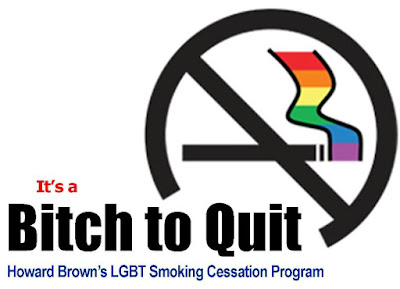
Bitch to Quit - Next Groups Begins April 30


Tired of trying to quit smoking on your own?

Join Chicago's only LGBT smoking cessation program and quit for good!

*7-week smoking cessation program

*Support from a trained smoking cessation counselor

* Sliding scale program fees based on your income

Our next group begins on April 30!

Space is limited, so call today to reserve your place!
773-388-8682

Tuesday, March 31, 2009

Report Explains Isolation of LGBT Seniors


via Eight Forty-Eight
originally broadcast March 24, 2009

Later this spring, the Illinois House is expected to vote on a measure that would grant both same-sex and opposite-sex couples many of the same legal protections that come with marriage. If the Civil Unions Act passes, it would give partners in a civil union a number of rights, including the ability to make medical decisions for their partner in an emergency. A report from the Howard Brown Health Center in Chicago says it will help many senior citizens in same-sex relationships who are feeling the effects of not having these rights. Howard Brown’s Hope Barrett says it’s tough to be older and gay, bisexual or transgender.

Listen.


And in a related story:


"I keep on track, or the train will stop." - Terry Powell

Midlife Patients With HIV or AIDS Require Care for Chronic Conditions


Individuals older than 50 who have HIV or AIDS confront a daily dilemma. How do they keep the disease under control while treating other health issues common in middle age and as seniors? It’s a juggling act that challenges healthcare providers as much as patients.

Read the rest.


Monday, March 30, 2009

Please Consider Justice and Inclusivity for ALL Populations As You Reform Health Care


Dear President Obama,


Please Consider Justice and Inclusivity for ALL Populations As You Reform Health Care

As LGBT Illinoisans, we know your commitment to this cause. Your record in support of civil rights for all and health care reform speaks for itself. You want a more inclusive, healthier world with less health disparities and stronger community health. A world where lesbian and bisexual women do not suffer from disproportionately high rates of smoking, alcohol use, obesity, and lack of insurance that place them at higher risk for breast cancer, heart disease, diabetes, depression, addiction, and other chronic, life-threatening illnesses. A world where gay and bisexual men do not suffer from disproportionately high rates of psycho-emotional disorders, addictions, and (most notably) HIV/AIDS. A world where transgender folks are able to be healthy and live free from violence.

With National LGBT Health Awareness Week just past, March 9-14, 2009, and health care reform gaining momentum, we must remember some basic priorities.

The LGBT population must be included in health care reform. When considering the topic of health care reform, you must not ignore the great social injustice being suffered by the groups of greatest health disparity. Therefore, I call on you to ensure that any healthcare reform be inclusive of LGBT folks. For the past eight years, we have had to be present, but invisible in the national health conversation.

By making health care reform inclusive of the LGBT community, healthcare settings could become safe, helpful places rather than venues of shame, stigma, and prejudice. Preventative practices and messages would be appropriate and inclusive, reducing the cost of reactionary treatment to preventable disease. We will not have to use the emergency room as our primary health care provider as so many of us without insurance are forced to do. Instead, we will know that providers have knowledge about our true risks, best practices for how to care for us, and how to be respectful of our families and identities.

The LGBT population must be included in data collection – so that we can understand the truths of our bodies and lives. The need for accurate, inclusive data is two-fold: 1) if we don’t know what is wrong in our community, we can’t fix it and 2) data is the basis for all federal support and funding for health initiatives. Our national surveys don’t include sexual orientation and gender identity questions. We need these tools to accurately understand what problems all of us face so we can solve them. Furthermore, without data about health issues in our population, the LGBT population is consistently overlooked by federal programs.

By making health care reform and research LGBT-inclusive, we will be able to better care for the entire community. These reforms will affect the most vulnerable members of our community – those who can’t choose a health care provider based on what their website profile says, but who delay care until crisis strikes. If health care reform is LGBT-inclusive, our doctors, nurses and staffs will be better able to care for all of their patients and our nation’s health will improve.

Michael C. Cook
President and CEO
Howard Brown Health Center
Chicago

Friday, March 20, 2009

Media HO - LifeLube's new campaign gets some

Ad campaign on public transit celebrates gay men's health

via Medill Reports, by Meg Martin
Asking just one question - “How are you healthy?” is purposely ambiguous, according to Beau Gratzer, director of HIV and STD prevention at Howard Brown Health Center. “They are intended to be reflective,” he said. “We’ve found that if we go out with a directive message that says ‘This is what you need to do to be healthy,’ people generally don’t respond to that.”
Read the whole item.

Friday, February 13, 2009

Is that a pylon in your pocket?


In celebration of National Condom Week, Howard Brown (a Project CRYSP partner) placed MAGNUM condoms on the rainbow pylons along North Halsted street in Chicago's Lakeview/Boystown neighborhood/gay ghetto.

The social marketing campaign is intended to re-invigorate discussion about safer-sex practices and spark community dialogue about on-going HIV/STI prevention needs.
Related Posts Plugin for WordPress, Blogger...

select key words

2007 National HIV Prevention Conference 2009 National LGBTI Health Summit 2011 LGBTI Health Summit 2012 Gay Men's Health Summit 2012 International AIDS Conference ACT Up AIDS AIDS Foundation of Chicago Africa BUTT Bisexual Bisexual Health Summit Brian Mustanski Center on Halsted Charles Stephens Chicago Chicago Black Gay Men's Caucus Chicago Task Force on LGBT Substance Use and Abuse Chris Bartlett Coaching with Jake Congress David Halperin David Munar Dr. James Holsinger Dr. Jesus Ramirez-Valles Dr. Rafael Diaz Dr. Ron Stall ENDA Ed Negron Eric Rofes FTM Feast of Fun Feel the love... Friday is for Faeries Gay Men's Health Summit 2010 HCV HIV HIV care HIV drugs HIV negative HIV positive HIV prevention HIV stigma HIV strategic plan HIV testing HIV/AIDS HPV Howard Brown Health Center IML IRMA Illinois International AIDS Conference Jim Pickett LGBT LGBT adoption LGBT culture LGBT health LGBT rights LGBT seniors LGBT youth LGBTI community LGBTI culture LGBTI health LGBTI rights LGBTI spirituality LGV Leon Liberman LifeLube LifeLube forum LifeLube poll LifeLube subscription Lorenzo Herrera y Lozano Lymphogranuloma Venereum MRSA MSM Monday Morning Perk-Up National AIDS Strategy National Gay Men's Health Summit One Fey's Tale Peter Pointers Pistol Pete PnP PrEP President Barack Obama Presidential Campaign Project CRYSP Radical Faerie STD Senator Barack Obama Sister Glo Sisters of Perpetual Indulgence Susan Kingston Swiss declaration Ted Kerr Test Positive Aware Network The "Work-In" The 2009 Gay Men's Health Agenda Tony Valenzuela Trans Gynecology Access Program Trans and Intersex Association Trevor Hoppe Who's That Queer Woof Wednesday You Tube abstinence only activism advocacy african-american aging issues anal cancer anal carcinoma anal health anal sex andrew's anus athlete ball scene bareback porn barebacking bathhouses bears big bold and beautiful bisexuality black gay men black msm blood ban blood donor body image bottom chubby chaser circumcision civil rights civil union communication community organizing condoms crystal meth dating dating and mating with alan irgang depression disclosure discrimination domestic violence don't ask don't tell douche downlow drag queen emotional health exercise female condom fitness gay culture gay identity gay latino gay male sex gay marriage gay men gay men of color gay men's health gay pride gay rights gay rugby gay sex gay youth gender harm reduction hate crime health care health care reform health insurance hepatitis C hiv vaccine homophobia homosexuality hottie hotties how are you healthy? human rights humor hunk immigration international mr. leather internet intimacy leather community leathersex lifelube survey love lube lubricant masturbation mental health microbicides middle music negotiated safety nutrition oral sex physical health pleasure podcast policy politics poppers porn post-exposure prophylaxis prevention prostate prostate cancer public health public sex venues queer identity racism recovery rectal microbicides relationships religion research safe sex semen sero-adaptation sero-sorting seroguessing sex sexual abuse sexual addiction sexual health sexual orientation smoking social marketing spirituality stigma stonewall riots substance abuse treatment substance use suicide super-bug superinfection syphilis testicle self-examination testicular cancer testing top trans group blog transgender transgender day of remembrance transgendered transmen transphobia transsexual universal health care unsafe sex vaccines video violence viral load writers yoga youtube