Showing posts with label Leon Liberman. Show all posts

Monday, November 22, 2010

80 is the new 79

What is important to an 80 year old is “right now,” not a week from Friday, next February, another survey or study or a panel discussion.
On a Monday, Garbo was asked to dinner on Saturday. “How do I know if I’ll be hungry on Saturday?” she asked.

by Leon Liberman

I turned 80 on October 24, which is United Nations Day, a little-known holiday that having lived in a half-dozen countries on four continents I think of as meant for me.

Old age doesn’t sneak up on you. It happens suddenly. It seems that overnight you go from a “beautiful eyes” pick-up line from someone sitting on the adjoining bar stool saying “nice shirt” before they change seats. It’s not without irony that when you hear someone whistle on the street, you look to see who’s behind you or what’s unzipped.

And a sense of humor or even the ridiculous is what’s needed to cope with aging. Without them there’s the temptation to become angry and resentful.

Well-meaning friends have told me that 80 is the new 60. Eighty is nothing other than the new 79. I don’t find comfort in hearing that age is only a number or you’re only as old as you feel so please stop your well-intentioned comforting. I know that I look, feel and act 80.

I’m probably more fortunate than many other 80-year-olds. My doctors care not just for me but about me as well. They share test and procedure results and along with my pharmacist, the unsung hero of HIV treatment, consult one another about the possibility of conflicting prescribed medications.

What is important to an 80 year old is “right now,” not a week from Friday, next February, another survey or study or a panel discussion. On a Monday, Garbo was asked to dinner on Saturday. “How do I know if I’ll be hungry on Saturday?” she asked. We thrive on spontaneity, reminiscence and acknowledgment. We want to share our valued experiences. We still have contributions to make.

More than a decade ago, a hospital social worker to whom I went with a confusing Public Aid problem, introduced me to Ann Fisher, Executive Director of AIDS Legal Council of Chicago, who immediately resolved the problem and has resolved many more since.

I volunteered to keep the Council in its good work and continue to do so. I’m a member of Chicago Area HIV Service Planning Council that assesses needs for HIV/AIDS funding priorities and evaluates how federal Ryan White Part A funds are distributed to the community. I serve on the Council’s Quality Management and Evaluation Committee.

There are opportunities to contribute and share for the aging—welcome opportunities.

Think of aging as a focus, 
not a limitation or a handicap.

I am thankful to have this blog to set things straight about aging and if you will bear with me, there’s something more I’d like all of you to know.

Not long ago, a major HIV/AIDS Chicago treatment facility now in deep trouble because of recent financial mismanagement and threatening to close if it doesn’t receive immediate funding, began a much publicized senior program which was funded in part by a Jewish non-profit grant. I couldn’t imagine what it could do that wasn’t already being done by the senior program at the nearby Center on Halsted so as Exhibit A, I contacted the facility for information and to let it be known that I might be of some use to the program as a volunteer.

I was put on to a young woman who was brought from the East to run the program. This had to be done at some expense. We met and she confided in me that all she had been instructed to do since arriving was to spend time in south side gay bars interviewing older if not aged clients. She was not familiar with the city or communities within it. I did my best to introduce her to some of those who it might be to her advantage to know.

The next thing I knew, she had been replaced by a much heralded advocate for aging gays, a woman who directs the SAGE program and was also brought from the East Coast at an even greater expense. It was my understanding that she would continue with SAGE in the East as well as directing the Chicago program.

Suddenly, there was nothing more about her or the program in the papers so I called and was told by a facility employee that the program which barely got off the ground had been shelved for financial reasons and that she, the facility employee, was responsible for what, if anything, remained of it. That employee later left the facility to take the position as regional SAGE director working out of the Center on Halsted. What a waste of funding which must discourage those who backed the program from considering grants for other HIV/AIDS and/or aging programs.

A suggestion for those who are responsible for programs for the aged: Pick a director who is a local, someone who knows what conditions and experience we have had, preferably someone who is not half our age who can relate to our concerns, problems and needs.

Finally, 
for those of you who are 80 
or pushing it, 
delight in your good fortune. 
Regardless of the shape you’re in, 
every day more is a bonus!

Wednesday, February 24, 2010

Leon Liberman: Help is there, just ask for it

My story should have been 
shared long before now and 
I regret not having done so.

by Leon Liberman, for LifeLube.
Read more from Leon here.

When diagnosed as HIV Positive more than a decade ago, I suffered what all newly diagnosed suffer – confusion, humiliation and the fear of ostracization and imminent death. I struggled with concealment... who if anyone should know and from whom my condition should be kept secret.

One of the toughest parts of beginning treatment was downing the first prescribed pill. For someone who never had health insurance and prided himself on being in miraculously good shape in his mid-sixties, I now knew that I would never be without needed medication.

Social Security had referred me to Public Aid for payment of Medicare B premiums because of my low income. Public Aid put on spenddown, which I didn’t understand, and after a short while switched me from one local office to another. The new office to which I had been assigned and dutifully reported claimed not to have been advised of the switch. Not knowing there was help in resolving such problems, I tried unsuccessfully to resolve them myself.

I mentioned the problems I was having with Public Aid to my doctor who suggested that I meet with the hospital social worker about them, which I did. He called Ann Fisher, Executive Director of the AIDS Legal Council of Chicago, and I saw her straightaway.

Ms. Fisher accompanied me to the Public Aid office and using her respected professional position of authority and influence, resolved the switching and spenddown problems, had a miscalculation of my income corrected and saw that I was entitled to benefits not previously offered to me. I have since depended upon Ms. Fisher for help in resolving more legal problems that I never anticipated having. She has always been immediately accessible and thorough in her advice and effective in her assistance.

My purpose in writing is twofold. I want people living with HIV and AIDS residing in Illinois who already have unresolved legal problems and those unaware of benefit entitlements to know of the AIDS Legal Council of Chicago and the completely free assistance and representation available from the Council for those with low incomes - if they don’t already know it.

Problems might be discrimination issues, insurance, Social Security benefits, Medicare, Medicaid, wills and powers of attorney, debtor credit, immigration and/or guardianship for children. Call the Council. There are no recorded menu options from which to choose. A real live person will answer the telephone and put you through directly to Ms. Fisher or someone on the Council staff of lawyers, paralegals and case workers. Spanish is spoken. If the problem is one that the Council is not equipped to handle, you’ll be referred to a service that will.

Also, I want to beg support of readers for the AIDS Legal Council of Chicago’s work in providing those with low incomes and are HIV Positive or have AIDS with help in resolving their legal problems and finding out what they might be entitled to that they can use and are not aware of availability.

Your support is needed for the Council’s continued good work and expansion.

Join members of Chicago’s most prestigious law firms and other concerned donors in supporting the Council by calling Ann Fisher or if she is not available, Ricardo Cifuentes, Council Development Director, for information about the AIDS Legal Council and to find out how you can support its much needed services.

The AIDS Legal Council of Chicago is located at 180 N. Michigan Avenue, Suite 2100, Chicago, IL 60601. The telephone number is 312 427 8990. (Toll free 866 506 3038.) Information is also available on the Council’s website www.aidslegal.com.

As I said, HELP IS THERE, JUST ASK FOR IT.

Tuesday, January 19, 2010

In Praise of Local Pharmacists

Work at endearing yourself 
to your pharmacist.


by Leon Liberman, exclusively for LifeLube
Read more from Leon here.

Whether we do it or not, we know what should be done to keep ourselves in the best possible working order.  Keep doctor appointments, take medication as instructed, exercise, eat sensibly and hope for the best. 

We trust our health care providers and seldom if ever question them.  If we see more than one doctor and most of us at my age of 78 do it’s important that all of those who treat us be made aware of the advice given and results of tests done.

I recently gave my primary physician the results of blood tests done by my specialty care one.  After reviewing the results, he determined that since my good cholesterol level was low, it should be medically treated, something that the specialty care doctor did not recommend.  Niaspan was prescribed.

I dutifully filled the prescription and read the enclosed information about the drug.  I was to take an aspirin a half-hour before taking Niaspan.

I take Plavix, a bloodthinner, and remembered that I had been told not to take aspirin if using it.  I called the specialty care physician to find out if Niaspan would interfere with any other medication I was taking and about taking aspirin.  The specialty care physician is associated with a respected Chicago treatment facility. 

That’s when the fun or, better said, lack of it began.

A recorded message gave me a list of options from which to choose, none of them relative to my call.  Finally, I was offered the option of pressing 0 to speak with a nurse which I did.  Another recorded message told me that my call could not be answered at that time and I was asked to leave a message which I also did.  I explained my reason for calling and asked that my call be returned as quickly as possible.  It was not returned that day or the following one. 

I called a second time and left the same message.  My calls still were not returned.


Out of desperation, I called my Walgreens pharmacist, Swarup Mehta who was a recent AIDS Legal Council of Chicago Advocate of the Year Award winner (pictured above).  He did something almost unknown today.  He answered the telephone.  I told Swarup my concern and he said that he would speak to my doctor and get back to me which he did.  He told me that the doctor was not overly concerned about my low good cholesterol level and advised me not to take Niaspan and aspirin because I was taking Plavix.

The pharmacist agreed with the specialty doctor’s decision.  A potentially dangerous reaction was avoided and I went out to worry-free shop Macy’s first one-day sale of the New Year.

We know that are doctors are not always immediately available when needed.  They have other patients to accomodate, emergencies arise and even have been known to take vacations.  We’re also at the mercy of recorded messages and menu choices. 

Because they provide the prescription drugs, pharmacists are familiar with our conditions, know about drug interaction and have preferred access to our doctors.  They help in resolving prescription-related insurance problems and can recommend less expensive generic brands and even over the counter substitutes, all with the approval of doctors. 

Doctors I have learned respect pharmacists and even depend upon them for their contribution to the welfare of their patients.

The doctor/pharmacist relationship is teamwork at its best.

Work at endearing yourself to your pharmacist.  Let him or her know how much you depend on the skill and caring.  We need our pharmacist in our corner.

Monday, January 11, 2010

Don’t ask me what I’m doing a week from Thursday

At this point in my life, I’m not interested in spending a weekend night in a Halsted Street bar. What I want is to know about you and what you’re up to. I want to share with you what I’ve done and where I did it, and talk about what should concern all of us.


by Leon Liberman, for LifeLube
Read his other musings.

I’m at it again. As before, I speak for myself but have the proverbial sneaking suspicion that others will agree with me.

I’d like this time around to sound off on some of the ongoing health needs of the aged such as myself that are little-acknowledged, if they’re acknowledged at all.


As older people, we dutifully keep doctor appointments, take our medication as instructed, work out at health clubs, and shop at Whole Foods to eat what’s good for us. If we're lucky, we have friends who keep us engaged with the community around us and we still have the energy and physical well-being to get out and see them.

But it seems as if being out today also means going out. Bars serving shamefully small over-priced drinks flourish. I have longtime good friends to whose home I have never been invited. We meet out for coffee, drinks, lunches, and dinners. It’s not that I don’t welcome being with my friends, but going out isn’t as preferable as being invited over.

Growing up in Chicago during the fifties, I met friends at Drake’s, a coffeeshop/restaurant at the corner of  State and Division. We sat for hours over endless cups of coffee without ever being at a loss for something to talk about.

Of course, we went to the Shoreline Seven (was a gay bar near State and Division) at times, but more times than not, we had our friends and theirs over to our places, even though most of those places were more modest than the places in which people live today.

At this point in my life, I’m not interested in spending a weekend night in a Halsted Street bar. What I want is to know about you and what you’re up to. I want to share with you what I’ve done and where I did it, and talk about what should concern all of us. All of this is or should be as important to keeping healthy as doctor visits, medications, exercise, and diet.

What’s more, now that I’m pushing 80 there’s an immediacy to what I want to do. Don’t ask me what I’m doing a week from Thursday or tell me that you’re writing for theater tickets for something taking place three months from now and invite me to join you. I think of something Garbo once said. She was asked on Monday to dinner on Saturday. “How do I know if I’m going to be hungry on Saturday,” she said.

What became of spontaneity? Are we all leading agenda-full lives at the risk of missing out on something worthwhile that turns up unexpectedly?

I spent many years living in Spain. In Spain, there was no “week from Thursday” or tickets in three months. Spaniards seldom buy theatre tickets before the morning of the day of a performance and will call to ask what you’re up to now or that night. I remember a friend calling one morning to tell me that she had just found something she thought I’d enjoy at the market and would I come to lunch.

I’ve been making the rounds of holiday parties in the last few weeks. Some of the invitations came several months ago. One host proudly told me that there were at least 85 guests at his party. I stayed a couple of hours and could only spend a few minutes with each of some of them.

There’s more to keeping healthy than the oft-repeated doctor visits, medication, exercise, and diet, especially for those of us who are older. Ask us to your place to talk and not suggest meeting at Starbucks. Keep in mind that we’d like to go to the theatre with you , but our modest incomes don’t usually allow for it. Remember that a week from Thursday or three months from now isn’t as much of a certainty for us as it is for you.

I’m computer illiterate and likely to stay that way. I’d welcome your comments and what you have to say about aging, maintaining good health, and suggestions for staying interested, amused, and participating. Jim Pickett at the AIDS Foundation of Chicago will pass on anything sent to me.

Friday, December 4, 2009

Yes there IS a Ms. Santa Claus - at the VA no less!


by Leon Liberman, for LifeLube
Read more from Leon.

Sometimes Santa goes under the name of Floretta Strong-Pulley.


Those of us who are aging and unwell don’t allow for change, indifference and neglect when it comes to the health care we require, are eligible for and entitled to.

I had switched health care provider from the one with whom I began treatment to one who offered more services.I had complete confidence in the doctor who treated me at the new facility and was convinced that I had done right by switching I was more relaxed and hopeful than at any time since having been diagnosed.

Well into treatment, I received a letter from the facility telling me that the doctor left to work for a pharmaceutical company and I was given a list of other facility doctors from which to choose one to treat me.

I thought that I should have been told by my doctor that he was abandoning me for a seemingly more lucrative position since he knew of how much I depended on him and he should have referred me to another facility and a doctor one -  who would best treat me. Fortunately, the pharmacy I use is in the facility. I consulted the pharmacist, an AIDS Legal Council of Chicago Advocate of the Year Award recipient, who knows all of the facility doctors and he not only recommended the one who should treat me but also made an appointment for me to see him.

I have been dependent upon Illinois Public Aid for my Medicare B payment and supplemental medical and hospital costs.  It has been a frustrating and even humiliating experience that I am not deserving of.  Fortunately, Ann Fisher, Executive Director of AIDS Legal Council of Chicago, has intervened on my behalf with Public Aid on several occasions to resolve and correct them myself but was helpless in dealing with a case worker and her supervisors who did not return telephone calls or answer pleading letters.

Just when I thought that that’s the way it’s always going to be, I read in a newspaper about a VA Benefits Fair at the Jesse Brown VA Medical Center in Chicago. Being a Korean War veteran, I went to see if I might be able to profit from it.

I was told that it was only available to those registered for treatment at the Jesse Brown facility, which surprised me. I asked where I could register and a woman who overheard me said that she would take me to the registration department.  She was Floretta Strong-Pulley, Minority Veterans Program Coordinator, Jesse Brown VA Medical Center, and I bless the day that I met her.

I tried to register but didn’t have the proof of service information with me so could not complete the registration forms. I returned the forms to the clerk with an explanation as to why I was unable to complete them.  Floretta again overheard me and took me to another clerk to whom I gave my name, birthdate, and social security number which she then fed into a computer that promptly printed my service record with which I was immediately registered.

Floretta then walked me back to the fair and asked me to call her if there was anything more that she could do for me.  I was convinced that she walked on water.

I received a letter of eligibility for medial and hospital care from the VA and called Floretta to tell her that I had. She asked me to return so that she could arrange for an appointment for me with a doctor who would determine the care I needed and arrange for me to get it.

It doesn’t end there.

After that was done, I told Floretta that I was interested in any other VA benefit that I might be eligible for and would look into it.  She insisted upon walking me over to the nearby VA Headquarters where she arranged for me to immediately see someone who could help me with my inquiry. 

I have nothing but praise for this uniquely caring woman who obviously does much more than she has an obligation to do, and I want as many people as possible to know of her and what she has done for me.  Floretta more than makes up for provider and Public Aid indifference and neglect.  She epitomizes what it means to be a true professional.

I’m looking forward to my initial  Jesse Brown appointment.

YES VIRGINIA, THERE IS A SANTA CLAUS! 

[Sometimes Santa goes under the name of Floretta Strong-Pulley.]

Heartfelt thanks, Floretta! You’re the best Christmas gift I could receive.

Monday, October 26, 2009

I'm 78, I don't have time for another task force or survey

by Leon Liberman, for LifeLube

"When middle-aged or young people look at the situation of the elderly, inevitably they compare it with their own. Then aging seems only a pathetic series of losses- money, freedom, relationships, roles, strength, beauty, potency and possibilities." - Barbara Meyerhoff

Invited by Jim Pickett, Director, Advocacy of the AIDS Foundation of Chicago, I attended the recent LGBTI 2009 National Health Summit. Pushing 78, I was mainly interested in workshops concerned with aging and as a ten-year AIDS Legal Council of Chicago volunteer, such as the Take Charge of Your Health: Legal Tools for Obtaining Healthcare & Eliminating Discrimination.

I came away from the Summit with more questions than answers.

I’m aware of the difference between good intentions and actions and well-meaning efforts and personal agendas.

I was surprised to learn of so many task forces, studies, surveys, polls, focus groups, seminars and needs assessments. I couldn’t help but wonder how much is spent on them and paid to those who conduct them.

Obviously, I don’t subscribe to blind faith, but continuously question, doubt, and demand proof.

What does someone my age require? Primarily an immediate single source for what is available to me from municipal, county, state, federal agencies and privately funded facilities and help in determining eligibility and application. Like many my age, I am computer illiterate so accessing availability and eligibility is difficult. It is already a full-time job dealing with Social Security, Medicare, Public Aid, Medicaid and the Veteran Administration.

I recently read the late anthropologist Barbara Meyerhoff’s book “Number Our Days” and can’t remember relating so thoroughly to and profiting so much from than any summit would have made possible.


Read more »

Wednesday, June 17, 2009

I am a 77-year old gay man

There is help for older gays but few know where to go for it and if they do, are embarrassed to ask for it. It is important to let it be known that help is available, where it can be found and that it will be offered with dignity.


by Leon Liberman
(pictured above, with Fausto Fernos, at the Generation You forum)

I speak from my conditioning and experience only. I don’t claim to represent those of other aging gay men and most certainly not those of lesbians, bisexuals and transgenders about whom I know little and with whom I don’t relate.

Words such as gay, dating partner and community are not comfortably used by me. I didn’t grow up with them as young gays have. I use them but prefer companion to partner which to me smacks of a business relationship, society to community and resent the assumption that because I am gay, I should automatically accept to be included in some kind of fraternal-like brotherhood that represents me socially and legally.

My conditioning and experience is far different than that of younger gay men. My spheres of awareness and reference are also different. When I grew up, being gay was thought of as a shameful illness and something dirty. It was kept secret from family and friends for fear of punishment and ridicule. If confronted with it, it was vehemently denied. My father once asked me if I was a pervert. Of course, I told him that I was not and it was never mentioned again. My parents were not sophisticated people. Had they known and admitted that I was gay, they would have thought that they were responsible for me having been that way and would have been shamed by it. That was the prevailing attitude of the times.

I did everything possible to avoid suspicion or confirmation. I lied more times than not about how I met the people I knew and where I was going or had been.

Now, of course, things are different. Parents can be told and are supportive, families watch gay pride parades together, television programs have brought non-threatening gay relationships into homes where the subject had never been brought up, celebrities and elected officials admit to being gay without their careers being affected and schools and religious, government and privately funded programs offer counseling, opportunities and defense. I recently saw a cartoon of a five- or six-year old who had just come home from school that day. The caption was “Today I learned that gay also means happy.”

How old is older within the gay community? SAGE is a national organization meaning Senior Action in a Gay Environment yet SAGE as it is used at the Center on Halsted, Chicago’s new gay community center, stands for Services and Advocacy for Gay, Lesbian, Bisexual and Transgender Elders. Elder is a word that should only be used with statesman. You have to be 62 to collect Social Security, 65 to qualify for Medicare and 65 to get a discounted RTA pass. The Center on Halsted considers 45 the starting age for participation in its senior programs. Elder at 45!

There are those who need support from families and friends more than others, especially those with few friends or who have outlived friends and companions and those without families or good family relations. If you are dependent upon such support, there is the tendency to respond to it as you are expected to so as not to jeopardize the needed support and provision and seem ungrateful. There is the danger of losing the support.

Financial stability is a major concern of most aging gays as it is of non-gays. Not everyone saved their money and bought a condo. There are those who end up being dependent on Social Security, SSI and Medicaid cash benefits and health care and food stamps. Some with low incomes are eligible for VA pensions, health care and other benefits. A friend in Florida found such dependency so humiliating that he ended his life. Sometimes there is a problem in coordinating benefits and help in finding out about entitlements is not easy to find.

Some if not many older gays are HIV Positive or have AIDS and when they were diagnosed were convinced that death was imminent. They used savings, maxed out credit cards, quit jobs, sold life insurance policies and withdrew retirement benefits to live well until they died. New treatments prolonged lives and now they find that they have no means, no nest egg, are plagued by creditors, are unemployable and forced to throw themselves on the mercy of SSI, Medicaid and charitable institutions.

How are older gays thought of by other gays and straights? More times than not, straights think of them as predators and even pedophiles. Younger gays think of them as lecherous old men who make unwanted advances.

All older men whether gay or straight still have sexual fantasies and desires and they’re not about men or women their age. For older gay men, meeting someone in a gay bar seldom if ever happens. Most bar clientele is very young and not interested. Options are few. Men of means can pay for sex and considering the number of ads for services or escorts in gay publications, many do. Others forcibly resort to dangerous behavior in public places and darkened porno shops and theatres. The risk of catching venereal diseases and worse is high. Health conditions are never revealed. Chances are taken out of necessity and not by choice.

There is help for older gays but few know where to go for it and if they do, are embarrassed to ask for it. It is important to let it be known that help is available, where it can be found and that it will be offered with dignity. Those who are HIV positive or have AIDS should choose treatment from doctors or facilities that are familiar with problems peculiar to older gay patients and can accommodate their needs by directing them to the services that they require if they’re not provided in-house.

[Read Leon's answer to "how are you healthy?"]

Thursday, May 28, 2009

How is Leon Liberman healthy?


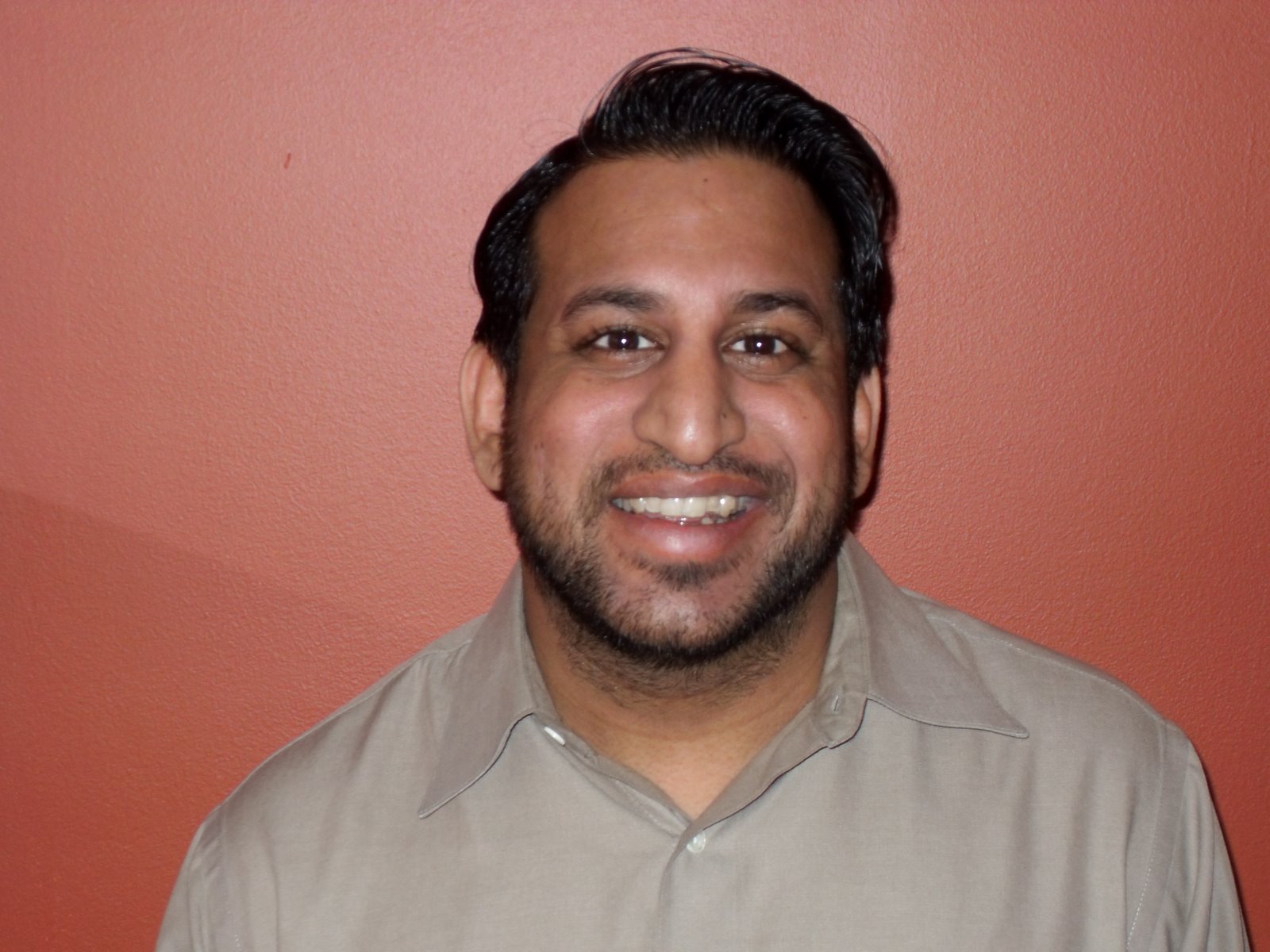
I'm a 77-year old Emersonian non-conformist, surprisingly blessed with probably undeserved good enough health, considering decades of indifference, neglect and abuse. The accompanying photograph is proof that I look somewhat younger than my age.

What do I contribute my good health to? I walk. I do it in part as my only exercise but mostly for pleasure. I have an insatiable curiosity and very little is missed when you walk as opposed to drive which I never learned to do.

I don't make a career of aging or not being wholly well. I accept the physical, social and sexual limitations forced on me and because of that acceptance, I handle them well. I seldom run to catch buses, rest when I'm tired, don't suffer bores and understand rejection. I detest condescension by those who patronize the aging.

I know that what seems right for me not be right for others. I thrive on black coffee, Marlboros, the odd bourbon and a lot of nostalgia although I agree with Simone Signoret who called her autobiography, "Nostalgia Isn't What It Used To Be."

I eat what I enjoy eating when I'm hungry. Retired and living alone, it's easy for me not to abide by popularly accepted lunch and dinner times. I weigh an approximate 160 pounds. I think that obesity should be taxed to pay for the inevitable diabetes and kidney and heart failure treatment that is as much a drain on the health care system as any other condition if not more.

I dutifully turn up for regularly scheduled doctor appointments and rush to see doctors when I suspect that something unusual is happening. I recently asked a doctor why I'm so fortunate in responding well to medication that I take for diagnosed conditions and am able to ward off others related to aging and the sexually active. He said that genes have a lot to do with it and as much,
it's the luck of the draw. My father died at 81 and my mother at 90.

I keep medication down to the minimum required for me to survive and function as I want to. I take very little preventive medication. I expect to outlive some if not all of the cursed afflictions of aging. I've never been in a gym, run a marathon, or bought anything at Whole Foods. I have no panacea to share for keeping in good working order. Someone had written, "The only justification for death is to live" on a Barcelona metro wall. I buy that argument. Do what has to be done to keep yourself in good or as I said in my case, good enough health but make sure that it includes large doses of curiosity, new learning experiences, simple pleasures and everyday delights. Mental health is as important as physical. Don't give in or give up. Keep interested.

Abrazos y Besos!

-- Leon Liberman
Chicago

How are you healthy?
Join in the conversation.
Tell us HERE. Send a pic to the same place.
And we'll blog it, right here.

Read past posts.
Learn more about the campaign.
Related Posts Plugin for WordPress, Blogger...

select key words

2007 National HIV Prevention Conference 2009 National LGBTI Health Summit 2011 LGBTI Health Summit 2012 Gay Men's Health Summit 2012 International AIDS Conference ACT Up AIDS AIDS Foundation of Chicago Africa BUTT Bisexual Bisexual Health Summit Brian Mustanski Center on Halsted Charles Stephens Chicago Chicago Black Gay Men's Caucus Chicago Task Force on LGBT Substance Use and Abuse Chris Bartlett Coaching with Jake Congress David Halperin David Munar Dr. James Holsinger Dr. Jesus Ramirez-Valles Dr. Rafael Diaz Dr. Ron Stall ENDA Ed Negron Eric Rofes FTM Feast of Fun Feel the love... Friday is for Faeries Gay Men's Health Summit 2010 HCV HIV HIV care HIV drugs HIV negative HIV positive HIV prevention HIV stigma HIV strategic plan HIV testing HIV/AIDS HPV Howard Brown Health Center IML IRMA Illinois International AIDS Conference Jim Pickett LGBT LGBT adoption LGBT culture LGBT health LGBT rights LGBT seniors LGBT youth LGBTI community LGBTI culture LGBTI health LGBTI rights LGBTI spirituality LGV Leon Liberman LifeLube LifeLube forum LifeLube poll LifeLube subscription Lorenzo Herrera y Lozano Lymphogranuloma Venereum MRSA MSM Monday Morning Perk-Up National AIDS Strategy National Gay Men's Health Summit One Fey's Tale Peter Pointers Pistol Pete PnP PrEP President Barack Obama Presidential Campaign Project CRYSP Radical Faerie STD Senator Barack Obama Sister Glo Sisters of Perpetual Indulgence Susan Kingston Swiss declaration Ted Kerr Test Positive Aware Network The "Work-In" The 2009 Gay Men's Health Agenda Tony Valenzuela Trans Gynecology Access Program Trans and Intersex Association Trevor Hoppe Who's That Queer Woof Wednesday You Tube abstinence only activism advocacy african-american aging issues anal cancer anal carcinoma anal health anal sex andrew's anus athlete ball scene bareback porn barebacking bathhouses bears big bold and beautiful bisexuality black gay men black msm blood ban blood donor body image bottom chubby chaser circumcision civil rights civil union communication community organizing condoms crystal meth dating dating and mating with alan irgang depression disclosure discrimination domestic violence don't ask don't tell douche downlow drag queen emotional health exercise female condom fitness gay culture gay identity gay latino gay male sex gay marriage gay men gay men of color gay men's health gay pride gay rights gay rugby gay sex gay youth gender harm reduction hate crime health care health care reform health insurance hepatitis C hiv vaccine homophobia homosexuality hottie hotties how are you healthy? human rights humor hunk immigration international mr. leather internet intimacy leather community leathersex lifelube survey love lube lubricant masturbation mental health microbicides middle music negotiated safety nutrition oral sex physical health pleasure podcast policy politics poppers porn post-exposure prophylaxis prevention prostate prostate cancer public health public sex venues queer identity racism recovery rectal microbicides relationships religion research safe sex semen sero-adaptation sero-sorting seroguessing sex sexual abuse sexual addiction sexual health sexual orientation smoking social marketing spirituality stigma stonewall riots substance abuse treatment substance use suicide super-bug superinfection syphilis testicle self-examination testicular cancer testing top trans group blog transgender transgender day of remembrance transgendered transmen transphobia transsexual universal health care unsafe sex vaccines video violence viral load writers yoga youtube