Showing posts with label communication. Show all posts

Thursday, March 1, 2012

We're Not Friends, So Dont Call Me 'Girl'!

via HuffPost Gay Voices, by Terrence Phearse

A random person comes up to you at an all-too-chic soirée and says "Girl, where did you get those shoes? They are fierce!"

You look over your shoulder and around the corner to make sure that you, a male, are the person being addressed. Hmm... no one is standing behind you, so you are indeed the one being addressed as "girl." But here you are tailored in menswear, with a full face of facial hair.

Obviously, this is the stranger's attempt at identifying you as a homosexual aloud.

I'm no stranger to that.

Some gays would happily respond with the tumultuous story of how those "fierce Prada shoes" were the last pair at the Barney's warehouse sale, and how the shoes were marked down to $399, and how they nearly died fighting to get them.

But words are things, and they are powerful. You have to be careful about the words you allow to be used around you, because they eventually get into you and become a part of you. Coming from a stranger, "girl" can send up a red flag as a pejorative for a gay man, so my mind quickly crafts a witty and somewhat rude response: "Oh, thank you, 'fierce' is how you pronounce my last name, and we're not friends, so don't call me 'girl.'"

The same rule applies for straight guys: "Don't 'bro' me if you don't know me!" Make sense?

"Hey, girl, hey!" "What's the tea, girl?" "Girl, hurry up and call me back!" These and similar expressions should be reserved for and used in good fun with close friends and family, as terms of endearment.

"That's a title exclusively for friends and people who randomly do you a favor," a friend exclaimed. I wholly agree with him.

Am I saying that women should not refer to their close gay friends as "girl"? No! Call your best gay friend "girl" if he is comfortable with it; you have a bond.

Just don't go blabbing out the word to everyone you see walking down 8th Avenue in Chelsea if you've had too much to drink. Capisce?


Read the rest

Friday, December 9, 2011

Gay Introductions

via HuffPost Gay Voices, by Domenick Scudera

'Tis the season of holiday celebrations, office parties and family gatherings. For gay people like me, these social events lead to a unique problem.

When I introduce the man I love to other people at a party, I cannot use the convenient title "husband" to explain who he is to me. Same-sex marriage is not recognized in our state.

There are many other options that I could use to introduce Brian to my long-lost Aunty Trudy from Duluth, but none of them is satisfactory. Here are a few:

Boyfriend: Brian and I have been together for 16 years. We are both... well, let's just say we are both on the other side of 45. We are too old and have been together too long to be "boyfriends." If we were going steady, or going to the prom, then maybe "boyfriends" would be more appropriate.

'Friend': I have lots of friends, and Brian is one of them. In fact, he is my best friend. But he is much more than that, so if I were to use this term to explain our relationship, it necessitates the use of quotation marks, italics or winks, as in:

"I'd like you to meet my 'friend' Brian [wink, wink]." You could use the word "roommate" in the same way: "my 'roommate' Brian [wink, wink]." This is all a little too cutesy for my taste.

Mate: This word would be fine if we were pirates. "Aye, matey, this here's me first mate Brian. Now swab the deck. Arrrgh."

Partner: This word makes us sound like attorneys in a law firm: "Scudera, Strachan and Associates, Homosexual Partners Since 1995." (Well, this could work if you consider our dogs "associates.")

Domestic Partner: This is even worse than "partner." It makes us sound like we are joint owners of a home cleaning service: "Scudera, Strachan and Associates, Domestic Gays Since 1995. We Make Your Floors Sparkle!"

Lover: This defines our relationship by a sex act. Although Michele Bachmann and Rick Santorum may want to define our "lifestyle" this way, I would rather not. Sex is just one aspect of many in our lives.

It seems random to choose one part of our relationship to represent who we are to each other. Brian cooks dinner sometimes, but I would not introduce him as "my chef Brian."

He also does the gardening in our yard, but he is not "my gardener Brian." I could just as easily call him my "confidant," my "driver," my "dog walker," or "the guy I watch TV with."

All these choices, including "lover," are too limiting.


Read the rest

Monday, September 26, 2011

Meet my Partner or Boyfriend?

by Sebastino Aviles

Language is one of the few things in life that we don’t really think about, I mean unless you’re a linguist or something like that, I consider it something that we take for granted.

That being said I’ve noticed that I catch myself changing up my language, depending on different circumstances, such as where I’m at, who I’m with, and what I’m doing.

 I’m sure everyone experiences this phenomenon all the time in their lives but do we really take the time to notice when and why we are doing it?

I believe that my language is reflected on who I am in terms of social constructions such as gender, race/ethnicity, sexuality, class, and age. If I use those social constructions I would describe myself as a young working class gay Latino man.

Language itself is a social construction and as a social construction it is subject to change depending on who is using it. Which brings me to my next point, as a gay man I often monitor my language depending on where I’m at, who I’m with, and who I’m talking to.

My prime example is how I change up my language is when talking to people about a significant other. Depending on who I’m talking to or where I’m at I would either call my significant other my partner or my boyfriend.

If I were to talk to a heterosexual person and I have my significant other with me I would normally introduce him as my partner, however if I’m talking to someone who belongs to the LGBTQ community or identifies as LGBTQ I would introduce him as my boyfriend.

On the other hand if I know the heterosexual person well enough like if they are a family member or a close friend I would introduce him as my boyfriend.

Once again my language would change depending on where I was at, for example if I were in a formal setting like at a reception for some event I would introduce my significant other as my partner, and if I were in an informal setting like a bar or something he would turn back into my boyfriend.

I think for me having two options as to what I call my significant other can be problematic at times because it seems that I am conforming to what other people would find acceptable and thus creating a dichotomy that doesn’t need to be there, but at the same time I feel that having two options is also important because it gives me the choice of choosing how I want to define my relationship and how I want my relationship to be perceived to myself as well as to society.

Thursday, August 4, 2011

VIDEO: From Where I Stand.... "Black Gay Men Are Beautiful"

In light of the latest round of daunting HIV numbers from the CDC regarding gay black men, we want to share this lovely video about strength and resilience from our friends in Atlanta. Being black and gay aint all a horror show - despite what the headlines say over and over and over. Sure, there are real challenges, but they are only part of the story.

Tuesday, July 26, 2011

How are Roberto and Naes healthy?[Our first "How are you healthy?" video]

Since the launch of the "How are you healthy"' series  in 2009, LifeLube has had contributions from 143 wonderful individuals who have provided insight on staying healthy in a world where making unhealthy choices is fashionable.

Keeping up with what's hot in 2011 (though, yes, we are a little late to the party), LifeLube has uploaded its FIRST video to the "How are you healthy" series. Watch how Roberto and Naes maintain a healthy relationship and lifestyle as a couple.

LifeLube would like to encourage YOU to reflect on your own healthy choices and make video to provide tips to others on LifeLube! Stay Fashionable! Be Healthy! Live Long! LifeLube!Send your video link or written post to lifelube@gmail.com.


--Roberto and Naes
Philadelphia


How are you healthy?
Please join the hundreds who have shared their tips.

Tell us HERE. Send a pic to the same place.
And we'll blog it, right here on LifeLube.
Gay men and all allies welcome to participate.

Read past posts.
Learn more about the campaign

Tuesday, May 17, 2011

Peter, my boyfriend is hanging out with his ex and I'm jealous. Help!

Peter Pointers is Chicago's most trusted source for gay, sexy, healthy info with an all-access pass to nationally known health and wellness experts. Go ahead, ask Peter for Pointers. Visit his page on the LifeLube site and read answers to commonly asked questions too.
Q: Dear Peter-- how do you deal with jealousy in a relationship? My boyfriend keeps hanging out with his ex, and that makes me green with rage! He says they aren't having sex, but I think it feels creepy. Any thoughts?

A: Thank you so much for your question. I imagine that the situation you are describing has been difficult for you and I applaud you for doing a bit of searching so that you can handle it in a way that promotes your own health and worth! 

It sounds like you’ve already started discussing this situation with your partner, and I commend you on taking steps to maintain your relationship – that takes courage.

There are a lot of opinions out there about jealousy in a relationship, both from the general public and from professionals. However, most everyone agrees that jealousy and lack of trust can be very damaging to a relationship.  Some people tend to err on the side of intuition and tell anyone who feels jealous that they must have reason. Some people see jealousy as a emotional problem with the one experiencing the emotion. I feel, however, that situations around jealousy or trust are a bit more complex than that. 


But first:

As you may have read, I am first and foremost a health educator.  I am not a licensed counselor, so I cannot prescribe a treatment for you to make this all better.  Also, relationship coaching is outside of my expertise.  Therefore, I have reached out to another professional in the field who DOES have that expertise.  I came across Brian Rzepczynski, LCSW, MSW, online because he had written a very fitting article titled “Squashing the Gay Relationship Killer Known as Jealousy.”  Brian has over ten years of practice under his belt of being a couples counselor, a sex therapist, and relationship coach and specializes in gay relationships and is local (practices right up the road in Aurora, IL).

Brian’s article on Jealousy is stuffed full of great information on sources of jealousy, positives and negatives of experiencing that emotion, and ways to overcome your jealous thoughts. The whole article is available here.Check it out.

Here are some highlights of his suggestions for overcoming jealous feelings:
  • Acknowledge your jealousy. Avoid minimizing or denying its existence. Recognize that you are not your jealousy--it is a part of you, one aspect of you that you can learn to manage. Admitting its power over you is the first step to conquering it.

  • Identify the cause of your jealousy. What feelings are underneath your jealousy? Work on developing more effective ways to cope with these specific emotions.

  • Keep a journal and write about your experience of jealousy and what it means to you. Ask yourself such questions as:

    • Do I trust my partner and believe what he says?

    • Am I projecting my own issues and feelings onto him and blaming him?

    • What is my jealousy really about?

    • What hurts? What's missing in my life?

    • What are the consequences of my jealousy? What do I get out of it that may be perpetuating it?

    • Are my jealous feelings rational or irrational? Are they based more on real threats or insecurities?
  • Refrain from obsessing and compulsively questioning your partner's behavior. Monitor your own thoughts and always check your motives and feelings against reality.

  • Make sure to have a life separate from your partner to reduce dependency and bring more fresh air into the relationship. Reach out to your friends, build your support system, and seek out social outlets that inspire a sense of fun and purpose.

  • As a couple: This is a great opportunity to open the channels of communication and see if any new boundaries or "relationship rules" need to be re-negotiated, created, or dropped.
The suggestions Brian makes help uncover whether the jealousy is from insecurity rather than a protective intuition. That is why I like his point about asking yourself if the feelings are rational or irrational. If you come to the conclusion that they are rational, then work on communication with your partner.  Concentrate on “I statements” so that you aren’t accusing your partner of something he may have not done.  Instead talk about how you feel and your perceptions. Give your partner an opportunity to be honest without interruption.

On the other hand, feel empowered to lay down your expectations of the relationship (not your demands – there is a subtle difference).  If the two of you aren’t able to find a common ground where you are both happy and fulfilled, it may be time to consider the option of ending that relationship.

I wish you the best of luck.

Be well,

Peter Pointers

peterpointers@lifelube.org


Monday, May 16, 2011

Gay men and intimacy.... yes, no, maybe so?

Does ‘sexual minority stress’ cause gay men to fear emotional commitment and pursue open relationships?
 via the Good Men Project, by Joshua Matacotta

I worked with a gay male therapy client—let’s call him Jim—who came in for individual therapy because his partner refused couples counseling. He was distressed because he felt “strong-armed” into an open relationship, leaving him with a sense of insecurity and anxiety. I soon realized that one thing this couple didn’t try was having an open, heart-felt communication about their struggles with intimacy and trust.

There have been a number of studies suggesting that many gay male couples who negotiate open relationships report satisfaction and fulfillment. But for some, does the decision to open the relationship reflect mistrust and a fear of intimacy and emotional commitment?

While gay men desire and create meaningful, loving relationships, their traumatic experiences growing up in a heteronormative culture—like homophobia and rejection—lead some to refuse conventions in heterosexual relationships (monogamy, marriage, children, etc.).

Like straight men, gay men are socialized away from intimacy. Expressing a need for intimacy and closeness is often viewed as weak.  Sometimes, entering into a relationship with a man comes with worries about their promiscuity—will they cheat?

Gay men not only internalize negative cultural messages about being men—and about what it means to be gay. The fear about vulnerability might partly be due to shaming experiences during early development, such as bullying and harassment for not conforming to gendered expectations.

Read the rest.


Friday, January 14, 2011

Sexual Self-Expression

via GAYTWOGETHER

Excerpt:
Not all sex happens within a relationship. While many men equate sex with love and intimacy, many other men do not.

Men who make a distinction between sex and romantic love are looking for something else. For some it is simple pleasure or erotic relief. For others there is another quality to this part of their erotic selves – a sense of connection to an erotic tribe of gay men.
Read the rest.

Tuesday, January 11, 2011

Coping Stategies to Deal with Insecurity in Your Relationship

via GAYTWOGETHER

Here's one strategy::

Practice thought-stoppage techniques. Get skilled at tracking your thoughts and identifying which ones are helpful vs. hurtful for you. Negative anxiety-provoking thoughts can be stopped dead in their tracks by snapping your wrist with a rubber band and immediately redirecting your thoughts to more positive self-talk. Sounds weird, but it can help break you out of the trance that anxiety can create and gives you a split second to change the course of your thoughts.


Read the rest.

Young gay men talk to their friends about sexual health, but they don’t always get the best advice

via Aidsmap, by Roger Pebody

“If you really know the person then you don’t really have to worry about [STDs]… Cause if you really know the person, you know that they don’t have anything cause you know them for a long time." 

Young gay men in California frequently discuss sexual risk with their best friends, new research shows. While these conversations have the potential to encourage and influence safer sex behaviour, many of the conversations are based on faulty assumptions, such as that ‘knowing’ your partner well is enough to protect against HIV infection. Moreover, the advice given by female best friends is often different from that offered by gay male best friends.

Reporting their findings in the journal Health Education Research, Matt Mutchler and Bryce McDavitt recommend that HIV prevention interventions should help young people have more constructive conversations with friends about sexual health and sexual risk taking.

Read the rest.

Monday, January 10, 2011

Seven Ways to Improve Your Relationship

via GAYTWOGETHER

Here's one of those ways:

LEARNING INSTEAD OF CONTROLLING


When conflict occurs, you always have two choices regarding how to handle the conflict: you can open to learning about yourself and your partner and discover the deeper issues of the conflict, or you can try to win, or at least not lose, through some form of controlling behavior. We've all learning many overt and subtle ways of trying to control others into behaving the way we want: anger, blame, judgment, niceness, compliance, caretaking, resistance, withdrawal of love, explaining, teaching, defending, lying, denying, and so on. All the ways we try to control create even more conflict. Remembering to learn instead of control is a vital part of improving your relationship.

For example, most people have two major fears that become activated in relationships: the fear of abandonment - of losing the other - and the fear of engulfment - of losing oneself. When these fears get activated, most people immediately protect themselves against these fears with their controlling behavior. But if you chose to learn about your fears instead of attempt to control your partner, your fear would eventually heal. This is how we grow emotionally and spiritually - by learning instead of controlling.

Check out the rest.

Saturday, July 17, 2010

Study: Gay couples need prevention too

via Bay Area Reporter, by Matthew S. Bajko 

HIV prevention needs to take a more holistic approach 
that goes beyond messages about safe sex.


Excerpt:
Gay couples' top reasons for establishing "sexual agreements," defined by the researchers as rules about whether sex with outside partners is allowed, had more to do with positively impacting their relationships than as an HIV prevention strategy, the study found. The main reasons couples established sexual agreements ranged from building trust in the relationship and promoting honesty between partners to protecting the relationship.

 "We found that gay couples are interested in building healthy, satisfying, and loving relationships," stated Hoff, who is attending the International AIDS Conference kicking off this weekend in Vienna, Austria. "These desires, when nurtured, can lead to strong relationships. Yet the reality is that a broken sexual agreement, or one that isn't clear to either partner, can make both partners vulnerable to HIV."
Read the rest. 

And for another view, from Box Turtle Bulletin...
The bogus “couples study” is back… and this time doing more harm than ever


Thursday, April 29, 2010

The skinny on long-term non-monogamous male couples

via San Francisco Bay Times, by Tom Moon

Blake Spears and Lanz Lowen have been together for over 34 years. They told me that they still have great sex, contradicting the common belief that sexual interest inevitably wanes in a long-term relationship. How do they do it? “One reason,” Lanz said, “is that we’ve been in an open relationship from the very beginning. If we hadn’t been open, we wouldn’t have been able to grow individually or as a couple.” But, they write, this was a journey they took “without a roadmap…Information about how couples navigate this terrain is surprisingly lacking. We were curious about the experience of others and assumed many long-term couples might offer valuable perspectives and hard-earned lessons.” So, a few years back, they decided to use their combined training and experience in research and psychology to do an independent, in-depth study of other long-term open gay male relationships.

They hoped to provide the community with an accurate picture of what non-monogamy actually looks like in the lives of gay men. Their study has now been completed. It’s an intimate look into the lives of 86 couples who have each been together for a minimum of 8 years, and it can be accessed at www.thecouplesstudy.com.

This study is a fascinating read because the authors largely avoid speculation and let the participants speak for themselves. One finding that fascinated me was the many varieties of “openness” that the couples practiced. Some only played together, some only separately, and some did both. Some only allowed anonymous outside encounters, while others allowed “friends with benefits” and still others built polyamorous families with multiple partners. Some (about ten percent) had no rules at all governing outside sex, while at the other end of the spectrum others created detailed ground rules and contracts. Every imaginable kind of “openness” seemed to work for someone.

Read the rest.

Join LifeLube for the "Love in the Age Grindr" forum on May 19 that explores some of these issues.


Tuesday, April 27, 2010

Dating and Mating with Alan Irgang:Opening up a relationship the right way

Ask Alan about love, romance, and relationships (and anything) else here! *All private information is kept confidential


Dear Alan,

My partner and I are in our 30's, have been together for three years and are now considering opening up our relationship. We have a good sex life and love each other a lot, but both of us crave physical contact with other men. What advice do you have to help us do this in a way that sustains our long-term commitment to one another?

Jorge


Dear Jorge,

First, let me say that having discussions with your partner about an open relationship before either of you act upon your desires to be sexual with other men is the first step in creating a plan that will minimize problems down the road that could lead to the destruction of your relationship. Too many couples, straight and gay, find themselves in an open relationship before they have both considered all the implications and risks and before they have agreed to mutually acceptable terms of the arrangement. So I commend you both for exploring this together openly before moving ahead.

There are many different ways that couples create non-monogamous relationships. This can range from a "Don't Ask, Don't Tell" policy to complete openness, with many variations in between. In my experience, couples that negotiate the terms of the arrangement openly and honestly before having sex with others outside of their primary relationship have the best success  in protecting their relationships while meeting their desires to have sexual contact with others.

The first consideration needs to be a rigorously honest self-reflection about whether or not each of you truly want to have an open relationship. Very often, one partner in the relationship agrees to an open arrangement out of fear of losing the other if he doesn't go along with it, which will likely lead to serious conflicts later on.

There are some very important relationship qualities that must exist for an open relationship to be fulfilling to both partners, and to avoid jeopardizing the viability of the primary relationship. These include honesty, trust, respect, and safety. If these qualities exist, the couple can then enter into a negotiation about what the mutually acceptable terms of the open arrangement are. Issues to consider are disclosure, acceptable sexual partners, sexual practices, safer sex, location of sexual encounters, boundaries around sexual and emotional relations with others, and whether or not both need to be present when engaging in sex with others. Most important to include in these negotiations is what the consequences will be if the agreed upon rules are broken.

I also encourage you to consider utilizing the support of a therapist to help facilitate the negotiations. It is important to choose a therapist that has a sex-positive attitude about non-monogamy but also a realistic understanding of the risks of an open relationship and the capacity to engage you both in open conversations about them.

Open relationships can be very gratifying to both partners when created in a way that preserves the dignity of each partner and allows each to express their own integrity. On the other hand, opening up a relationship that doesn't have a solid foundation can be the beginning of a painful ending to a partnership. I wish you both the best in working through this very delicate decision and negotiation process.


Alan Irgang, LCSW is a psychotherapist and “dating coach” in private practice in Chicago. He is also on the faculty of the Loyola University School of Social Work where he teaches graduate level courses in Human Sexuality. Alan has been in private practice since 1998 and has been facilitating groups for singles about dating and relationships for six years. Check out his website www.alanirgang.com for more information about his practice and his upcoming seminars for singles. Questions may be submitted to Alan at lifelube@gmail.com; all private information will be kept confidential.


* Join LifeLube in Chicago for "Love in the Age of Grindr" - a forum for gay and bi men to discuss all types of relationships plus being single in a wired, real-time age. May 19, at REHAB (front bar of Circuit). Learn more.

Tuesday, February 9, 2010

Cephalic Sex - an explanation on the purpose of sex

[cephallus, btw = brain]

The role of sex is about pleasure.  
Let's pleasure ourselves!

by Ranjan

The inability to perceive and behave outside the walls of our paradigm is beautifully illustrated by a Mullah Nasruddin story.  He would dearly like to own a donkey but they are expensive and he is really, really poor.  So for years he saves and saves, keeping his eye on the price of donkeys.  Finally he has enough money.  Elated, he goes to market.  Successfully concluding a deal, when he is leaving he is given a list of the foods for the donkey.  He hadn’t budgeted for that!  Now what to do? 

All the way home he ponders and worries, and finally hits upon a strategy.  He is going to reduce the recommended quantities a little bit everyday.  Eventually the donkey just keels over and dies.  He turns to his wife regretfully: “Aiyo,” he says, “if only the donkey had lived a little longer, I could have got him trained to living on no food at all.”    

When we work to an inappropriate blueprint, frequently the outcome is a sad end.  Sad for the Mullah donkey, even more sad for our love lives.  For nowhere are we more locked into our (obsolete) paradigm than when it comes to sexuality.

Paradigm 1
The only respectable sex is reproductive.  Get married! (Subtext: LGBT sex is unnatural.)  Conventional biology is contaminated by religious dogma.  Textbooks even label the human sexual system the 'reproductive' system.  Neuroscience reveals this is a secular superstition.  Modern research proves reproduction as the purpose of sex is not supported by empirical fact.  That is a paradigm shift.  We've got the blueprint wrong. 

Edward Wilson, in On Human Nature:
Its complexity and ambiguity are due to the fact that sex is not primarily for reproduction. Evolution has devised much more efficient ways for creatures to multiply . . . Sex by itself lends no straightforward Darwinian advantage.
Paradigm 2
The role of sex is about pleasure.  Let's pleasure ourselves! (Subtext: with as many variations as possible in people, positions and places.)  Modern biological research reveals the pleasure principle as the purpose of sex is not supported by empirical fact.  More superstition. 

Edward Wilson, again:
Nor is the primary function of sex the giving and receiving of pleasure . . . Most of the pleasures of human sex constitute primary re-inforcers to facilitate bonding.
Paradigm 3
It seems sex has an altogether different purpose: neural stability.  Go figure!  In A General Theory of Love Thomas Lewis et al write that in a loving relationship your subdominant neural pathways are deleted by broadcasts from your partner's brain and are replaced by your partner's dominant neural pathways.  You do the same to your partner's brain.  This changes both personalities.   It is a change in the physical structure of your brain, allowing the two brains to function in tandem.  It makes for greater neural stability.  Unlike reproduction which happens only occasionally, this brain-change is 24/7.  Empirical research reveals this is the purpose of sex, collapsing the argument that LGB sex is unnatural.

We move from phallic to cephalic sex; the future, today

This weekend at the Center on Halsted:
CEPHALIC SEX WORKSHOP: VALENTINE'S DAY 2010. 
Ranjan is one of the facilitators.


Monday, December 14, 2009

How does shame play out in queer lives?

Sex and shame: let's talk
via extra.ca, by Andrea Zanin 


Excerpt:

One of the things that happens when people are deep in the undigested shame cycle, they often go to either repression, rebellion or both. They internalize and repress their sexuality and wall it up, and will sometimes try to repress other people's sexuality as well.


Tuesday, December 8, 2009

New LifeLube Column: Dating and Mating with Alan Irgang!!!


Ask Alan about love, romance, and relationships (and anything) else here!
*All private information is kept confidential

This is my inaugural column for LifeLube. As I sit here staring at a blank screen wondering what I can say to you, reader, about the vast subject of love, romance, and relationships, I am feeling a bit overwhelmed. There is so much to tell you. As a psychotherapist for 15 years, I have devoted much of my practice to the mystery of love. How to find it, sustain it, give it, receive it, savor it, lose it, and on and on. I have learned a lot over the years from my clients, countless books, articles, seminars, and from my own personal struggles with it. Yet I always return to the question, "Why is love so difficult?" The resounding response that repeatedly occurs to me is simply, "LIFE is difficult. And LIFE is LOVE. Therefore, LOVE is difficult." (Ah yes of course, the Transitive Property of Mathematics!)


OK, so let's start with the premise that LOVE is difficult. Now where do we go? It's deplorable that in our culture, our education curriculum includes so little to prepare us for Life's most important experience. Yet we sit through endless class periods of subjects that might be cool to learn about, but offer no real guidance about the things that really matter. "Oh that, dear students, you'll have to learn on your own. We don't teach that here." As an adult, I complained about this, quite vocally out loud for a long time until I decided to do something about it. So years ago, I created a coaching class of sorts for gay men about navigating the challenges of dating, romance, and love. It was wildly successful and well received. Knowing I was on the right track, I began offering it to people of all genders and sexual orientations. Over time, I came to realize that regardless of the diversity inherent among all of us, we are all looking for the same thing: To love and be loved. Together, through the sharing of experience, and learning new ways of thinking about and creating love and romance, we can unlock the mystery of the greatest challenge and most rewarding gift of our lifetimes.

So, I offer this forum to you, the seeker of Love. This is your place to ask a question, seek advice, or simply to see if you're on the right track. Know that you are not alone and that your curiosities will be shared by countless others who can relate and identify. Here we can create that class that we should have been offered in school and learn from each other. I eagerly look forward to hearing from you...


Alan Irgang, LCSW is a psychotherapist and “dating coach” in private practice in Chicago. He is also on the faculty of the Loyola University School of Social Work where he teaches graduate level courses in Human Sexuality. Alan has been in private practice since 1998 and has been facilitating groups for singles about dating and relationships for six years. Check out his website www.alanirgang.com for more information about his practice and his upcoming seminars for singles. Questions may be submitted to Alan at lifelube@gmail.com; all private information will be kept confidential.


Thursday, November 5, 2009

The "Work-In" - The "I" Word


by Ed Negron, a former drug user, turned gangbanger, turned drug dealer, turned own best customer, turned addict, turned recovering addict (still there), turned activist, turned business manager, turned student, turned Substance Abuse Counselor, turned better and happier person, turned someone who can love and be loved (Love you Patrick), turned blogger. Check out Ed's own blog here.

Featured (almost) Every Thursday on LifeLube --- check out all of Ed's "Work-In's" here.


Intimacy was a topic of the night with of a group for men I facilitate. I was surprised at what I heard and saw that night. There was a big charge in the room. The conversation got heated up, no pun intended, as each man gave their interpretation of intimacy.  One man said it doesn’t exist in the gay community because all men are dogs and just want to fuck like they’re in a porn video. Another man said after being married for 4 years the intimacy is gone. One thing that all the interpretations had in common was they were all about sex.
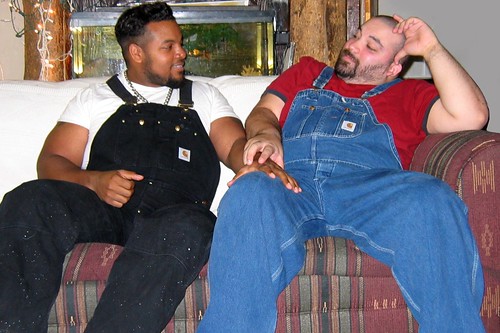


Today, the word intimacy has taken on sexual connotations. But it is much more than that. It includes all the different aspects of our lives - the physical, emotional, mental, sexual, but also the social and spiritual aspects as well. Intimacy means sharing of one’s total self, firm commitment with another person, mutually supportive, understanding and accepting of each other. Yes it does take some work. It involves trusting someone else, being vulnerable, selflessness, and honesty just to name a few things. This is why it is easier for most people to be physically or sexually intimate with someone than to be intimate in any of the other areas. So let’s move away from the physical and sexual for a while.

 I’m not going to get into why it is difficult for gay and bi men to be intimate because that’s all we hear and see. You can Google it and find all the negative stuff out there. I want to continue to keep it on the positive side. Because being gay or bi does not always lead to a life of gloom and doom. My blog is about reclaiming who we are and dispelling what society would have us believe about ourselves.

Let’s talk about social intimacy. Some of your close friends will reach this level. The people you spend time with, go to the movies, shopping or share common interests form social intimacy. We all need this from time to time, especially if you are in a relationship. It helps you keep your own unique identity. Social intimacy in your relationship also means to find enough in common with the other person so that you will enjoy your time together.

Reaching mental or intellectual intimacy is the first true test of a relationship and where you first begin to trust your partner with your deeper self. This is where you share your hopes, fears, opinions and beliefs without fear of being judged or chastised. This is where trust, vulnerability and honesty are put the test.  Your closest friendships will also achieve this level of intimacy. Intellectual intimacy will tell you more about the real person in front of you and give you a solid insight to the person behind the public image they portray.


Now we get into one of the most critical ingredients to a long-term healthy relationship, emotional intimacy. Lots of couples never make it to emotional intimacy because it’s here where we must accept the person for whom he or she is without reservation, flaws, irrationality and all. At this level, you feel comfortable sharing yourself without fear of repercussions. You both feel comfortable expressing and sharing their anger, happiness, secrets, sensual side and sexual feelings with each other. You know you are loved and love your partner no matter how either of you feel or act. It's about trust and letting another see us at our worst and our best. Who do you first call or go to when something exciting or bad happens to you? For me the first person I call is my partner Patrick. This may steer you into the direction of spiritual intimacy.

Spiritual intimacy is where you find your soul mate. This is where we look beyond the physical and mental being of a person. It means loving the other person as you love yourself, becoming one spirit. You will now have an unconditional love for your partner. C.S. Lewis, author of The Chronicles of Narnia, describes it as a deep bond involving the experience of another person which he calls a “kindred soul.” He suggests that kindred souls are people that see the same truth or better yet, care about the same truth. C.S. Lewis, The Four Loves. We can also experience this with a friend who follows our same journey. Finally we can get back to physical and sexual intimacy.

First let’s talk about physical intimacy. Physical intimacy in the relationship is also a very important component of your happiness in that relationship. Many people think that physical intimacy and sexual intimacy are one in the same, but they are not. Physical intimacy can occur when two people hold hands or just setting on the couch together watching a good movie. Because intimacy is when two people become one with each physical intimacy can also happen when you gaze into each others eyes from across a crowd room. At that moment when the world doesn’t seem to matter it’s just about you and the other person.


Now to the most popular form of intimacies - sexual intimacy. Sexual intimacy and fulfillment is something we all long for, yes having sex like you are in a porn video is fun but it can still leave you feeling unfilled. Sexual intimacy involves the full range of sensual awareness including touch, kiss, looks, expressions of endearment, communication, and of course, sex and orgasm. To get here you look inward and explore your attitudes and habits related to sexual intimacy - and let go of old constrictions about sex. Become aware of each other feelings around sex including fear, wants and needs. Communication and awareness are the keys to bringing pleasure to a relationship.

We don’t have to be afraid of the “I” word any more. We are all capable of being intimate. Let yourself experience it and sharing it. One way to get over the fear is to talk about it.

Next week, Wednesday, Nov. 11th, the wonderful folks at LifeLube.org, Project CRYSP, and the Feast of Fun are hosting a special gay men’s health forum (and live podcast) at the Center on Halsted.

We're Taking Pleasure Back

When did gay sex automatically equate to penetration?
Why do our conversations about gay men's sexuality consistently focus on disease and risk?
Join us to discuss ways gay men can explore our desires and be intimate, sexual, sensual, lusty and loving with each other - without any worries of risk and/or disease. Let's think creatively and expansively - and learn about some research on pleasure as well.

Featured panelists include Gary Harper from DePaul University, activist and spoken word artist Keith Green (also Project PrEP director) and Samuel R. Galloway, a sex educator from Tulip Toy Gallery (also from the University of Chicago.)

As always, Fausto Fernos and Marc Felion of the Feast of Fun will host the proceedings, and will be recording the event for a podcast.

Doors open for nibbles at 6:00p, program begins promptly at 7p.

The event is FREE, but RSVP's are required. Please RSVP today.

(Usual disclaimer applies, with emphasis: The suggestions on this blog are just that “SUGGESTIONS.” My words cannot heal your pain and or addictions. Nor can I change your life. Only you can.)

Visit my blog at thework-in.blogspot.com or to read daily motivations visit http://backtothebasicsplease.com/wordpress

If you are not sure how to begin your work-in or need some guidance please feel free to post a comment or email me directly at thework-in@hotmail.com, I will response as soon as I can.

“Every time you don't follow your inner guidance, you feel a loss of energy, loss of power, a sense of spiritual deadness." -- Shakti Gawain


Wednesday, October 14, 2009

The Brotherhood


I wanted him to hold me more than I wanted him to want me. But then I wanted him not so much to desire me, but be concerned about me, be interested in me, and then, maybe finally, find me desirable.


by Charles Stephens for LifeLube

[He is an Atlanta-based gay men’s health advocate and writer. Read more of his posts here.]

When I was younger, and more open, and more hopeful, I figured it would all be like a big fraternity, the gay thing. I imagined there would be an intimacy, a tenderness with other men. Bonding. A kind of fraternal love, not so much romantic love, those desires would come later. I thought everything would be intense. Moving. There would be vulnerability I thought, and secrets shared, and pains revealed, and crying, and holding each other, and loving each other so much, not necessarily even romantically or sexually, but loving each other so much that it hurt. And I’ve experienced some of those things, in pieces, not nearly as frequently as I hoped, but at times. As time has gone on, and experiences have been collected and suffered through and celebrated, I’ve found myself less deliberate about creating the kinds of relationships I initially desired.

Masculinity then, in my mind, was something we could have relief from, in being gay. There would be spaces to tend to each other and that we would all co-exist in an expanded and perfected notion of manhood.  I have not experienced this much, probably because I stopped looking. Not because I gave up, but because I forget how much I wanted it.

When I was 15 or 16, in those years, in Atlanta, I was always searching, for someone for something, to guide me. I still seek guidance even as I fight it. Being gay, back then, was still an experience. Everything was new. Everything was exciting, and kind of scary, but exciting nonetheless. But you did it anyway. Despite the fear you did it. There had been no pains yet, and no rejections, and feelings of inadequacy, and thus I could move without pause or hesitation.

There is a courage one can still have even in innocence, a fearlessness, that we read later as ignorance or stupidity, we remember ourselves as reckless. However, I don’t know if I have ever been again as courageous as I was at that age. Wiser yes. Courageous, I’m not so sure. And I often look back at that time, even now, especially now, excavating my memory not just for lessons to remember, but the courage to continue.

On one of these adventures, an experience I could never have now, time has shattered my innocence in a way, I came across an older man at the local public library. There were older men, of course there were older men. That was what working-class 16ish year old black gay boys did then. And I was neither coerced nor forced nor taken advantage of. And they weren’t predators, not all of them.

Read more »

Thursday, September 10, 2009

Cry Me a River

source

Crying is known to be a symptom of physical pain or stress but it can improve personal relationships, says a new study.

New analysis by Tel Aviv University (TAU) zoologist and evolutionary biologist Oren Hasson shows that while tears signal distress, they also function as an evolution-based mechanism to bring people closer.

“Crying is a highly evolved behaviour,” explains Hasson.

“Tears give clues and reliable information about submission, needs and social attachments between one another. My research is trying to answer what the evolutionary reasons are for having emotional tears.

“My analysis suggests that by blurring vision, tears lower defences and reliably function as signals of submission, a cry for help, and even in a mutual display of attachment and as a group display of cohesion,” he reports.

Hasson investigated the use of tears in various emotional and social circumstances. Tears are used to elicit mercy from an antagonistic enemy, he claims.

They are also useful in eliciting the sympathy and perhaps more importantly the strategic assistance of people who were not part of the enemy group, according to a TAU release.

“This is strictly human,” reasons Hasson.

“Emotional tears also signal appeasement, a need for attachment in times of grief, and a validation of emotions among family, friends and members of a group,” he says.

“Of course,” Hasson adds, “the efficacy of this evolutionary behaviour always depends on who you’re with when you cry those buckets of tears, and it probably won’t be effective in places, like at work, when emotions should be hidden.”

The study was published recently in Evolutionary Psychology.
Related Posts Plugin for WordPress, Blogger...

select key words

2007 National HIV Prevention Conference 2009 National LGBTI Health Summit 2011 LGBTI Health Summit 2012 Gay Men's Health Summit 2012 International AIDS Conference ACT Up AIDS AIDS Foundation of Chicago Africa BUTT Bisexual Bisexual Health Summit Brian Mustanski Center on Halsted Charles Stephens Chicago Chicago Black Gay Men's Caucus Chicago Task Force on LGBT Substance Use and Abuse Chris Bartlett Coaching with Jake Congress David Halperin David Munar Dr. James Holsinger Dr. Jesus Ramirez-Valles Dr. Rafael Diaz Dr. Ron Stall ENDA Ed Negron Eric Rofes FTM Feast of Fun Feel the love... Friday is for Faeries Gay Men's Health Summit 2010 HCV HIV HIV care HIV drugs HIV negative HIV positive HIV prevention HIV stigma HIV strategic plan HIV testing HIV/AIDS HPV Howard Brown Health Center IML IRMA Illinois International AIDS Conference Jim Pickett LGBT LGBT adoption LGBT culture LGBT health LGBT rights LGBT seniors LGBT youth LGBTI community LGBTI culture LGBTI health LGBTI rights LGBTI spirituality LGV Leon Liberman LifeLube LifeLube forum LifeLube poll LifeLube subscription Lorenzo Herrera y Lozano Lymphogranuloma Venereum MRSA MSM Monday Morning Perk-Up National AIDS Strategy National Gay Men's Health Summit One Fey's Tale Peter Pointers Pistol Pete PnP PrEP President Barack Obama Presidential Campaign Project CRYSP Radical Faerie STD Senator Barack Obama Sister Glo Sisters of Perpetual Indulgence Susan Kingston Swiss declaration Ted Kerr Test Positive Aware Network The "Work-In" The 2009 Gay Men's Health Agenda Tony Valenzuela Trans Gynecology Access Program Trans and Intersex Association Trevor Hoppe Who's That Queer Woof Wednesday You Tube abstinence only activism advocacy african-american aging issues anal cancer anal carcinoma anal health anal sex andrew's anus athlete ball scene bareback porn barebacking bathhouses bears big bold and beautiful bisexuality black gay men black msm blood ban blood donor body image bottom chubby chaser circumcision civil rights civil union communication community organizing condoms crystal meth dating dating and mating with alan irgang depression disclosure discrimination domestic violence don't ask don't tell douche downlow drag queen emotional health exercise female condom fitness gay culture gay identity gay latino gay male sex gay marriage gay men gay men of color gay men's health gay pride gay rights gay rugby gay sex gay youth gender harm reduction hate crime health care health care reform health insurance hepatitis C hiv vaccine homophobia homosexuality hottie hotties how are you healthy? human rights humor hunk immigration international mr. leather internet intimacy leather community leathersex lifelube survey love lube lubricant masturbation mental health microbicides middle music negotiated safety nutrition oral sex physical health pleasure podcast policy politics poppers porn post-exposure prophylaxis prevention prostate prostate cancer public health public sex venues queer identity racism recovery rectal microbicides relationships religion research safe sex semen sero-adaptation sero-sorting seroguessing sex sexual abuse sexual addiction sexual health sexual orientation smoking social marketing spirituality stigma stonewall riots substance abuse treatment substance use suicide super-bug superinfection syphilis testicle self-examination testicular cancer testing top trans group blog transgender transgender day of remembrance transgendered transmen transphobia transsexual universal health care unsafe sex vaccines video violence viral load writers yoga youtube