Showing posts with label Chris Bartlett. Show all posts

Monday, December 31, 2012

The BEST of Lifelube - "Whole Milk - Never Blend In" From Friday, November 14, 2008


Whole Milk - Never Blend In


Chris Bartlett reviews Milk
[opens nationwide November 26]

Read more from Chris on LifeLube here


I went to see a pre-screening of Milk, the new feature film about Harvey Milk's life, with Sean Penn in the lead role. The movie was fantastic. I was in a theater full of Philadelphian queer activists and allies who represented all generations of our movement. There was the lesbian who helped found Giovanni's Room (our still running fabulous gay bookstore), many of our key political figures, AIDS activists who have been fighting for decades, fired-up youth, people of color, transmen and transwomen. That set the perfect scene for the movie itself-- a celebration of the power of gay communities at their best.

I started crying within the first two minutes of the film. The opening scenes (I'm not giving anything away here) show 1950s era bar raids-- police pushing hapless gay men into paddy wagons; the look of fear and resignation among the gays; and a wonderful moment when one angry queen throws a drink at the camera (go Sister!). Director Gus Van Sant from the very opening paints a picture of the tremendous gains we have made in queer organizing since that time, while also ironically noting that we are fighting many of the same battles of the 1970s. Those who cannot remember the past are condemned to repeat it, and the movie is a remarkable reminder of what has often been forgotten by our gay movement.

It seems almost odd that this film could come out at this time. The ongoing battle against Proposition 8 so mirrors one of the major dramas of the film: Milk's spearheading the efforts against the infamous Briggs Initiative (Proposition 6), which sought to ban gay teachers and their allies. Watching all of the protest, marches, and advocacy was a very spooky deja vu for me. Perhaps the most telling example of this deja vu is a marvelous moment when Supervisor Tom Ammiano, playing himself (as a teacher who confronts Briggs), shouts "you're trying to take away my job!" But it is spooky to see that Ammiano's hair is gray, and that he has not been made up to look 20something. He is the adult version of himself transported by time machine back to the Briggs Demonstration. The more things change, the more they stay the same. It's bittersweet, almost, to see that the organizing against the Briggs Initiative succeeds-- it makes a critical viewer wonder what we are doing wrong nowadays.

Delightful moments include the wonderful portrayal of Cleve Jones (of AIDS Quilt fame) by Emile Hirsch. Hirsch brings out the sweet combination of Cleve's youthful bravado, ageism, and love for elders. When Milk first attempts to get Cleve to join in the gay liberation battle, Jones calls him "Old Man" and laughs in his face. But by the end, you can see the beautiful mentorship between Milk and Jones... and you can see the ways that Milk's lessons would live on in Jones' future organizing. It's all there.

Penn as Harvey Milk is really incredible. Milk protégée Anne Kronenberg reported many a double-take during the filming-- they just look so much alike! And Penn also brings out the wonderful paradoxes in Milk's behavior-- the flirtatiousness, the naiveté, the seriousness, the genius, and the bullying. And Penn plays Milk as I always had imagined him-- a mensch on a mission. There is such a sense of self-awareness and destiny. It's also possible from viewing Penn's performance to see what it means to be a leader-- the commitment that is required, the cost to relationships and family, and the charisma and charm that is required to generate a Tribe.

And to me the main story of the movie is the power of Tribe-building. Harvey does it with genius-- including all of the folks who, until the 1970s, had largely been outside political power networks. In the film, we see Milk's deft ability to build a coalition of progressive people-- gays, people of color, elders, union rank-and-file, youth, and others. Though he was a gay leader, he was far greater than that. As he says, he is there to lead "all the people".

The portrayal of the dramatic events leading up to Milk and Moscone's assassination is compelling and direct. I had hoped for a complex portrayal of Dan White (the assassin) by Josh Brolin, and I think he did a not bad job. We get a little picture into his life: the pressures, the conservative background, the police influence. In the end, the senseless assassinations seem unavoidable.

I've seem the documentary "Times of Harvey Milk" numerous times in my life, and there were moments when I felt transported back to that telling of the story. Both films are beautiful and different-- I recommend seeing the documentary before the movie to give you some background that isn't available in the feature. Notably, Van Sant omits the part of the story that occurs after Milk's assassination-- the trial and the dramatic White Night Riot. I was glad that my friend Micah had told me this ahead of time-- so I wasn't disappointed to miss the drama of police cars burning in the night. But I think Van Sant (and screenwriter Dustin Lance Black) were smart to omit the post-Milk trial and tribulation-- because really this story is focused on Harvey-- and when he is murdered, a new story begins.

Friday, February 5, 2010

Tracking our History - The 2009 LGBTI Health Summit (Chicago) Recap


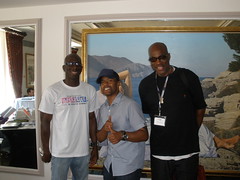
via Chris Bartlett (pictured top picture, left side)

Whether you attended the fabulous August, 2009 LGBTI Summit in Chicago or not, you ought to review the summary document prepared by Summit organizers.  The document, available here, presents the key outcomes from the 2009 Chicago meeting of this biennial summit of cutting-edge thinking in LGBTI Health.

Our history is important.  Over more than ten years of offering health summits targeted at lesbians, gay men, bisexuals and trans folks, our Summary Documents have been key maps of where we have been and where we plan to go next.

The document includes:

1. A detailed summary of the Bisexual Health Summit, held in conjunction with the broader summit.

2. A report back from the M-Town discussion of men's needs.

3. Suggestions for how to get involved moving forward.

If you participated in the LGBTI Summit and wish to add information to the summary document,  please contact me at bartlett.cd@gmail.com . It's important that the document represent as much as possible the outcomes of the Summit.

Check out pictures from the Summit here, from the opening party, and from the Bisexual Health Summit.

For those of you who are history geeks like I am,  you might want to check out Michael Scarce's archives of past Summits.

Monday, December 14, 2009

Lost to AIDS, but Still Friended

So much was lost when those lives were ripped out of the heart of [Philadelphia]. There were 4,600 men who died from a gay male population of about 26,000.


via New York Times, by Guy Trebay

Like millions of other Americans, Dominic Bash has a Twitter account, an online wall and a network of friends on the Web. His Facebook-style profile features Mr. Bash’s occupation as a hairdresser at the Abbey in Philadelphia, lists his birthday, the names of good friends, his interests and hobbies. It pictures him at his most typical and outrageous — at a Philadelphia gay pride parade, dressed in a lavender feather boa, his long blond hair styled in a braid reminiscent of Madonna, in her Heidi phase.

Mr. Bash’s profile also contains information less customary on social networking sites: the date of his death. Mr. Bash, 46 when he died in 1993, was a member of what a friend refers to as a lost generation of gay men, among the many who died of AIDS before the development of antiretroviral drugs rendered H.I.V. treatable.

“There is a real hunger for information about this period, this history and these lost lives,” said that friend, Chris Bartlett [pictured - a regular LifeLube contributor and wonderful friend], a former classics scholar who has set out to rescue the memories of those lives, specifically 4,600 gay Philadelphia men who perished of AIDS in the 1980s and ’90s. While the memorializing impulse is ancient, the method Mr. Bartlett came up with is as new as the latest app; he has created a social networking site for the dead.

Modest by the standards of memorial Web sites like Tributes.com — a for-profit company that amasses 80 million obituaries — Mr. Bartlett’s site, gayhistory.wikispaces.com, is far from the first AIDS commemoration. But its appearance now links it to a resurgence of attempts to reclaim the memories of thousands who died during a calamitous era, when H.I.V. was still a death sentence. It connects the dead to one another, to a larger community and to groups of potential new “friends” using technology that most of those it commemorates did not live to experience.

“There is absolutely no permanent social marker of the hundreds of thousands who died of AIDS in this country,” said Sarah Schulman, a writer and a director of the Act Up Oral History Project, begun seven years ago to assemble testimonies from the surviving members of the activist group AIDS Coalition to Unleash Power.

“There’s not even a postage stamp.”


Friday, October 23, 2009

Social Networks for the Dead


Last Tuesday,  October 13th, 2009,  I presented at Ignite Philly on my Gay History wiki , which documents the lives of gay men who died of AIDS in Philadelphia since 1981. The presentation was entitled "A social network for the dead and living".  Watch the video to find out more.

The idea behind Ignite is cool:  You get five minutes to make a presentation.  You have twenty powerpoint slides to tell your story,  and those slides change automatically every 15 seconds  (20 slides x 15 seconds each= five minutes).   It's great practice for public speaking, spontaneity, and story telling.  There are Ignites in most big cities in the US, and I recommend that LGBT folks start presenting our visions and stories.  There are many change agents who attend Ignite, so you can get people behind your idea in a big way.

So I presented and the audience reaction was awesome. People were howling, hooting, and even crying.  It's obvious that even though the AIDS epidemic has impacted our LGBT communities in a particularly deep way,  everyone feels the impact deeply when the experience is documented powerfully.

The exciting thing about my presentation is that out of speaking at Ignite, I met a web designer, a web content expert, and a social networking geek who will help me to bring the site to its next level.  So look out... the Gay History Wikispace is movin on up!

[Ignite Chicago]

Monday, August 24, 2009

A major step forward in LGBTI Health

The LGBTI Summit 2009 in Chicago


A major step forward in the LGBTI Health Movement and a generator of a road map forward


By Chris Bartlett

When I arrived in Chicago for this year's LGBTI Health Summit last week, I was feeling a bit daunted by the numerous challenges that await those of us working in the fertile fields of LGBTI health: The health care access battle currently playing out in Congress and in every state. The invisibility of queer elders. The need for more funding and other support for bi and trans health programming. The recognition that some of our crucial community based organizations might not successfully weather the storm of the current economic crisis. It all felt so heavy.

Some of you know that I dwell in the land of Assets Based Vision (sometimes known as optimism), so I was pondering, on the Orange Line trip to the hotel, ways that I could use the Summit to re-energize myself, focus on exciting priorities, and most importantly, have some fun. So I planned to reconnect with my tribe of queer health folks- many of whom I have known for over ten years, and one (yes, that's you Bill Jesdale) who went to college with me in the distant year called 1985. These folks really have come to feel like an important family for me -- a group of men and women I feel accountable to in my work and play. By the time I got off the Orange Line and trundled over to the Hilton, I was feeling ready to engage.

The tendency at most conferences is for participants to be passive recipients of information, but at the LGBTI Summit we create a space where every participant has the authority (and responsibility) actively to transform their experience-- through creating a last-minute workshop, or through sassily engaging with presenters, or through tweeting critiques from the audience. When people said to me that they wanted more sex-positive workshops, or more engagement with edgy themes, I said-- go ahead-- MAKE IT SO.

And the good news about the LGBTI Summit Chicago is that many people made it so. The Gay Men's Health Agenda gathered further steam as Summiteers participated in plans to move that key policy work forward in Washington, on the state level, and in our local towns. And we also discussed the growth of lesbian, bi and trans health agendas. Engaging plenaries focused attention on movement leadership, the power of data collection (and data caveats-- hence Scout's Law of Fake Queers -- if you misidentify some non-LGBT folks as LGBT, you screw up your data), and our responsibility towards LGBT elders (of course this is my key focus right now, but I can see Elder at the end of my own tunnel). Rebecca Fox, the unstoppable Director of the National Coalition for LGBT Health, was omnipresent at the Summit- exerting her leadership to remind us of this unique moment in history where we can bring LGBT folk to the table of health care access.


So topically, we made it happen- the role of public health (including the ways its institutions can impact our health negatively), the health of health organizers ourselves (a touchy topic) , trans-inclusive health care and insurance, the power of resilience in LGBT families, vigorous anti-tobacco activism, poisonous anti-queer stigma, and numerous other hot topics. Keeping up with the spirit of active engagement, the audiences challenged presenters (including me) to show why our ideas made a difference for our health.

And outside the presentations we made it happen relationally. One key moment of the Summit was an impromptu gathering organized by Trevor Hoppe and Erik Libey-- an opportunity for drinks, pizza and chocolate (so much for queer nutrition) but also a chance to meet one-on-one with the presenter who pissed you off, or the Sister who helped to explain community to you, or the Executive Director of a nationally-known LGBT health center, or the famous thinker who transformed trans research. They were all there-- and the Summit is created to break down traditional hierarchies-- so you could meet them all and engage with them as-- gasp-- human beings. There is something to understanding that behind the ideas and the presentations and the research papers, every person in the room had a similar commitment to queer health as they see it.

I should also mention that the Summit is one place where events that enter the realm of the spiritual (a key realm of health) are given their due-- whether that is the Sisters of Perpetual Indulgence celebrating joy and banishing shame on a bar crawl, 12 step meetings in the morning and evening, the spiritual peace brought on by a good shoulder massage, or a Radical Faerie heart circle bringing together pagans, faeries, and the curious for some moments of sharing those dreaded feelings. When the Summits are most successful, both presenters and participants experience their engagement as relaxing and perhaps even health-inducing.

We reached the apex of ideas, engagement, and relationship at the public forum "Risky Business-- Reclaiming Pleasure"- co-sponsored by the LGBTI Summit, LifeLube and Chicago's impressive LGBT Center on Halsted. At one point, I stood up from the front of the auditorium to look out at the audience-- a mix of generations of the international LGBT health movement, as well as media and Chicago queers. Though the topic (barebacking, unprotected sex, community health, promoting pleasure) was bound to be interesting (and was), I was more interested by the experience of community in the room- the sense that the conversation (both from the panelists and the audience) really mattered, and that despite accusations of LGBT apathy, our communities are more engaged than ever with the key questions of how to build upon our community assets, and how to address the challenges that we will continue to face.


So whither the Summits and the movement? In the ten years since the Summit movement started, dozens of new LGBT health organizations have been created; research has gradually expanded to focus upon the breadth of queer health, access to LGBT-friendly health care has expanded, and three generations of LGBT health organizers have grappled with the key questions of what we mean by LGBT health and how to make it happen. There's no doubt that the movement has been a success, and the Summits have been the major public expression of this movement. To me, the measure of our ongoing success will be our ability (through Summits and the work that emerges from them) to produce specific measurable results in our movement and communities. More funding for LGBT health projects. The jettisoning of homophobic and transphobic policy in Washington and in our state capitals. Growing visibility of bi and trans health programs, research, and activists. Strengthening partnership with the HIV/AIDS movements, and with organizers in communities of color. A strengthening of the fabric (lace? felt? spandex?) of our intergenerational organizing.

We need to be aware of our ongoing goals and intentions, and we need to grow the structure to implement our goals. We have succeeded with a campaign of placing a whole generation of queer health activists in the communities and organizations nationally where they can make a difference. Are we willing to take responsibility and accountibility to bring about the huge visions and projects that were discussed last week in Chicago? Are we responsible to MAKE IT SO?

At the forum at the Center on Halsted, Cornelius Baker, a long-time leader in the LGBT Health, HIV/AIDS, people of color, and many other movements, put his arm around my shoulder and asked me if we were ready to take the work to the next level-- to really insist upon greater power, more accomplishments, and further success. Cornelius reminded me that Eric Rofes (pictured right), one of the founders of this movement, would have wanted to see continued results. So let's map out the strategy, and continue to demand the results.

Rofes indeed was always a visionary. I leave you with a number of questions posed by him in his letter to the 2002 LGBTI Summit in Boulder. I think they remain pertinent questions for our future:

1) Who is responsible for setting an LGBTI health agenda and overseeing its success?

2) What should be our health movement's agenda with the administration in Washington?

3) What structures currently exist to move forward the priority items on our collective agenda?

4) Should we commit to future LGBTI health summits and make a powerful collective effort to build a grassroots movement in the United States?

[check out pics from the Summit]


Thursday, August 20, 2009

Intergenerational Leadership is Claimed, Not Given


Versions of this talk were delivered at the National Conference of Black and White Men Together / Men of All Colors Together in Philadelphia, PA on July 29, 2009 and at the plenary session at the LGBTI Health Summit in Chicago, IL on August 16, 2009


In order to learn from our elders or from our wise youth, we need to connect intergenerationally.


By Chris Bartlett

I’m an old-school gay.

I came of age during the height of the AIDS epidemic, when we were burying people every week. Leadership was needed in numerous places, and we can be grateful that many men and women stepped up to lead. Many people in this room know what I am talking about. At that time, I was lucky to be a part of ACT UP Philadelphia and I had the great blessing to be part of an intergenerational group of men and women who believed strongly in not only fighting for people with AIDS, but also for people of color, and women, and immigrants rights, and a woman’s right to choose abortion, and for poor people everywhere. So I was taught to lead out of that context—with a big picture attitude that did not view LGBT people as something unique- we were just one of the many targets in a great tradition of American oppression.

What did I learn about leadership from ACT UP Philly? I learned that leadership is largely claimed, not given. I learned that effective leaders are powerful listeners- they’re able to understand the needs both of individuals and groups. I learned to listen to my elders- and to have them teach me everything they knew. I learned to celebrate the passion of youth—their incredible diversity of vision—and their ability to think outside the box. And I learned to appreciate the adults in ACT UP—the men and women who paid the bills, made sure the doors were open, welcomed and blessed the youth, and included and celebrated the elders. ACT UP gave me all of that—and twenty years later, I am still friends with many of the men and women I met in those rooms.

From that incredible experience, forged in the fire of the AIDS Crisis, I saw what worked, and I learned consequently about the power of leadership and how to cultivate it. Out of those lessons, and from many since, I know now that the number one challenge we face in LGBT leadership is our inability to successfully pass our history, traditions, ethical culture, and racial and social justice legacy from elders to adults to youth. Intergenerational transmission of culture and history. How many people outside this room know that BWMT conducted bar surveys to document racism in local gay bars? How many people outside of this room know that LGBT people have been at the forefront of health activism for generations, or how many people outside of this room, or even within it, remember all of the movement leaders who have died from disease, or poverty, or old age? How many of us know what Barbara Giddings stood for, or why Essex Hemphill matters? I’m not asking these questions as a trivia game. But I do wonder how our leaders can do their jobs powerfully when they don’t always know the lessons and strategies that were honed by those in generations before them.

In order to learn from our elders or from our wise youth, we need to connect intergenerationally. We queer folks have a challenge connecting intergenerationally. We’re fearful of being tagged as chicken hawks (if we’re older) or gold diggers (if we’re younger). We don’t know where or how to meet men of other generations. Once we do meet, we’re often unsure how to get past sexual energies, attractions, romantic interest. Intergenerational friendships require stretching our comfort zone a bit.

But I’m telling you now- in order for us to succeed in the next fifty years, every man and woman in this room must take the lead in connecting intergenerationally. This is no longer optional. Each of us must be willing to claim our unique role in the movement, and share what we know with others of all ages. We must connect both with those who are older, and those who are younger. It is a two way street.

But first of all, you need to understand where you are yourself.

Youth. Adult. Elder. Or Ancestor.

Once you know what you consider yourself (and it is simply a matter of claiming that category)--- you can go about thinking about how you will connect with the other categories.

Here are some suggestions for leaders;

1. If you are a youth, learn about adulthood from an adult. If you are an adult, learn about elderhood from and elder, and if you are an elder, learn about ancestorship from an ancestor.

2. Secret mentorship- make a list of men and women you can be of service to

3. Create a ritual of adulthood – a gay bar mitzvah

4. Create a ritual of elderhood

5. Creatie opportunities for adults and elders to bless the youth—three times. If you are not blessing the youth, you are cursing them.

6. Create opportunities for youth and adults to honor the elders

7. Document your history—put it on the web where everyone can find it

8. Create opportunities for celebrating the elder role—show younger gay men that they can become elders, not just olders.

Intergenerational connection is not rocket science, but it does require using our imagination to interact in new ways. To create opportunities that might have been invisible in the past. That is the work of visionary leadership at this time. I do want to acknowledge the powerful leadership in this room for doing much of this work already. I know you are doing it, because you have been doing your incredible work for more than three decades.

I want to acknowledge you for your leadership in taking a stand for LGBT liberation—looking at the intersection between LGBT struggles and the other significant civil rights struggles of people of color, women, trans people, etc. This breadth of vision provides opportunities for a diversity of populations in your work.

I want to acknowledge the incredible leadership in this room, because this is one of the places that you are making leadership work—otherwise you wouldn’t still be here. But I suspect that you know there are areas for growth—creating space for youth, solidifying the job descriptions for adults, and more fully accessing the benefits to be provided by elder participation. Perhaps you see new opportunities for intergenerational dialogue, or for mentoring someone younger or older. My one request is that each of you leave today feeling inspired to break down the intergenerational divide in your own life. If you’re already doing this—take the next step. Show someone else how to do it. Create a conversation that courageously explores our fears of each other.

I said earlier that this work is not optional. Why? Because the first generation of LGBT liberation activists is in their 50s, 60s, and 70s. If we “ancestor” them out of the movement—by that I mean close off their possibilities for ongoing participation, we do a disservice to LGBT folks of all generations. Youth and adults will see what is in store for them down the line, and if they are smart, would take their organizing energies elsewhere. If we don’t bless our youth and provide them opportunities for leadership, If we don’t support our adults and connect them to youth and elders, they will likely burnout and move on.

But if each of you in this room takes on the task of intergenerational connection and transmission of history and traditions, we can expect that both youth and adults will jump into the work and fun of LGBTI Health, secure in the knowledge that there is a lifetime of possibility.

Monday, May 25, 2009

Generation You Podcast is now LIVE

On this special edition, Project CRYSP, LifeLube and Feast of Fun bring you a podcast forum taped in front of a live audience at the Center on Halsted in Chicago, Illinois last Wednesday, May 20.

Click here for the podcast.

We have a THINK PINK TANK- a multi-generational panel of experts on how to break down the barriers when it comes to age differences: Bill Rydwels, a founder of TPAN (Test Positive Aware Network) and a member of SAGE, the Center on Halsted’s Advocate and Service group for GLBT Seniors; Tony Alvarado-Rivera, a coordinator at the Broadway Youth Center’s LGBT Mentor Program, which aims to build healthy relationships between generations in our community; and Chris Bartlett, the director of the Greater Philadelphia LGBT Leadership Initiative.

Listen as we take you on a deep discussion on what it means to age as a gay man and how we can bridge the gap to become a happier, healthier and more connected society.

Plus questions from the audience live! You don’t want to miss it.

SAVE THE DATE - The next live podcast forum will be held on August 17 at the Center on Halsted, in conjunction with the 2009 National LGBTI Health Summit. Stay tuned for details and RSVP info.


Friday, May 15, 2009

How is Chris Bartlett healthy?

[Chris - in pink - is a featured panelist at the May 20
live podcast forum Generation You.]

They say people often get involved in the line of work that they most need for themselves, and that is probably true for me as a long-time health advocate. I have always been drawn to issues of health, probably because I was a young gay during the height of the AIDS epidemic, and everyone I knew was thinking and talking about that aspect of health, so health was like the water that I swam in. But it's one thing to work in a field, and it's another actually to put the lessons of ones work to bear on ones own life. Here I'll focus on some of the ways that I think I have been successful at incorporating what I've learned.

Community: I've always felt instinctively that community and participation in community are valuable elements to a healthy life. When I am isolated, I am less able to get access to the things I need to build my health, and when I am in community I do get that access. So I have sought out as many communities as possible to provide support. Of course, the benefits of community correlate to the level of participation, and I have focused on participating in a few communities in which I feel that I am cared about and supported. I often think, "If I were in trouble, which communities of people would drop everything to support me?" The Radical Faeries, both in Philadelphia and nationally, have played a huge role for me in terms of such a supportive community. If I were to sum up what they provide, it would be a loving support of everything I am up to, and willingness to help me with challenges that arise in all areas of my health. I also have an informal "Board of Directors" of close friends who are aware of the details of my health and welfare, and on whose care and kindness I depend.

Creativity: I've played piano since I was a kid, and over the years I have noticed that I play the piano most in times when I am feeling good. I can use creativity as a barometer of things being out of balance in various areas of my life-- creativity is usually the first thing to disappear when I am not well. I also know that increasing my creative output has a great impact on all areas of my health-- I physically feel more energetic and awake, and my mental, emotional, and spiritual health also benefit.

Cat: I could say that my cat has been better for my mental health than therapy and support groups combined, and that might be a bit of an exaggeration, but Madeleine the cat is a sweet and calming influence on my life, and seems to know intuitively when I am feeling lonely or depressed. She's also a reminder that someone counts on my health for her own well-being. If I'm not well, I'm not available to take care of her needs, and she lets me know in many creative ways. So I am a fan of pets, whether you are a cat person, a dog person, or a lover of other species.

The key to health for me has to become aware of the telltale signs that things are out of balance-- each of the three examples above provide these signs to me. Often the signs are small: Have I flossed my teeth recently (basic self-care) ? Am I taking too many taxis (life too rushed) ? Did I have breakfast (life too rushed) ? And I aim to keep an eye on these barometers of health so that I know when I am off track. Perhaps most important of all, I am gentle with myself when I am.

-- Chris Bartlett
Philadelphia

How are you healthy?
Join in the conversation.
Tell us HERE. Send a pic to the same place.
And we'll blog it, right here.

Read past posts.
Learn more about the campaign.

Friday, November 14, 2008

Whole Milk - Never Blend In


Chris Bartlett reviews Milk
[opens nationwide November 26]

Read more from Chris on LifeLube here


I went to see a pre-screening of Milk, the new feature film about Harvey Milk's life, with Sean Penn in the lead role. The movie was fantastic. I was in a theater full of Philadelphian queer activists and allies who represented all generations of our movement. There was the lesbian who helped found Giovanni's Room (our still running fabulous gay bookstore), many of our key political figures, AIDS activists who have been fighting for decades, fired-up youth, people of color, transmen and transwomen. That set the perfect scene for the movie itself-- a celebration of the power of gay communities at their best.

I started crying within the first two minutes of the film. The opening scenes (I'm not giving anything away here) show 1950s era bar raids-- police pushing hapless gay men into paddy wagons; the look of fear and resignation among the gays; and a wonderful moment when one angry queen throws a drink at the camera (go Sister!). Director Gus Van Sant from the very opening paints a picture of the tremendous gains we have made in queer organizing since that time, while also ironically noting that we are fighting many of the same battles of the 1970s. Those who cannot remember the past are condemned to repeat it, and the movie is a remarkable reminder of what has often been forgotten by our gay movement.

It seems almost odd that this film could come out at this time. The ongoing battle against Proposition 8 so mirrors one of the major dramas of the film: Milk's spearheading the efforts against the infamous Briggs Initiative (Proposition 6), which sought to ban gay teachers and their allies. Watching all of the protest, marches, and advocacy was a very spooky deja vu for me. Perhaps the most telling example of this deja vu is a marvelous moment when Supervisor Tom Ammiano, playing himself (as a teacher who confronts Briggs), shouts "you're trying to take away my job!" But it is spooky to see that Ammiano's hair is gray, and that he has not been made up to look 20something. He is the adult version of himself transported by time machine back to the Briggs Demonstration. The more things change, the more they stay the same. It's bittersweet, almost, to see that the organizing against the Briggs Initiative succeeds-- it makes a critical viewer wonder what we are doing wrong nowadays.

Delightful moments include the wonderful portrayal of Cleve Jones (of AIDS Quilt fame) by Emile Hirsch. Hirsch brings out the sweet combination of Cleve's youthful bravado, ageism, and love for elders. When Milk first attempts to get Cleve to join in the gay liberation battle, Jones calls him "Old Man" and laughs in his face. But by the end, you can see the beautiful mentorship between Milk and Jones... and you can see the ways that Milk's lessons would live on in Jones' future organizing. It's all there.

Penn as Harvey Milk is really incredible. Milk protégée Anne Kronenberg reported many a double-take during the filming-- they just look so much alike! And Penn also brings out the wonderful paradoxes in Milk's behavior-- the flirtatiousness, the naiveté, the seriousness, the genius, and the bullying. And Penn plays Milk as I always had imagined him-- a mensch on a mission. There is such a sense of self-awareness and destiny. It's also possible from viewing Penn's performance to see what it means to be a leader-- the commitment that is required, the cost to relationships and family, and the charisma and charm that is required to generate a Tribe.

And to me the main story of the movie is the power of Tribe-building. Harvey does it with genius-- including all of the folks who, until the 1970s, had largely been outside political power networks. In the film, we see Milk's deft ability to build a coalition of progressive people-- gays, people of color, elders, union rank-and-file, youth, and others. Though he was a gay leader, he was far greater than that. As he says, he is there to lead "all the people".

The portrayal of the dramatic events leading up to Milk and Moscone's assassination is compelling and direct. I had hoped for a complex portrayal of Dan White (the assassin) by Josh Brolin, and I think he did a not bad job. We get a little picture into his life: the pressures, the conservative background, the police influence. In the end, the senseless assassinations seem unavoidable.

I've seem the documentary "Times of Harvey Milk" numerous times in my life, and there were moments when I felt transported back to that telling of the story. Both films are beautiful and different-- I recommend seeing the documentary before the movie to give you some background that isn't available in the feature. Notably, Van Sant omits the part of the story that occurs after Milk's assassination-- the trial and the dramatic White Night Riot. I was glad that my friend Micah had told me this ahead of time-- so I wasn't disappointed to miss the drama of police cars burning in the night. But I think Van Sant (and screenwriter Dustin Lance Black) were smart to omit the post-Milk trial and tribulation-- because really this story is focused on Harvey-- and when he is murdered, a new story begins.

Monday, November 10, 2008

Remembering consummate gay men's health activist Hank Wilson

by Chris Bartlett


I was sad to read in Michael Petrelis' blog that Hank Wilson died today (Sunday, November 9, 2008). This brief obituary is my effort to start the process of transitioning him from elder to ancestor for me. He certainly ranks in my estimation as one of the lions of the gay men's health movement.

Hank was a gay men's health activist from the earliest days-- he showed up at all the conferences, attended protests, and cajoled numerous political figures to keep gay men's health high up on the agenda for our communities. He started his activism work in the early 1970s and was a participant in many of the great moments of post-Stonewall San Francisco gay history.

He was an early activist in numerous San Francisco organizations in the 1970s, including CUAV (Community United Against Violence) Speakers Bureau, Gay Teachers Coalition, and the San Francisco Gay Democratic Club. He participated in the fight against the Briggs Initiative (which sought, unsuccessfully in the end, to ban gay teachers). Information about many areas he was interested in can be found in the listings of his collections at the Online Archives of California (collection listed here).

He successfully pushed for employment protection for gay teachers in SF in 1975. The SF Board of Education voted 7-0 for a non discrimination policy which omitted sexual orientation. Wilson and two other teachers came out publicly the next day and rallied the community.

It was a natural evolution of his gay activism to focus on the gay health crisis of HIV/AIDS emerging in 1981. He formed the Committee to Monitor Poppers in 1981 in the context of the emerging and spiraling epidemic. In 1982, Wilson and gay activist nurse Bobbi Campbell, one of the first public persons with AIDS, formed the AIDS Political Action Network in SF and got the California Nurses Association to issue a call for government response and funding to the spiraling epidemic. He joined with San Francisco PWAs in organizing the first AIDS Memorial Candlelight March in 1983. He was also arrested at the University of California Regents meeting in 1985 protesting the failure to increase the AIDS research budget. In 1984, he was Cofounder of Mobilization Against AIDS and picketed then Rep. Barbara Boxer, now US Senator and AIDS supporter,to get the Democratic controlled House and Senate to hold congressional hearings. A week after his picket the hearings were scheduled. He was an active member of ACT UP Golden Gate, and a long-term survivor of HIV himself.

I met him first in the early 1990s as a critic of poppers and the poppers industry. Hank collected every bit of research he could find and aggregated it into an anti-poppers report that was written for the layman. He went everywhere he could to tell people about his belief in the dangers of poppers. When I completed a survey of 1400 gay and bi men in Philadelphia, he took me out to lunch to find out what we had learned about poppers and poppers use. He then included that work in his poppers report. His report was controversial- the gay media (often funded by poppers companies) were hesitant to bite the hand that fed them, and he was often frustrated at the lack of interest in poppers-related health issues by the media and by gay communities.

He attended the Gay Men's Health Summits in Boulder and told me great stories about attending the White Night Riot (which followed the slap-on-the-wrist manslaughter verdict for Dan White for the assassinations of Harvey Milk and San Francisco Mayor George Moscone in 1978). He described to me how he and his friends had grabbed newspapers, set them on fire, and dumped them into the empty police cars. Many of you may have seen the results in the footage of "The Times of Harvey Milk"--- numerous police cars went up in flames as a protest against the brutality of the verdict, and the feeling that the San Francisco police had protected and supported the assassin Dan White.

I was hoping that he would attend the recent Gay Men's Health Leadership Academy in May 2008 organized by Shane Snowden at UCSF. Shane and I talked about honoring him there in the midst of the 50 participants, as a way of acknowledging this pioneer of gay men's health. Unfortunately, he did not feel well enough to attend. We (the gay men's health movement) may want to think about an ongoing way to honor his contributions.

Many of you may see "Milk", the new film about Harvey Milk's life. If and when you see it, remember that Hank Wilson was a powerful participant in the world documented there. And he dedicated his adult life to advocating for a broad vision of gay men's health-- founded on the principles of gay liberation, human rights, and awareness of the structural forces that impact our day-to-day health

================================

The death notice follows below:

Henry "Hank" Wilson, who for more than 30 years has been a leader of both the Queer Liberation and AIDS Communities,died peacefully at 4 P.M. Sunday November 9th in Davies Hospital.

A long-term HIV/AIDS survivor and "Thriver" he succumbed to Lung Cancer.

I had seen him in the hour before; Hank was under sedation and was sleeping deeply, so I did not wake him.I am thankful that his passing was so gentle.

I will post more as information becomes available.

Remembering one of my heroes,

Rodger Brooks

Thursday, October 30, 2008

Unspoken Mentorship: Intentional and unobtrusive coaching for new generations of queer men and women

[This was originally published in the Summer, 2006 issue of White Crane Journal, and so good, we wanted to share it here.]

By Chris Bartlett

Many spiritual traditions point to the value of a gift freely and anonymously given. Jewish tradition states that all charity and philanthropy (tzedaka) ought to be contributed anonymously, with the goal that the recipient not be aware of who gave the gift. The strength of such an anonymous gift is that it can have a positive impact on the recipient, neither bringing about shame nor reinforcing existing power dynamics. I argue here that a gift of mentorship can likewise be unspoken—fueled by a powerful intention, and strengthened, paradoxically, by the lack of formal or named structure. In short, please mentor someone—but don’t tell him or her that you are doing it!

How would it feel if you knew that a number of men and women had been secretly watching your back; both gently guiding your path with an invisible hand, and offering words of support in moments of both success and failure. They had actually been doing this for you for over ten years, without formalizing the relationship or pointing out the many gifts of coaching and leadership development that they had offered. You had often noticed their involvement in your life: the shared lively debates about politics, tips on how to manage a difficult situation or person, or advice on the best disco music for inspiring a crowd. It was they who (without telling you) had advocated that you receive the scholarship or the position of leadership. It was they who (without your knowledge) sent friends your way: new, inspiring friends who came along at just the right moment. They (unbeknownst to you) observed your growth and watched your development. It was they who told you that you were more than up to the many challenges that confronted you in living a good life.

I was lucky to have such an intentional and powerful gay adult in my life in Eric Rofes, who had been my friend and colleague for fifteen years when he died in June, 2006. Eric played an influential and unobtrusive role in my development as a leader. What I didn’t know until quite late in our relationship is that he had an intention to have this role towards me (and to quite a few others).

I had been thrilled and honored when Eric sent me the draft of one of his books to review, or invited me to sit on a panel with him, or introduced me to another gay writer or activist whom he admired. He gave me gentle feedback about my own efforts: “Your talk grabbed the audience”; “You could have given a few more examples”; “You need to include more ideas from women and people of color”. When I went through some very challenging months in 2000, Eric wrote me an encouraging note but didn’t offer any intrusive or unsolicited advice. If I had attempted (as some did) to formalize my relationship with Eric in some way, he would have said, “I don’t like the concept of the mentor. Too hierarchical. I learn as much from you as you do from me.”

Three years ago, after many years of such steady and informal coaching and friendship, Eric revealed his original intention in the context of a discussion about leadership development. He told me that Urvashi Vaid, community organizer and philanthropist, had talked with him in the early 1990s and suggested that he choose seven gay men and work with them to understand what it meant to be a radical gay community organizer. Eric liked the idea—but he decided that he didn’t want to tell the guys that he chose that they had been chosen. In addition to me, he chose six other men from different regions, fields of interest, and skills sets. If you were to speak to any of them today, they would tell you that they experienced the same depths of Eric’s generosity that I had.

Having had such a positive experience with Eric, I have sought to embrace this model of “unspoken mentorship” (as I call it: Eric would have been appalled at the implied hierarchy). I too have chosen a number of men (and in my case women and transpeople) whom I have intentionally and (unstatedly, informally) supported in their work as allies, colleagues, and organizers.

I choose five to seven men or women whose lives I would like to impact. Why five to seven? It’s natural that some percentage of the total will not be interested in my energies on their behalf: some will be too busy to receive my intention; others will be the sorts of independent spirits who bolt at the appearance of my assistance. It’s important for me quickly to let go of those who clearly are unwilling recipients of my intention and attention.

When I do choose, I look for the individuals who seem to benefit from my particular personality and energy type. Perhaps my match is the new young sissy at the faerie circle, or the co-worker who shows particular signs of strength in gentle leadership. I have been drawn to the transman who has spoken up at a community forum, or the lesbian who has just moved to town and shared a smile and a warm hug with me. I choose carefully, because the intention of support for these individuals is a powerful one, and it’s important for me to carefully consider possible recipients before I set my intention into action. I choose widely and diversely: people of color, queer heterosexuals, bold colleagues, dance partners, Radical Faeries, and, in one case, someone I met on the subway.

Once I have chosen, I begin to support the individual in his or her work. I offer to help on their projects, I share information about my own work, I recommend participation in various community efforts, I email interesting articles to them for their comment, and I am available to listen if they wish to share something. The key thing for me is to be keenly aware of when such support is appreciated, and when it is obtrusive and unwanted. I am always listening for the invitation for my unspoken intention. When the invitation does not exist, I let go and move on. Importantly, my intention is to help each one manifest his or her own dreams successfully.

I measure success in this project by the extent to which I am steadily of service to some number of queer folk who are open to my support. It feels unnecessary to name the relationship or to set forth its responsibilities in a contract. Such formality would, I believe, dispel the magic that exists in an informal relationship of mutual service and kindness.

At Eric’s memorial service in San Francisco I told a few of his “secret mentees” about Eric’s intentions towards us. It turned out that he hadn’t mentioned the plan to any of the others. I have to say that I’m not sure that it was the right thing to do to tell them myself. One of the people I told was thrilled to find out (“I thought that something like that was going on”); another seemed perplexed (“How weird”). The key thing I learned from these interactions at the memorial was that the magic of any of our relationships with Eric did not come from knowing that he had the intention. It came from the actions he took to invest in each one of us- actions that derived from that purposely unexpressed intention. Perhaps Eric would have preferred to have kept his secret to the grave, knowing as he did that some of the more spirited among us would resist the idea of being mentored by anyone. It is certainly clear that Eric’s impact in my life, and the lives of these other men, had nothing to do with a formal, structured relationship called mentoring. On the contrary, the beauty of his intention came in the humility of its not being spoken and in its actual impact: a new generation of gay men who benefited from Eric, as he benefited from us. It’s tzedaka of the best sort, I would say.


Chris Bartlett is gay community organizer and activist from Philadelphia, PA. He can be reached here.

Monday, October 20, 2008

A Summit of Engagement: Engaging Ideas, Engaging Emotions, Engaging Communities


Days 1 and 2

by Chris Bartlett [pictured above center at the opening plenary on Saturday, Oct 18 - with plenary moderator Jim Pickett, left, and Fred Swanson, right.]

The 2008 National Gay Men's Health Summit is the fifth in a series of powerful community organizing efforts around gay men's health. Earlier summits in Boulder (1999, 2001), Raleigh (2003), and Salt Lake City (2005) created models for bringing activists, academics, public health staff, community organizers, doctors, and other health stakeholders to dive into lively conversations about what the gay men's health agenda is and should be. Those summits led to numerous outcomes, including new gay men's health organizations, new organizing efforts in Europe, Australia, Canada, and Asia, and a growing international cadre of gay men and allies who are taking a stand for our bodies, our selves, and our communities.

The Seattle Gay Men's Health Summit, taking place now(from October 17-21st, 2008), seeks to continue this tradition of generating ideas and energies that will create the next generation of gay men's health organizations and efforts.

In the program book for the Seattle Gay Men's Health Summit, summit convener and Executive Director of Gay City Fred Swanson said, "We hope that this weekend challenges and inspires you, makes you angry, joyful, and gives you an opportunity to engage." After two days, that mission has been accomplished for me. I'll give a few highlights here.

I swung into Seattle on Thursday, and met up with Josh Thomas, superorganizer from CHAMP, and we had a great talk over dinner about what brought us to our work-- what personal experiences, who inspired/inspires us, and how we maintain our commitment in the face of challenges. The Summit puts a premium on these face-to-face get-togethers, where we can really discover who those fantastic people are who exist on the other sides of conference calls and listserves. Josh and I are just about the same generation, though he is much younger. ;-), and we discovered that we came to the movement in similar ways: out of confronting the deaths of friends and family from AIDS, and out of our belief that we could make a difference. The conversation with Josh reminded me that it is largely the relationships I currently have and have had, with people both alive and dead, that have keep me powerfully engaged over so many years. I come to the Summit in part largely to bump up against these incredible gay men and allies who are committed, for the long haul, to creating opportunities for health.

DAY I-- LEADERSHIP ACADEMY: Key ideas: leadership, importance of relationships for organizing, secret mentoring,

Friday morning, I was up early to co-facilitate the Gay Men's Health Leadership Academy pre-institute with Kaijson. We had over 40 gay men and allies show up bright and early at 9:00, and we spent the day examining what it takes to BE a leader, with the accent on BE. We discussed why we do what we do, and what makes us passionate about it. We explored how that passion is a magnet for people to join our cause. We discussed paradigm shifts that are required of a leader in gay men's health:

1. Shifting from a focus on HIV/AIDS as the exclusive realm of health for gay men, to a much broader picture that includes HIV/AIDS as an important (and sometimes primary) issue, but does not default to HIV as a metaphor for gay men's health.

2. Shifting from a focus on gay men's deficits and weaknesses to a focus on assets and strengths.

3. Shifting from a focus on disease and pathology to one of wellness.

In the afternoon, we also got into some great conversations about the particular skills that gay men and their allies could bring to leadership. In particular, we looked at developing intergenerational links between youth, adults, elders, and ancestors. It helps to lead in the context of being connected to those who came before and those who come after.

In this light, we discussed the idea of "secret mentorship", in which people create a list of people whom they are mentoring, and by whom they are mentored, but they keep the list a secret to everyone but themselves. The idea is to create a network of people to whom one is intentionally connected-- for service, support, and wisdom.

DAY II- Internet Organizing, Wellness Plenary, GMHC's crystal meth campaigns, and dinner with a gaggle of gays. Key ideas: Gay Men's Health needs to be aware of the impact of jobs/our needs for jobs/ economic issues on our organizing; we have to be very clear about who (people of color, transpeople, rural gays) are invisible in the ongoing organizing. Also how can we create outputs for our communities that are not always dependent on outside funding: the revolutionary work will not be funded by the usual suspects.

My first workshop was Stephan Adelson's terrific presentation of the state-of-the-art of gay men's health organizing on-line. Adelson is a former key staff person from Manhunt, so he was able to tell us about the ways that Manhunt has educated and provided access to health services. He also took us through a tour of the huge number of websites that now serve as potential venues for gay health organizing. His PowerPoint is a terrific resource, and you can find it here.

The opening plenary engaged the audience around the ways that wellness is and can be constructed within our communities. The audience was particularly charged up about how to engage conversations around race, gender and class, as well as the impact of class itself (and income/jobs) on our abilities to organize. We also discussed how best to use the Summit itself as a vehicle for wellness organizing- that a Summit is meant to be different from a conference in providing opportunities for actual planning, debate, and action steps.

Post-plenary, I went to Francisco Roque's wonderful presentation of GMHC's crystal meth campaigns: "Hurricane Tina" and "How Obvious Does It Have to Get". Both campaigns aimed to present a diversity of community views about meth, without pathologizing or demonizing users. The campaigns represent a significant improvement from some of the first-generation campaigns (from other agencies/entities) that were filled with finger-wagging and scare tactics.

In particular, these campaigns go beyond the social marketing efforts themselves to work across programs and generate/support healthy social networks. I left impressed by GMHC's work in this area, and wondering at the same time (as I always do) about the long-term impact of social marketing campaigns that treat community members as a market for a product called "health", as opposed to a social network empowered to create its own health. GMHC's efforts strike me as stronger than most precisely because the campaigns are plugged into efforts to build/strengthen communities and the individuals that are a part of them.

I spent the evening of Day 2 having dinner with bunch of gay health advocates. We sat around and shared some of the things we didn't know about each other: one of us had been an actor on the 700 Club (a Christian fundamentalist TV show); another shared his story about coming out at a gay bar in the South, and I talked about my very close relationship with recently deceased Grandmother. The stories we shared were again part of an effort in relationship building-- one of the key goals for me in insuring that I surround myself with a network of gay men and allies who can help me in all of the challenging work we face. The Gay Men's Health Summit reminds us that gay men's health also applies to us organizers, and that gay men's health leaders must make the effort to get the support they need to themselves remain healthy. For me, this is always an important take home.


-- Chris Bartlett will post his thoughts from Day 3 and Day 4 of the summit in the next few days. You can follow his real-time postings about the summit - and there are a lot of them - on Twitter here.

Check out pics from the Summit here.

Connect to the Summit today and everyday forward on the new Gay Men's Health Summit portal.

Tuesday, September 16, 2008

Mourning ancestors: Why John Burnside mattered to gay leadership

He had a particular sissy style that resonated with me-- gentle, cultivated, and subtly powerful. He was one of the people who helped clarify for me the incredibly powerful role of sissies in the world.


Chris Bartlett remembers John Burnside

John Burnside (on right of picture), partner of Harry Hay (on left of picture), an inventor of kaleidoscopes and an important figure in the history of gay liberation, died on Sunday, September 14th, 2008 in San Francisco, CA of complications due to brain cancer. He was 91.

I really loved John. He lived for the past decade or so in a pretty little house on 17th Street between Sanchez and Church in the Castro. The house has clouds painted all over it. He and Harry Hay lived there together until Harry died in 2002. They were watched over by a group of Radical Faeries called the Circle of Loving Companions.

I owe my meeting with Harry and John to SF faerie David Smith who, one day in 1999 ran into me on Castro Street and said, "Do you want to come meet Harry Hay and John Burnside?" That was like asking me if I wanted to meet Ethel Merman--- OF COURSE!!

Read the rest here, on the blog for the Gay Men's Health Leadership Academy.

Friday, March 21, 2008

Gay Men's Health Leadership Academy Begins Today

The next Gay Men's Health Leadership Academy is just getting underway today (March 21-24, 2008) in the lovely gay haven of Guerneville, CA, otherwise known as the Russian River.

32 gay men and allies will be visiting the Wildwood Retreat Center to participate in the lively and invigorating atmosphere of the GMHLA.

Once again, the academy will be blogging participants' experiences at their sassy blog . You can also follow Chris Bartlett's tweats as he twitters his experiences from the academy at this twitter link.


The Leadership Academy was founded by Eric Rofes and Chris Bartlett, and provides twice-yearly academies that explore the following areas:

1. Ways of expanding gay men's health work beyond HIV and STI prevention to health and wellness writ-large.

2. Challenging views of gay men that are based in deficits, and insisting on an assets-based model of our health.

3. Transforming models of gay men's health based on pathology to ones based upon wellness.


If you are interested in attending the next academy, contact Bartlett at bartlett.cd@gmail.com .

Wednesday, October 10, 2007

Chris Bartlett Hearts LifeLube

Chris Bartlett - Philadelphia
I'm a huge fan of Lifelube, and as you can tell from my photo, I am always blown away by what I find here.

It is a great connection to everything I want to read about gay health (and dozens of other topics that fascinate me). I also adore "Friday is for Faeries".

I gently nagged LifeLube to add a feed so that I could read it in Google Reader, where I do my daily blog reading. Being ever responsive to their fans, they provided a newsfeed, and I am happy as a gay clam.

Subscribe -- so you don't miss a delicious ounce of Lifelube.

Friday, August 31, 2007

Why Barbara Gittings mattered


by Chris Bartlett

Barbara Gittings, the incredible world-changing gay civil rights activist and visionary, died on February 18th of this year. For those of you who don't know of her, she was one of the key international leaders of the gay liberation movement, and started her work in 1958, as one of a few hundred such leaders internationally.

Her death leaves a few deep questions for each of us to answer: What have we lost in her death, and what parts of her spirit, vision, and action can continue to live on in our communities and among us individually?

The pace of LGBT liberation has been so quick in the past few decades that we sometimes forget just how different things were even a few decades ago. In the 1960s and 70s, bar goers sometimes waited in the shadows across the street from a bar or nightclub until no foot or car traffic was visible, and then would dash into the bar so as not to be seen. Psychiatrists terrorized lesbian and gay people with electroshock or pressure towards heterosexual marriage. Outside of our own few gay bookstores, it was difficult in the early 1970s to find the very few published gay and lesbian-friendly books. Movies like "Cruising" portrayed us as diseased, murderous, or generally crazy. LGBT people of all stripes were open targets for queerbashers, who included "upright citizens" and often the police. Finally, sodomy laws lent legal weight to the entire project of systematic heterosexism.

Barbara Gittings, through wisdom, collaboration with others, and sheer force of will, took that world, confronted it in its meanness and discrimination, and shook it up with the force of a Gandhi or a Roosevelt (Eleanor, of course). She is a true testament to the ability of one person (helped by a host of allies) to bring about such change. I want to suggest some of her lessons for us in continuing her powerful work:

i. Have vision: From a young age, she knew there was something wrong with a world that made gay people invisible. Our ongoing work should build on her foundation: Who remains invisible? How can we confront that? Examples abound: more work in the schools, health insurance access for transgender people, efforts to build and celebrate the visibility of LGBT elders.

ii. Be kind and decent: A number of recent eulogies stated sentiments like, "I often disagreed with Barbara, but I always respected her and enjoyed her company". Barbara knew how to work collaboratively with people even if she did not agree with them 100%, or even 25%, and you could tell that she enjoyed activism because she enjoyed the people who were part of it. Her example calls each of us to do our work with decency and kindness, especially when we disagree.

iii. Embrace your opponents and hidden allies: She could speak in front of any audience and speak in a way so that she could be heard. She understood that much of the success of gay liberation would come from finding a vocabulary that could be understood by those who were confused, misled, or even hostile.

iv. Think for the long-term: She had the courage to think decades ahead. When she imagined a world with gay-affirming psychologists, or libraries filled with lesbian novels, or a world of visible LGBT people, she had the optimism to believe those things would happen, slowly, inexorably, in her lifetime. And they largely did. She had the strength of will to imagine what seemed, at the time, unimaginable.

So one lesson for us is to work on the visions that seem unimaginable to us:

A world without right-wing hatred.

A world of complete inclusiveness for trans people.

An end to the AIDS epidemic.

The election of a lesbian president or gay mayor.

Add your unimaginable dream to the list. We can't let our tremendous political successes lull us into believing that there are no more unimaginable dreams. When we have identified them, we need to work with the same unstoppable energy that Barbara Gittings showed throughout her lifetime to make the dreams reality. And we need to create those realities with the same skill, kindness and wisdom that she embodied.


Chris Bartlett is a gay men's health community organizer in Philadelphia. He directed the SafeGuards Gay Men's Health Project for ten years, and is currently the lead consultant for the LGBT Community Assessment in Philadelphia, a project that gathers data about LGBT communities in order to make recommendations regarding community organizing, health, housing, and economic development.

He was featured as a friendly rectal microbicide advocate on LifeLube here.


Related Posts Plugin for WordPress, Blogger...

select key words

2007 National HIV Prevention Conference 2009 National LGBTI Health Summit 2011 LGBTI Health Summit 2012 Gay Men's Health Summit 2012 International AIDS Conference ACT Up AIDS AIDS Foundation of Chicago Africa BUTT Bisexual Bisexual Health Summit Brian Mustanski Center on Halsted Charles Stephens Chicago Chicago Black Gay Men's Caucus Chicago Task Force on LGBT Substance Use and Abuse Chris Bartlett Coaching with Jake Congress David Halperin David Munar Dr. James Holsinger Dr. Jesus Ramirez-Valles Dr. Rafael Diaz Dr. Ron Stall ENDA Ed Negron Eric Rofes FTM Feast of Fun Feel the love... Friday is for Faeries Gay Men's Health Summit 2010 HCV HIV HIV care HIV drugs HIV negative HIV positive HIV prevention HIV stigma HIV strategic plan HIV testing HIV/AIDS HPV Howard Brown Health Center IML IRMA Illinois International AIDS Conference Jim Pickett LGBT LGBT adoption LGBT culture LGBT health LGBT rights LGBT seniors LGBT youth LGBTI community LGBTI culture LGBTI health LGBTI rights LGBTI spirituality LGV Leon Liberman LifeLube LifeLube forum LifeLube poll LifeLube subscription Lorenzo Herrera y Lozano Lymphogranuloma Venereum MRSA MSM Monday Morning Perk-Up National AIDS Strategy National Gay Men's Health Summit One Fey's Tale Peter Pointers Pistol Pete PnP PrEP President Barack Obama Presidential Campaign Project CRYSP Radical Faerie STD Senator Barack Obama Sister Glo Sisters of Perpetual Indulgence Susan Kingston Swiss declaration Ted Kerr Test Positive Aware Network The "Work-In" The 2009 Gay Men's Health Agenda Tony Valenzuela Trans Gynecology Access Program Trans and Intersex Association Trevor Hoppe Who's That Queer Woof Wednesday You Tube abstinence only activism advocacy african-american aging issues anal cancer anal carcinoma anal health anal sex andrew's anus athlete ball scene bareback porn barebacking bathhouses bears big bold and beautiful bisexuality black gay men black msm blood ban blood donor body image bottom chubby chaser circumcision civil rights civil union communication community organizing condoms crystal meth dating dating and mating with alan irgang depression disclosure discrimination domestic violence don't ask don't tell douche downlow drag queen emotional health exercise female condom fitness gay culture gay identity gay latino gay male sex gay marriage gay men gay men of color gay men's health gay pride gay rights gay rugby gay sex gay youth gender harm reduction hate crime health care health care reform health insurance hepatitis C hiv vaccine homophobia homosexuality hottie hotties how are you healthy? human rights humor hunk immigration international mr. leather internet intimacy leather community leathersex lifelube survey love lube lubricant masturbation mental health microbicides middle music negotiated safety nutrition oral sex physical health pleasure podcast policy politics poppers porn post-exposure prophylaxis prevention prostate prostate cancer public health public sex venues queer identity racism recovery rectal microbicides relationships religion research safe sex semen sero-adaptation sero-sorting seroguessing sex sexual abuse sexual addiction sexual health sexual orientation smoking social marketing spirituality stigma stonewall riots substance abuse treatment substance use suicide super-bug superinfection syphilis testicle self-examination testicular cancer testing top trans group blog transgender transgender day of remembrance transgendered transmen transphobia transsexual universal health care unsafe sex vaccines video violence viral load writers yoga youtube