Showing posts with label homophobia. Show all posts

Friday, March 2, 2012

[VIDEO] God Loves Gays

via HuffPost Gay Voices, by Jordan Bach

The anti-homosexuality bill known to many as the "Kill The Gays" bill has been put back on the table for consideration in Uganda.

The proposed legislation would deliver a life sentence in prison for any consensual gay sex act, and the death penalty for gay sex acts by a person with HIV.

Driven mostly by religious fervor, the bill is a searing reminder that, for so many human beings around the world who are born gay, life does not "get better."

Upon hearing this news, I felt an almost unbearable sadness for these oppressed men and women. In videos posted online, their deep-rooted shame is palpable, and I see myself in their faces, in their speech, and in their dreams for their lives.

I cannot separate myself from them. I know that whatever is happening to them is very much happening to me, and to every one of us.

This week, I felt a resolve to do something about it. I recorded my first YouTube video with the intention of illuminating the fact that, despite everything we've heard, God loves gay people.

Though it has never been my goal to convince non-believers, I'll point out that one needn't condemn spirituality simply because a handful of religious extremists has misinterpreted holy scripture; that's throwing the baby out with the bathwater.

Instead, I urge gays to look inward and perceive their own very personal love -- that is God, and it will save you and, indeed, the world.


Monday, February 20, 2012

It's Time: Yes, I'm Gay, and I'm Unapologetic

via HuffPost Gay Voices, by Troy Roness

Growing up in North Dakota in an environment abundant with oceans of wheat, vast plains, rolling hills, and wonderful people, it's hard to believe that such a tumultuous journey could lie ahead in a young man's life.
To each outcast, in every sense possible, this piece is for you.

In a quiet community of roughly 1,000 residents, I lived a fairly "normal" existence. Worshiping in my hometown church, participating in community events, and riding my bike everywhere until dusk was part of everyday life.

But dark clouds gathered in the distance of my sky, and I had no idea a "perfect storm" would soon begin my Stepford-like existence.

For the first 16 years of my life, I was exposed to emotional trauma at home and bullying and teasing in school, and I became very good at trying to make everyone happy.

I wore many hats when tackling my ever-changing surroundings. My mother always instilled in me that there was nothing I couldn't do. I was always encouraged.

Sure, my parents pushed for solid academics, but like all parents, they wanted me to succeed. I embraced being respectful to everyone I was surrounded by and used humor to attract attention in an attempt to separate myself from my insecurities.

I played every sport possible and was even named "Senior Athlete of the Year." However, this "jock" was nervous, hated his looks, and was forced into internal seclusion despite his outward demeanor.

I never realized I was struggling. Everything I was feeling, good, bad, or otherwise, was simply pushed down and nearly unnoticeable.

Fortunately, I was introduced to faith, true faith, during my teen years and embraced all it had to offer. The Lord took my heart at the age of 18 and never let it go. I'll never blame my faith for obstacles I've endured. In fact, it's what keeps me going through the most difficult of times.

Staring at myself in a mirror, I internalized my shame, guilt, and insecurities. I believed my appearance defined my existence.

The perfect grades, the perfect body, and appearing flawless would somehow make me complete. I've learned, though, that we aren't mean to be "perfect"; we're meant to be whole.

College is everyone's opportunity to be free, thrive on their own, and separate from their roots, right? Well, with no idea of where life would take me, I spiraled into an addiction to exercise, paired with anorexia -- aka "eating disorder not otherwise specified," or EDNOS.

Yes. I'm a guy with an eating disorder, a jock, a Christian... and gay. One of the major contributors to my illness was the internal fight where faith was my guide and being gay was incredibly wrong.

However, I could never simply throw it away and believe that's why I've struggled for so long.

In an appearance on Dr. Phil in 2009, I sought help and endured six months of residential treatment to begin my recovery. I addressed emotional trauma, my parents' divorce, perfectionism, self-hate, bullying, and family alcoholism.

However, throughout that time, and even the year after, I never addressed the internalized homophobia that manifested out of my desire to please God.

Contrary to popular belief, eating disorders aren't about looking good. Through extreme exercise and trying to control what I could, the physical, I nearly killed myself, twice, by pushing my body to the brink, enduring self-punishment and starvation.

I've drawn my own conclusions about the responses I'll receive concerning my sexuality: avoidance, hatred, acknowledgment, and pity. Just FYI, I'll take any of those responses but pity. It's taken so long to be where I am and to find my voice, so I'll never regret the journey here.

Telling a few loved ones that I'm gay has been interesting, but most people who know me are learning this for the first time as they read this piece. Aug. 31, 2010 was a first step.

On that day I received the craziest response: acceptance. That's the response I'd feared. Odd, right? Even more terrifying, though, was that that person had "wondered" about my sexuality for some time.


Read the rest

Friday, February 17, 2012

Straight Allies: The Importance and the Realities

via HuffPost Gay Voices, Jack Antonoff

2012 is a strange time in the fight to end inequality. On paper we are closer than ever before, and although this is true, our country is also becoming more and more polarized as a byproduct of this undeniable progress.

While it is important to celebrate each victory large or small, there is obviously still a great struggle ahead. Our roles as straight allies of LGBTQ Americans are becoming not only clearer but increasingly vital as we go further down the road toward change.

We have reached a moment in which wavering apathy is simply a non-option, as it is an endorsement in itself of the treatment of LGBTQ Americans as second-class citizens. As straight allies, we have to realize that the time is now to take a critical look at ourselves and to question how and where we are allowing hate to exist and, therefore, to breed.

A large part of being an ally is establishing ourselves within our social and professional circles as people who will not tolerate homophobia in any form or under any circumstance.

This is also, in many ways, the hardest part. It goes without saying that bringing up weighty issues can be awkward in social situations -- even more so, standing up to a colleague or a friend.

My experience has led me to believe that people are excessively uncomfortable and often upset when homophobia is pointed out in social settings.

I can't even begin to count the amount of times I have been called a "buzzkill" or, worse, pre-warned to keep my mouth shut before entering a dinner: "So-and-so's parents are super religious, so don't bring up the gay rights stuff."

That felt seriously dark even to write, but nonetheless, these are actual words that have been said to me, and I believe they reveal a great deal -- namely that we as a culture place social comfort over right and wrong.

We would rather let hate speak linger among us than endure that awkward moment when someone points out that something is simply not acceptable. It is that same part of the brain that can't locate the words to ask a cab driver flying down an avenue at the speed of light to just slow down.

Social paralysis is strong and stands firmly in the way of change on the ground level. As allies, we have to prepare ourselves to step into the fire when necessary, even -- and especially -- when said fire is merely a still-lit cigarette tossed carelessly onto the street.

Of course, the majority of us would speak up in the face of outrageous bigotry, but do we speak up in a social situation when someone casually refers to something as "gay"? If we don't, we are standing with the homophobes whom we are quietly fighting.

Saying nothing is saying that you are someone who is OK with hate, while saying anything establishes you as an entity that will not accept it in any form. Awkward? Yes. Necessary? Absolutely.

Homophobia is not only rampant; it is tolerated, and those of us who intend to speak up in its ugly presence are often looked upon like oppositional teenagers just trying to get a reaction. However frustrating it can be, these are the scenarios in which we have a real opportunity to make a difference.

Unlike racism, the verdict on homophobia's social acceptability is still out. Hate mongers will always exist; we can't change that. We do, however, have the power to back them into corners and illuminate their ignorance, making them as irrelevant as possible.

As we have seen with racism, the more we as a culture choose to cease to tolerate it, the less visible it becomes, and therefore, its influence is monumentally decreased. As a result, life becomes better for those oppressed, laws change more rapidly, and equality is achieved sooner.

You can bet that the more we make a scene in the presence of homophobia, however minor it may seem, the more progress we will make toward its greater silencing.

Personally, this is something I encounter constantly in the music industry. Being a heterosexual male in a band comes with a certain misogynistic stereotype that, in effect, leads people to assume that they can safely use offensive terminology that perhaps they wouldn't in front of, say, a teacher.

This leads me to another vital role of any ally: recognizing the specific power we each have based on who we are and what we do.

There is no question that the issue of LGBTQ inequality has a stigma of being a "gay issue" and not the human rights issue that it is. With this comes an assumption that heterosexual America doesn't have to care, because, well, it's not their problem (or as stated above, "they didn't come for me").

I personally believe that this way of thinking is one of the most threatening to human equality, and that "straight apathy" is a major roadblock in the fight towards faster change.

The non-LGBTQ community has a distinct power -- whether or not they want it -- to stand up on behalf of our oppressed fellow human beings, and it seems that the straight community has, to date, failed our LGBTQ citizens by not fully exercising that power.

To support quietly from the sidelines while those oppressed stand on the battlefield is to ensure that change will come at a glacial pace.


Read the rest

Thursday, February 16, 2012

Queer in Immigration Detention

via HuffPost, by Jonathan Perez

There I stood in South Louisiana Correctional Center, hundreds of miles away from my home in sunny California. Immigration detention means the end of the line for most undocumented immigrants. But I was not worried when or if I would be released. In the first place, I went in there on purpose.

I also knew there were people organizing to get me out, including Dreamactivist, Immigrant Youth Coalition, and people from all over the country. It was part of a "silent action" challenging the Obama administration's immigration policy, which allegedly does not detain undocumented persons without criminal records. But there I was.

After dozens of civil disobedience actions, we learned that Immigration Customs Enforcement (ICE) would not detain us during public events.

We would simply get arrested and go undercover pretending to be the type of immigrant that they usually detain, and not the ones who know their rights and have connections to advocacy groups. But most importantly, we pretended to be afraid.

My home for the next 10 days would now be "Wolf 1," a pod with a dozen grown men from different parts of Latin America. I knew it wasn't going to be easy to adjust but I felt okay about it.

I was there because I needed to organize and help them out in any way I could. We created a team of a couple other detainees that were ready to organize a hunger strike.

We weren't sure exactly how or when it would happen, but we knew we needed a number of issues to focus our efforts around. In the meantime we began to take stories of people who were detained and connected them to their families and immigration attorneys.

We took on deportation cases for those that can be won, like people who have been here for more than ten years, have citizen children, no criminal record and even DREAM Act eligible youth.

But there was always a splinter in my mind, something that always told me to be careful. Although I was detained with a friend who supported me, I knew he could never understand fully what I felt, and much less what I was thinking.

Looking at all the sweating men exercising and running by me only made it harder to ignore. There was Jose from Honduras; he was a father of three and a super nice guy with hazel eyes. He was caught driving without a license, and "Secure Communities" kicked in when he was booked. He was debating whether or not to sign a voluntary removal to get to his family as soon as possible.

One day, I began to think that I maybe I could tell the guys the truth -- that they wouldn't see a problem, since I had gotten to know them and they trusted me. I was wrong!

Dead wrong. As we walked back to our pod after lunch, I noticed two other men just like me on the other side of the fence. I felt relief, and I was glad to know that I was not alone.

But then the taunting began. They were mocked, whistled at, and harassed by the other detainees. They were called names like, "putitas," 'maricones," "jotitas," etc., pretty much different ways of saying faggots. I was shocked at first, and then I became sad.

It took me to a place I had not been to in a long time. It felt like I was in elementary school or middle school again. I was forced to mask my identity with a tough exterior, and had to be careful of what I said and did.

We only saw them when they walked by on their way to their pod, and every time they were ridiculed with enthusiasm by detainees. Their gender expression was more "feminine" than mine.

They were openly queer, and so they became targets. Most people never realized, and therefore didn't make fun of me or hit me. They actually assumed I was just like them.

A few days later, I was transferred to "Wolf 2," an adjacent pod where the two queer men, along with seventy other men were housed. I was afraid.

For all of the times I claimed to be undocumented and unafraid, I was out of my element. But I saw one of the Queer guys walk by 70 beds with his head held up high, with such energy and pride, and it made me feel so ashamed.

Ashamed that I could not do what he did, to be out and proud in a place where everyday there was someone harassing you and trying to put you down.


Read the rest

Conversation: Being Black and LGBT, Homophobia, and Transphobia

via HuffPost Gay Voices, by Janet Mock and Clay Cane

Our Voice To Voice conversation series began in January with a collection of interviews between LGBT authors discussing their work, queer life and some of the challenges of writing.

In February, celebrating Black History Month, we've asked some prominent and inspiring individuals to join the Voice To Voice series so we can get an window into some of the issues that define and challenge people who are both African-American and gay, lesbian, bisexual or transgender.

Last week we featured Laverne Cox and her twin brother M. Lamar and on Monday we offered a conversation between two Charlotte, North Carolina lesbian activists, LaWana Mayfield and Rhonda Watlington.

On Tuesday we shared Meshell Ndegeocello and Toshi Reagon's discussion.

Today we're featuring a conversation about identity between Clay Cane and Janet Mock.

Clay Cane is a radio personality and journalist who's contributed to numerous publications such as The Root, theGrio, The Advocate and BET.com, where he's the Entertainment Editor. Aspiring to be a James Baldwin with a pop culture twist, he spends his Thursday nights as host of Clay Cane Live on New York's WWRL 1600AM.

Janet Mock is a writer who earned a GLAAD Award nomination for her story about growing up transgender. She's also a Staff Editor at PEOPLE.com, hosts the relationships podcast "The Missing Piece" and is writing her memoir about her adolescent journey beyond gender.

In 2012, she was named one of theGrio's 100 most influential leaders making history today for "challenging the stigma surrounding gender identity."

Here, Cane and Mock discuss their decision to be out as journalists, the duality of being black and LGBT and dealing with homophobia and transphobia, respectively.

Janet Mock: So happy to finally meet you! I feel I already know you from reading your work and being a fan of your radio show.

Clay Cane: I feel the same way! I’ve wanted to interview you for a long time. I loved your article in Marie Claire because it created such a buzz in the community and sparked a dialogue I hadn't heard in a long time. And congratulations on the GLAAD Award nomination!

JM: Thank you. The outpouring of support is surreal to me. But I'm sure we can spend the hour fan-girling out. [Laughs]

CC: Yeah, I'm sure we could go on and on. Okay, I have a question for you: Having "come out" as trans in such a public way, when you think of gender identity, what does it mean to be a woman?

JM: I can only talk about what it means to be me. I intimately know what it means to be Janet, this young woman who comes from this evolutionary existence having grown up trans.

To be a woman means standing fully in your truth and owning the totality of your experiences -- things that have really nothing to do with gender.

That sense of owning who you are is what attracted me to you. You've talked about the duality of your experience as a black, gay man, quoting Zora Neale Hurston, saying, you're not tragically colored or tragically gay. Can you expand on that?

CC: For many people, they look at being LGBT as having a tragic life: living an existence of shame, rejection and anger. That's not my story and I will not let that be my story.

Actually, being gay saved my life. If I would've been straight, I would’ve more than likely been in jail or dead like the other boys in my neighborhood in West Philadelphia.

Because I was gay, I was introverted. I would stay home and study, listening to Madonna and Prince! [Laughs] I wouldn't be the writer that I am if I don’t fully accept all of the dimensions of myself.

JM: I find that to be fully you is amazing but it's a whole other thing when you do it in your profession as you've consciously done as an openly gay journalist.

CC: I got into the writing industry via other gay men who were closeted. They felt like it would hurt their careers if they were out. Well, from the start of my career I made the decision to be who I am because I didn't want anybody to say, "Well, he interviewed T.I., but he's a faggot!" Being out made me a better writer.

You can't sit down with a stranger and get the truth out of them when you're paranoid about somebody finding out your truth. The truth is, being who I am has never stopped me from getting a job.

I wouldn't have gotten my radio show on WWRL if I had been closeted. What about your coming out as a journalist?

JM: While making the decision to tell my story, I definitely took on other people's thoughts about me, internalizing other people's transphobia.

So when I came out publicly, I was armed for people to say awful things about me. Instead, I was overwhelmingly embraced.

I wasn't expecting the love and light that actually came my way, and the opportunities that arose as well because I chose to be open about my journey.


Read the rest

Monday, February 13, 2012

Dear America: You Have a Gay Problem

via HuffPost Gay Voices, by Josh D. Scheinert

Dear America,

It must be hard being you these days. You have so many big issues -- from the economy to national security and the looming election, just to name a few. If I may though, I'd like to focus on another one.

This is Canada, your northern neighbour (I spell it with a "u"). Blessed with a bird's eye view, I've watched troubling developments unfold below. Before more damage is done, I thought it best to offer some Canadian insight in the hopes that it may assist you as you move forward in your struggle.

I've wanted to write this for a while. During the lead up to Proposition 8 and the continued legal battle that has ensued, as debates over gay marriage spread to other states, you questioned if allowing soldiers to fight and die openly would ruin your military just as teenagers across your country tragically took their own lives after being bullied for who they were.

What finally forced my hand was a heartbreaking and infuriating article in Rolling Stone chronicling how one school district in Minnesota not only condoned but actively promoted the bullying of its LGBT students.

The result of the Anoka-Hennepin school district's policy has been devastating. One can only pray (isn't that what they'd want us to do?) that the souls of those who took their own lives are now at peace.

You Americans don't pay all that much attention to Canada. We know, and are mostly okay with it. But as you strive to build your land of the free, it might do you good to look up every now and then.

When you do, you'll discover something that might surprise many of you: We aren't all that concerned about gay people. Our Conservative government has said it has no intention of re-opening a debate on same-sex marriage, which is legal.

Abroad, it has become a consistent and strong advocate for gay rights. Contrary to some beliefs, no radical gay agenda came and hijacked our society. The sky hasn't fallen.

Now sure, things up here aren't perfect. We too have unfortunately been faced with instances of homophobic bullying and tragically, gay-teen suicide.

There are Canadians unhappy that Bob and Joe can express their love just like Bob and Joan. And I certainly don't want to imply that all, or even the majority, of Americans are anti-gay.

But there's something different, something malicious about the debate in your country. The haters are too hateful and the vilification of the LGBT community has spread too far.

In what other free and equal society would those seeking to be Commander-In-Chief stand silently as a crowd of citizens booed a soldier because he was gay?

It is a true juxtaposition of cowardice and courage, and such a moral deficiency should automatically qualify one as unfit to lead a nation.


Read the rest

South Africa Leads the Continent on Gay Rights

via theatlantic, by John Campbell

Unfortunately, much of sub-Saharan Africa is homophobic. Recent legislation, some proposed, some passed, condemns gay marriage and sometimes outlaws gay sexual activity.

Nigeria, Uganda, and Liberia all have such legislation pending or passed, often with the provision of draconian penalties. Such legislation appears to be very popular.

The exception is South Africa, with a constitution that provides among the most comprehensive protection of individual rights in the world.

Last week, a regional court magistrate sentenced four men convicted of murdering a 19-year old lesbian in 2006 to eighteen years in prison, with four years suspended. The sentencing was widely hailed by the human rights community.

The trial and sentencing took place in Khayelitsha, a grim township outside of Cape Town and an area of severe social deprivation.

Certainly there is homophobia in South Africa. The Zulu King, Goodwill Zwelithini, was quoted in the South African press as saying, "Traditionally, there were no people who engaged in same-sex relationships. There was nothing like that and, if you do it, you must know that you are rotten."

But, the acceptability of homophobia in South Africa appears to be low. Following outcry, the Zulu Royal Household issued a public statement saying that the king was a victim of a "reckless translation" of his remarks from Zulu to English.

The household spokesman said, "At no stage did His Majesty condemn gay relations or same sex relations."

Meanwhile, in Uganda, where a particularly draconian piece of anti-gay legislation is working its way through parliament again, former South African president Thabo Mbeki said publicly that what consenting adults do in private "is really not the matter of law."

He also recalled that the apartheid regime in South Africa had prohibited sexual relations across the color line, and that it provided the police with the authorization "to raid peoples' bedrooms."


Read the rest

Thursday, February 9, 2012

A Flaming New Anthology

via HuffPost Gay Voices, by Emerson Whitney

A bathroom view of two side-by-side urinals is the book jacket graphic for Mattilda Bernstein Sycamore's new anthology, Why Are Faggots So Afraid of Faggots?

In a femme and fearless metaphor, one of the urinals is stuffed full of jewelry, flowers, and other colorful, queer-looking flotsam -- a nod to the book's anthological content, featuring "flaming challenges to masculinity, objectification, and the desire to conform," as the subtitle reads.

In anticipation of the book's official launch -- slated to take place, appropriately, on Valentine's Day -- Ms. Sycamore spoke with me while on her West Coast book tour.

"The book is dedicated to exposing hierarchies wherever they exist," said Ms. Sycamore of Why Are Faggots So Afraid of Faggots?

The book was born, she said, out of frustrations with the "gay male" sex scene that she inhabits, and the hierarchies within it: internet cruising, sexual commoditization, and assimilationist culture.

"It's about flaming challenges to all of that," she said. "Flaming as in flamboyant and queenie and outside the conventional binary, but also in the sense of lighting things on fire."

She paused. We laughed.

Since her first book, Tricks and Treats: Sex Workers Write About Their Clients, published in 2000, Ms. Sycamore's work has lit lots of us on fire.

Why Are Faggots So Afraid of Faggots? is her fifth anthology in a string of wildly popular works -- at least, in the queer scene -- including her much-acclaimed Nobody Passes: Rejecting the Rules of Gender and Conformity (2007) and That's Revolting! Queer Strategies for Resisting Assimilation (2008).

"Like always with my anthologies, the idea for this one stemmed from a question that's coming from my own life experience and the cultures I'm involved in," she said.

"In my life, I feel really inspired by trans/genderqueer and gender-nonconforming communities that I inhabit. But in a very personal way, I feel less and less hopeful in the sexual spaces I find myself. Gay male space often mimics the grossest norms of everything I hate."

Ms. Sycamore and I discussed cyber cruising scenarios, including the use of Grindr, a gay cruising app for the iPhone. (For further reading, visit a new website called "Douchebags of Grinder," aimed at exposing extreme examples of racist, ableist, classist, and other stereotypical gay male sexual exclusivity, as illustrated by profiles on Grinder.)

"'No femmes or fatties' is practically the mantra of gay cruising culture on the Web," she said. "This gross kind of hierarchical regimentation has become so normalized, to such an extent that most gays don't take the time to say, 'Oh, that's fucked up.'"

Ms. Sycamore described an experience she had attempting to say "that's fucked up" to a random cruiser.
"Someone had one of those standard posts with all the 'don'ts,' and this one was 'no Asians,'" she said.

"I wrote, 'I'd prefer no racists,' and the person responded by saying, 'Don't be sore just because you're Asian.'"

Ms. Sycamore is not Asian, and she was appalled at the expectation she shouldn't be offended by a racist comment if she is not member of the race the comment is perpetrated against.

"I wonder whatever happened to our dream of a world of sexual splendor?" she said. "The dream of a sexually inclusive utopia.

Today, instead of imagination, we just have regimentation. The gay culture started out so we'd have a place to express ourselves sexually. Where's all the glamor and joy and sustainability now?"

The stories of 31 different authors were compiled in Why Are Faggots So Afraid of Faggots? in an attempt to answer this question.

And according to Ms. Sycamore, the authors and their subjects are as varied as the alternatives to sexual assimilation.

"For example, there's a piece by a straight, female prison guard about the interaction between homophobia and male-on-male desire in prison," she said.

"And there's another story about how drag king culture sometimes takes on the same kinds of prioritization of masculinity as in the gay male and heteronormative communities.

Even in a performance that is based on gender fluidity, still there's a hierarchy. It's amazing!"


Read the rest

Monday, January 30, 2012

UN Secretary Calls Out African Homophobia

via Advocate, by Neal Broverman

United Nations Secretary General Ban Ki-Moon urged African nations to end government-sanctioned discrimination and violence against LGBT people.

Speaking at the African Union summit on Sunday in Addis Ababa, Ethiopia, Ban Ki-Moon called the discrimination a violation of the UN's universal declaration of human rights.

"One form of discrimination ignored or even sanctioned by many states for too long has been discrimination based on sexual orientation or gender identity," he said, according to Agence France Presse.

"Confronting these discriminations is a challenge, but we must not give up on the ideas of the universal declaration of human rights."

The U.S. and the U.K. have begun pressuring some African nations, with threats of reduced aid, to reign in some of their virulent antigay policies.


Read the rest

Thursday, January 12, 2012

A Tribe Called Queer

via Out Magazine, by Jon Roth

Gay couples can’t marry in Washington. But near Seattle, tucked away off the Puget Sound, there’s a sovereign nation whose citizens can marry whoever they choose.

They’re called the Suquamish, and they were there before Washington was a president, much less a state.

The Suquamish enjoy the right to same-sex marriage, thanks to Heather Purser, a 29-year-old lesbian tribal member who grew up near the reservation.

She’d already tried to come out of the closet twice during her childhood, and retreated both times before she arrived at Western Washington University and started attending LGBT events. “I saw that I could be safe there,” she says. “I decided I wanted to have that feeling back home, too.”

Purser began speaking with her tribe about same-sex marriage in 2007. A year later, she addressed the tribal council, which cautiously encouraged her cause.

She did her research: contacting a tribe that had recently passed a similar law, requesting copies of their ordinance, reviewing it with an attorney, and translating it into Suquamish.

After three years, she put her petition to a vote at a council meeting. “Everyone said, ‘If you do that, it’ll kill your dream. We have to do this slowly,’ ” she says.

Purser demanded a vote anyway. In a room of 300 people, not one dissented. In August of 2011, her dream became law.

This isn’t the first victory for queer Native Americans. In 2006, the First Nations Two Spirit Collective formed, creating a political platform for LGBT native people.

In 2008, the Coquille tribe of North Bend, Ore., became the first to allow same-sex marriage. This summer, the Suquamish became the second.

Two months later, the Oglala Sioux tribe of Pine Ridge, S.D., issued a proclamation in support of LGBT equality, declaring it “time to ignite the civil rights movement of the 21st century.”

This may sound progressive, but Native Americans’ recognition of queer people predates Columbus. The Navajo call them nadleeh, the Lakota say winkte, the Plains Cree use iskwekan -- there are almost as many terms as native languages.

One word you probably won’t hear is berdache, a pejorative (something between a catamite and a male prostitute) introduced by early French colonists. In 1990, a queer Native American caucus settled on “two spirit” as an umbrella term to describe indigenous people of alternative gender or sexuality.

“In traditional communities, ‘gay’ wasn’t even a category,” says Dr. Karina Walters, an out member of the Choctaw Nation of Oklahoma and Director of Washington University’s Indigenous Wellness Research Institute.

“Quite often there were third gender statuses, sometimes up to seven,” Walters notes. “These relationships weren’t homosexual, they were heterogendered.” Two spirits often inhabited the in-between spaces, working as medicine people and mediators between rival factions, living on the outer ring of camp to serve as buffers from outsiders.

Some two spirits were even present in Washington, D.C., during treaty negotiations. At best, they were revered. At worst, they were tolerated, sometimes teased.

Like smallpox and whiskey, homophobia was a Western import, codified once the U.S. and Canada became nations. Government-run boarding schools spearheaded this reeducation: Students were given Western names, clothes, and haircuts, along with a set of foreign values.

Dylan Rose, 24, who describes himself as a mix of Plains Cree, Scottish, Irish, and French, deeply resents the lasting cultural impact of those schools, which flourished through the 1970s.

“They taught us not to be Indian,” he says. “We’re devalued because of same-sex relationships now, and that’s not how it used to be.”


Read the rest

Friday, January 6, 2012

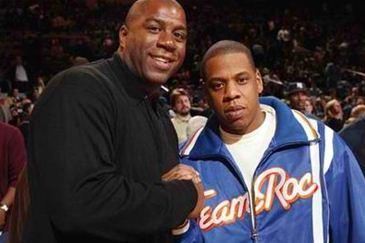
Magic Johnson Teams Up With Rappers to Address Homophobia in Hip Hop

via GLAAD Blog, by Kimberley McLeod

NBA legend and HIV/AIDS advocate Magic Johnson plans to continue educating the African American community about HIV and hopes to also address anti-gay attitudes in hip hop.

Johnson recently spoke with The Huffington Post about a new project he's developing with rappers to rally against homophobia:

As a hip-hop fan, you realize that homophobia is still an issue everywhere, but especially in the black community. When people are scared to talk about it, that's how the disease spreads. So what have you been doing to get that risk reduced?

What we're trying to do is reach out to the hip-hop community because they have power — power with their voice, power with that mic in their hand and power with the lyrics that they sing. I have a lot of friends in that industry and so what we're trying to do is rally them to get behind the cause, deliver the message to these young people that HIV and AIDS is big and it's not going anywhere. They can make a difference right away by speaking out, because they have a big fan base.

So we're finding out that a lot of them want to be involved; they're just looking for a group like ours to latch onto and be a part of it. We haven't really had any push-back from the hip-hop community.
He is currently in talks with various performers and plans on announcing their names at a press conference this year.

“It's so important that we rally — not just them, either,” he adds. “I need the hip-hop community but I also need the basketball players and football players. We need a little bit of everybody…”

GLAAD commends Magic Johnson for leading this important initiative and will post updates as details about the project become public.


Read the rest

Thursday, December 15, 2011

Homeless for the Holidays

via GLAAD, by Elana Stone

Did you know that there are approximately 3,800 homeless young people in NYC? Did you also know that 40 percent – or 1,500 – identify as LGBT?

These statistics are important and vital to understanding the epidemic of homelessness for LGBT young people, but statistics won’t let you know what it means to be young, LGBT, and homeless all because your family rejects you for who you are.

Statistics won’t change hearts and minds, but stories will.
                                                                                                              
“I was 15 the first time I got kicked out of my house. My lowest point of trying to make it on the streets was three weeks ago. My girlfriend and I had to sleep on the roof of a building in the Bronx.

It was raining cats and dogs. I let her sleep, and stayed awake to make sure we were safe.”

–Tiffany “Life” Cocco

Homeless for the Holidays is a campaign through the Ali Forney Center to raise awareness about the lives of LGBT youth who are homeless.

Designed to feature a different young person three times a week for the month of December, the campaign illustrates the very real struggle that each of these young people face as part of the larger push to increase funding and access to services and beds for homeless LGBT youth.

The Ali Forney Center’s ED, Carl Siciliano writes, “Every young person deserves to be loved,” which is at the heart of the campaign.

For each of the young people featured in the campaign, Siciliano says, “[C]oming out meant being driven from their homes, denied of love, denied of all economic support, made to suffer utter destitution.

And, shamefully, despite the numbers of such youth across the nation reaching epidemic proportions, their plight has not been at the forefront of the attention of the LGBT community.

Siciliano calls these youth the unsung heroes of the LGBT movement, for having the courage to tell their stories, to come out, and to face such terrible rejection for their honesty.

He asks the question, “How horrible it is that kids are made to experience such brutal abuse, just for being who they are.”

So take a moment and hear these stories. Read about what it means to be young, LGBT and without a place to live.


Read the rest

Gay Culture and Sex Addiction

via Huffpost Gay Voices, by Alexandra Katehakis

Support for gay marriage is on the rise. Every new survey shows greater tolerance and greater acceptance of the fact that homosexuality is a personally integral and relational truth that warrants equal rights.

With this support, we also see the rise of greater diversity in gay culture depicted by the media. Certainly the suburban gay parent is a fairly recent standard prototype in the collective consciousness that has gained traction from popular fiction, namely Modern Family and The Kids Are All Right, and from real-life celebrity parents like Rosie O'Donnell and Neil Patrick Harris.

The suburban gay parent does much to humanize the prevailing stereotype that depicts lesbians and gay men solely as promiscuous and unstable, propagated just last month by the conservative, religious website LifeSiteNews in response to Newsweek's recent cover story on sex addiction:

"[H]omosexuals are known for having superficial, short-term relationships and hundreds of lifetime sex partners..." (That's perhaps the least offensive quote in their homophobic article.)

I have to wonder about the degree to which any so-called "deviant" lifestyle traits displayed by LGBT people are ultimately an inherent psychological reaction to institutionalized homophobia at every level.

Let's take this trip. First, there's the closet, this toxic idea that it's not OK to be gay, compelling LGBT children to hide their truth.

Gay kids live in silence for fear of the repercussions of disclosure, which can include rejection, abandonment, and bullying to the point of suicide.

Gay bullying is perpetrated by peers, parents, teachers, community leaders, and world leaders.

While many minorities suffer oppression, from disenfranchisement to outright discrimination to persecution, few minorities additionally experience such extreme degrees of intimidated relational repression during formative years as the LGBT community.

What effect does this have on people? As a result of this coerced repression, there exists insufficient co-regulation to explore appropriate relational valuing, which is the process of integrating personal reality with authentic expression that results in healthy, intimate relationships.

Instead, an abyss has to be crossed where a child "comes out." For LGBT people, this is a rite of passage with a wide range of emotions that is experienced mostly in emotional isolation.


Read the rest

Friday, December 2, 2011

Are Gays Too Sensitive to Jokes?

via HuffPost Gay Voices, by Aaron Anson

I was appalled when I read excerpts from Vibe's interview with rapper T.I.: he said that the gay community is too sensitive to jokes made at their expense. T.I. starts with a disclaimer, saying that he's OK with any sexual "preference," but goes on to say, "If you're against [being gay], you should also have the right to be against it in peace."

Most obnoxious was when T.I. condoned Tracy Morgan's venomous diatribe against gays, which took place earlier this year.

His idea is that anti-gay sentiments are acceptable, and that it's ridiculous for the gay community to backlash against this expression of free speech.

It's true that the First Amendment protects all kinds of free speech, including anti-gay speech. But the fact that anti-gay speech is legal does not make it any more acceptable.

Free speech can allow free ignorance, unfortunately, and the two often go hand-in-hand.

It's clear from his language that T.I. simply does not relate to gays.

If we conclude that gays are overly sensitive to these jokes, then clearly the African-American community is overly sensitive about racism.

Imagine the backlash if a public figure made a joke about killing a person because they were black.

Would this have any comic value at all, or would it simply be tasteless?

How would this be any different from Tracy Morgan's remarks that he would stab his son if he were gay?


Read the rest

Monday, November 7, 2011

It's about the "Weekend"


The Sundance Selects film Weekend has to be one of the most honest portrayals of gay dating I’ve ever seen, and it deserves the positive reviews it has been getting.

Though people of all sexual orientations will relate to the themes of romance and courtship, Weekend shines in the way it offers a Queer Theory lens on the most primal aspect of gay life: hooking up and dating.

The premise is simple enough: Russell and Glen hook up on Friday night, but end up spending the weekend together, realizing that there’s something more than sexual chemistry between them.

Glen, of course, is leaving the country Sunday afternoon, so the magic has to happen fast.

It was disappointing that the film reinforced the stereotype that gay men use a lot of drugs, but with the short timeline, the alcohol, marijuana, and cocaine take the characters to a very vulnerable and honest place with each other, allowing for the film’s most compelling dialogue about gay relationships.

Weekend thrives on its simplicity, using conversations between the two archetypal characters to dissect the script gay courtships are supposed to follow as the two learn and grow from each other’s influence.

Russell is the classic closet-case, who’s out as gay, but not really to anyone. He pursues sexual liaisons, but is afraid of commitment because it means being out and having to own his identity.

 Instead, he interviews his partners about their own coming out experiences and tries to live vicariously through them in his journal. Glen, on the other hand, is out and proud, but has sworn off of relationships after being hurt by a cheating boyfriend.

 He also interviews his partners, forcing a tape recorder in their face in hopes of exposing queer sexuality through some sort of eventual art project.

Both are searching to understand the other’s archetype: Why is Russell so afraid and ashamed of his sexuality that he feels he has to hide it at all times? How can Glen be so comfortable with himself when he lets his sexuality define him?

The exploration of these questions reflects the internal homophobia that impacts all members of the LGBT community, complicating our relationships as we attempt to pretend they are no different than those of our heterosexual friends and neighbors.

Towards the end of Glen and Russell’s hurried courtship, the topic of marriage equality comes up. Tapping into his queer radicalism, Glen condemns the gay community for trying to embrace the heterosexual norm, suggesting “no one gets married for the benefits.”

 Russell’s yearning for true love betrays his inhibitions as he implores that maybe two people just want to declare their love in front of their friends because it’s meaningful to them. Ultimately, though, the movie makes a point greater than either side of the debate.

 Given how the variable of being gay in a homophobic society complicates same-sex relationships, marriage equality would create a venue in which gay men and lesbians could be celebrated both for their unique identities and for the normal lives they can nonetheless live.

Neither Glen nor Russell are ready to marry, but marriage would honor how both of them feel about their identities.

Weekend asks more questions than it answers, but it does so in a refreshingly unvarnished way. As public sentiment about the LGBT community changes, so too does the culture of the community itself, and this film creates a foundation for discussing the impact of those changes.

And despite the archetypal nature of their identities, Glen and Russell are unsensationally realized such that audience members will relate to them both. The film itself is about relationships, but its biggest offering might be an opportunity to better understand ourselves.


Read the rest

Monday, October 10, 2011

Homophobia and our youth

via Huffpost Gay Voices, by Jason Mannino

"I always say how bullied I am, but no one listens. ... What do I have to do so people will listen to me? No one in my school cares about preventing suicide, while you're the ones calling me [gay slur] and tearing me down."

This article is my third in less than three years about teen bullying and the tragedy of suicide among LGBT youth. Today, I write an almost identical article with practically the same statistics that I have written for the past two years.

According to Massachusetts' 2009 Youth Risk Behavior Survey, LGBTQ youth are over four times more likely to attempt suicide.

A 2009 study, "Family Rejection as a Predictor of Negative Health Outcomes," led by Dr. Caitlin Ryan and conducted as part of the Family Acceptance Project at San Francisco State University, shows that adolescents who were rejected by their families for being LGBT were 8.4 times more likely to report having attempted suicide.

The rate of victimization among lesbian, gay, bisexual and transgender (LGBT) students has remained constant between 1999 and 2009, the latest date for which there are statistics, according to the National Climate Survey conducted by the Gay, Lesbian and Straight Education Network (GLSEN).

Once again, I feel my stomach doing backflips as I engage in dialogue about the homophobia and hatred entrenched in our culture. I have been having this conversation since I was an undergraduate student at, of all places, Rutgers University (where Tyler Clementi was harassed until he completed suicide last year), which is a place where I felt safe, accepted and free to explore and embrace diversity.

Reports indicate that Jamie Rodemeyer's suicide was preceded by severe harassment on social networking sites, including taunts like, "JAMIE IS STUPID, GAY, FAT ANND [sic] UGLY. HE MUST DIE!" according to local reports.

 Another post read, "I wouldn't care if you died. No one would. So just do it :) It would make everyone WAY more happier!"

Alarming research conducted by Sara Konrath and Edward O'Brien at the University of Michigan indicates that empathy among young adults and college students has dropped significantly since 2000.

They indicate that the fast-paced online world of social networking makes it easier to shut out the problems of others when we just don't feel like listening.

This research, together with the most recent example at Williamsville High (Rodemeyer was a freshman there), where, according to ACLU bullying expert Chris Hampton, the school's bullying policies, like those of other suburban Buffalo school districts, don't go far enough, begin to paint a picture of why our schools are failing to protect our youth.


Read the rest

Friday, September 23, 2011

"Hate No More" in Uganda


The brutal murder of gay activist David Kato has motivated more people to speak out, writes CAELAINN HOGAN

“MY BODY is not a battlefield,” declares one poster on a Kampala street. “Uganda belongs to all who live in it,” reads another. On walls across a country known for its condemnation of homosexuality, a simple yet powerful appeal is being made: hate no more.

The Hate No More campaign, launched on August 10th, is a courageous four-month initiative to raise awareness and end discrimination. In addition to the nationwide poster campaign, LGBT activists are engaging in direct dialogue with religious leaders, NGOs, police, health providers and politicians.

“These people exist among you,” says Joshua Muhanguzi of Freedom and Roam Uganda, the organisation spearheading the campaign. “They’re your brothers, your sisters, your parents. So stop the hate.”

In the same month, following widespread international pressure, the Ugandan cabinet finally rejected the 2009 Anti-Homosexuality Bill proposed by MP David Bahati.

While homosexuality is already illegal in Uganda, the Bill sought the death penalty for “aggravated homosexuality” and threatened three years’ imprisonment for those who failed to report a known homosexual within 24 hours.

As well as suffering verbal and physical abuse, many LGBT people in Uganda are expelled from school and disowned by their families because of their sexuality. Many are denied medical and counselling services.

“Lesbians have been forced into marriage to cover up their sexuality,” says Joanitah Abang, programmes manager for Freedom and Roam Uganda.

“Others have been raped by family members and friends to cure them of the ‘disease’.”
Campaigning in her home district of Lira, Abang received positive responses from the community, including the police. Local radio stations, however, accused the campaign of recruiting people to homosexuality.

“They claimed I was given money to recruit people; the whole place is on fire, they want to kill me,” she says. “I just tell people, whatever you do, you cannot break me.”

The brutal murder of gay activist David Kato in January was a harsh reminder of the high risks Ugandan activists face, but his death has motivated more people to speak out.


Read the rest

Monday, July 25, 2011

Black and LGBT in the Black Church

via Black Enterprise, By Tomika Anderson

Rigid attitudes around homosexuality in the church, mosque and in communities of color overall may explain the fervor that surrounded embattled Georgia pastor Eddie Long.

After years of publicly denouncing homosexuality—even going so far as to lead a special ministry for gays and lesbians in order to convert them into heterosexuals—Bishop Long was sued last year by four young men who alleged he used his pastoral influence to coerce them into a sexual relationship with him. A national uproar ensued as he scurried to settle with them out of court.

Some argue that had it been women Long had the affairs with, he might have gotten a slap on the wrist. But because his dalliances allegedly involved (underage) men, his feet were put to the proverbial fire.

New York City-based trauma expert and wellness coach Dara Williams says it is the fear of public condemnation that keeps folks—in and outside of the church—from being honest about who they are when it comes to their sexuality. “The black community is very conservative about most sex-related issues,” she says, “and homosexuality is one of them. Sexuality in our community is generally oppressed or not discussed, and we can see through our [collective] rate of HIV infection that this kind of secrecy is literally killing us.”

Read more.

Monday, June 20, 2011

Gay in 2011: How Homophobia Lost Its Cool

via PAJIBA, By Michael Murray

A well-written standpoint on this age-long issue.

The other night my wife and I watched X-Men: First Class.

I hadn’t mentioned anything, but I wanted to see Jennifer Lawrence’s portrayal of Mystique, which is another way of saying I wanted to see Jennifer Lawrence naked. We all know how Rebecca Romijn had perfected the role with her body in earlier versions of the franchise, but I wanted to see how the plain-spoken determination that Lawrence displayed in Winter’s Bone would translate into nudity.

I was optimistic.

However, very, very quickly I found myself utterly mesmerized by Michael Fassbender.

He was sexy. Jesus, he was dead sexy. And then there was James McAvoy. He was sexy, too. Sexy in a different way, but still sexy. Together, the chemistry they shared burned through the screen and I simply couldn’t take my eyes off of them. I mean, I wanted them to do stuff. Pulling myself together, I asked Rachelle, “Where’s Jennifer McLarwebender?”

Rachelle pointed her out.

“So she’s the blue one? Man alive, I just wish she’d get out of the way, sometimes she makes it hard to see Fassbender and McAvoy!”

Rachelle pursed her lips, “So, you want to have a better view of the guys, do you?”

I felt a little defensive at first and said nothing, but I couldn’t contain myself, “Yes! Look at them! They’re hot as hell! Way better than anything on “True Blood”! And don’t you judge me, you’d be in there like a dirty shirt in a second!”

And after just a moment of looking at one another we both nodded and returned to the movie.

Some 20 years ago when I was in high school, to say that you found another man sexy, let alone two of them, spelled certain doom. And it’s not that I grew up in an unusually parochial environment. As far as these things went, the school I attended in Ottawa — one of the larger Canadian cities — was relatively liberal minded. No matter, if you were gay or suspected of being gay, your life was to be misery.

Read more.

Tuesday, June 7, 2011

AIDS, the silent killer of the Black community


Reposted from CNN.com by Keith R. Green

Editor's note: LZ Granderson writes a weekly column for CNN.com. A senior writer and columnist for ESPN The Magazine and ESPN.com, he has contributed to ESPN's "Sports Center," "Outside the Lines" and "First Take." He is a 2010 nominee and the 2009 winner of the Gay and Lesbian Alliance Against Defamation award for online journalism and a 2010 and 2008 honoree of the National Lesbian and Gay Journalists Association for column writing.

(CNN) -- I assumed Dr. Ronald Ferguson, senior pastor at Antioch Church of God in Harlem, was misquoted in Thursday's New York Daily News.

I thought, "No way did a member of the clergy say 'God does not want to see homosexuals in our parks.' "

I didn't think it was possible for a man working in New York City, with the letters "D" and "R" in front of his name, to compare homosexuality to pedophilia and bestiality. ("If children start to believe it is OK to be gay, they will think it's OK to be a pedophile or have sex with animals.")

I found it completely ridiculous to even think a black pastor's response to a gay pride event in 2011 would be to stay inside his house.

Read the rest here...
Related Posts Plugin for WordPress, Blogger...

select key words

2007 National HIV Prevention Conference 2009 National LGBTI Health Summit 2011 LGBTI Health Summit 2012 Gay Men's Health Summit 2012 International AIDS Conference ACT Up AIDS AIDS Foundation of Chicago Africa BUTT Bisexual Bisexual Health Summit Brian Mustanski Center on Halsted Charles Stephens Chicago Chicago Black Gay Men's Caucus Chicago Task Force on LGBT Substance Use and Abuse Chris Bartlett Coaching with Jake Congress David Halperin David Munar Dr. James Holsinger Dr. Jesus Ramirez-Valles Dr. Rafael Diaz Dr. Ron Stall ENDA Ed Negron Eric Rofes FTM Feast of Fun Feel the love... Friday is for Faeries Gay Men's Health Summit 2010 HCV HIV HIV care HIV drugs HIV negative HIV positive HIV prevention HIV stigma HIV strategic plan HIV testing HIV/AIDS HPV Howard Brown Health Center IML IRMA Illinois International AIDS Conference Jim Pickett LGBT LGBT adoption LGBT culture LGBT health LGBT rights LGBT seniors LGBT youth LGBTI community LGBTI culture LGBTI health LGBTI rights LGBTI spirituality LGV Leon Liberman LifeLube LifeLube forum LifeLube poll LifeLube subscription Lorenzo Herrera y Lozano Lymphogranuloma Venereum MRSA MSM Monday Morning Perk-Up National AIDS Strategy National Gay Men's Health Summit One Fey's Tale Peter Pointers Pistol Pete PnP PrEP President Barack Obama Presidential Campaign Project CRYSP Radical Faerie STD Senator Barack Obama Sister Glo Sisters of Perpetual Indulgence Susan Kingston Swiss declaration Ted Kerr Test Positive Aware Network The "Work-In" The 2009 Gay Men's Health Agenda Tony Valenzuela Trans Gynecology Access Program Trans and Intersex Association Trevor Hoppe Who's That Queer Woof Wednesday You Tube abstinence only activism advocacy african-american aging issues anal cancer anal carcinoma anal health anal sex andrew's anus athlete ball scene bareback porn barebacking bathhouses bears big bold and beautiful bisexuality black gay men black msm blood ban blood donor body image bottom chubby chaser circumcision civil rights civil union communication community organizing condoms crystal meth dating dating and mating with alan irgang depression disclosure discrimination domestic violence don't ask don't tell douche downlow drag queen emotional health exercise female condom fitness gay culture gay identity gay latino gay male sex gay marriage gay men gay men of color gay men's health gay pride gay rights gay rugby gay sex gay youth gender harm reduction hate crime health care health care reform health insurance hepatitis C hiv vaccine homophobia homosexuality hottie hotties how are you healthy? human rights humor hunk immigration international mr. leather internet intimacy leather community leathersex lifelube survey love lube lubricant masturbation mental health microbicides middle music negotiated safety nutrition oral sex physical health pleasure podcast policy politics poppers porn post-exposure prophylaxis prevention prostate prostate cancer public health public sex venues queer identity racism recovery rectal microbicides relationships religion research safe sex semen sero-adaptation sero-sorting seroguessing sex sexual abuse sexual addiction sexual health sexual orientation smoking social marketing spirituality stigma stonewall riots substance abuse treatment substance use suicide super-bug superinfection syphilis testicle self-examination testicular cancer testing top trans group blog transgender transgender day of remembrance transgendered transmen transphobia transsexual universal health care unsafe sex vaccines video violence viral load writers yoga youtube