Showing posts with label music. Show all posts

Thursday, December 29, 2011

What it Means to Write a Gay Love Song

via HuffPost Gay Voices, by Mark Hamilton

When first asked to write on "what it means to write a gay love song," I thought I'd take a stroll to my neighbourhood café, where I do most of my writing and working, and by the time I'd arrived would have a definitive answer regarding the gay love song as one of the ultimates in queer defiance and political statement. But now that I'm here, I simply don't.

To me, as songwriter, every love song I write is a gay love song. Perhaps it's a weakness as a performer that I can't sing something unless I truly believe in it (otherwise, I'm just too embarrassed), so when I sing of love, I sing only of the kind of love that I know. And that, for me, is always a big gay one.

I'm releasing a new EP of music titled For Paolo, and the title track is a love song I wrote for my Viennese boyfriend. He calls me the colloquial "schatzi," so to his embarrassment I put it in the chorus.

If there's something to do that he thinks is important, he tells me that I "better should," so that's in there, too.

He'd like me to believe he's the shy type and that having his name in the title of a song (never mind as the title of a full EP's worth of music) is a struggle for him, but I can tell he's more than a little chuffed about it.

"How dare he say anything about my song," he told me last night, when a friend who hates pet names said he liked the song except for what he considered an overuse of "schatzi."

So yes, indeed, "For Paolo" is a gay love song of the highest degree. It's got the gay gene. It was born this way.

And yet, despite what I need to believe in order to perform a song genuinely, I can also realize that my songs' genders and sexualities can vanish entirely once they leave my lips and hit the listener's ear.

At some point, everyone has a "schatzi," and it really makes no difference if the one I'm singing to in my mind has a beard and the same private parts that I do.

I've received letters from straight married couples telling me that their first straight wedding dance was to some gay song I wrote for some hot guy on the other side of the planet.

In one case, a couple told me they'd danced to a song that I'd originally written for a straight (sure) construction worker I'd been hooking up with in Calgary a couple of summers ago.

I'd be lying if I didn't admit that I've put more straight love songs on mix tapes for gay crushes than I could ever possibly remember.

It doesn't even matter if he (or she) is singing to a she (or he), because it's the sentiment that gets us through sides A and B to the end of the tape.

I'd argue that love songs, once they come to mean something to you, don't really even have a sexuality anymore. ("The Man That I Am with My Man" by The Hidden Cameras might defeat this rule, but for the most part, for me it seems to stick.)

So, what does it mean to write a gay love song? Pretty much the same as it means to write any song. It means something particular and unique to everyone who listens to it, gay, straight, bi, transgender, or questioning.

And personally I hope all those people like what I've done in tribute to my handsome, homo boyfriend, and would love every guy, girl, guy-girl and girl-guy to make out with their respective partners (or groups thereof) to it and let me know how it goes.


Read the rest

Wednesday, June 15, 2011

I Am What I Am!


By D' Ontace Keyes

Hello I’m D’ Ontace Keyes. Remember my “How are you healthy?” blog story?

So this past weekend, I had the amazing opportunity to go back to Philadelphia and perform for their annual pride celebration. Every year, “Philly Pride Presents,” chooses one individual to sing the unofficial “National Gay Anthem” which happens to be I Am What I Am from the Broadway musical, La Cage aux Follies. The celebration is done at Philadelphia’s William Penn’s Landing, where thousands of people come from near and far to have fun, socialize and be entertained by a great line up of performers. 

I was randomly chosen in a video store when I was picking up a movie for a date one night. The owner engaged me into a long conversation about pride and the anthem, asking me to sing on the spot. I’d chatted with her many times before, conversations sometimes lasting two hours, but this time I need to go quickly. I was in a hurry home from a performance because my date was on his way to my apartment. Wondering to myself where this conversation could lead, I sang one line of the song and she said, “You’re hired.”

It was an honor to be chosen to perform for Pride. I remember when I first attended Pride in Philadelphia. It was in 2009, and I looked in the paper at the line-up, wondering if I would ever get the chance to perform with them.

The official Pride weekend came and I was so hyped. I knew the song like the back of my hand because I’d performed it on several occasions. On some “private” occasions, I would be in my bedroom, doing a very special “Shirley Bassey Tribute”, in my sequined pageant gown, feather boa, and big red hair.  “And so what if I love each feather and each spangle!”

Saturday, the day before the performance, I picked up my festival passes and practiced my performance a little bit. That night, I decided to post the event on to my facebook to invite friends. I figure that since my picture was everywhere in Philadelphia’s news, I would stay low-key on personal promotion so I wouldn’t come off “arrogant.”  

Sunday, I woke bright and early to good wishes from friends and family on my performance. My dress concept was a tux, but I replaced the tradition suit jacket with a sequin half coat to add a bit of “show-girl” to my look. I was ready. I had friends coming along with cameras and my whole fan club was going to be there. (Yes I have a fan club!) 

I arrived in the hot sun at the Penn’s Landing stage, 20 minutes before my performance. I was greeted by other performers excited to be on the line-up with me.  The stage was huge, overlooking an audience of over a thousand people.  I remembered one of my loving supporters and friends telling me how much of a big deal it was. “Cyndi Lauper performed on that very stage several years ago!” I needed to channel my inner diva quickly!

10 minutes till I was on and I was ssooo nervous. Blackberry in one hand, towel in another, I was ready to piss my pants. In the moment of being a total mess, Mother Louie came to me like an angel. “Child look at you, YYEESSS!” Bam! That was just what I needed to get into diva mode.

Before you knew it, I was on stage, singing “I Am What I Am”. The sound system could have been better, but like a true performer I sang and kept face. It was good. The performance was fast and I had my fan club screaming the whole time. “Werk!!!” Mother Louie said. 

Thursday, November 25, 2010

Who's That Queer? [Stephin Merritt]

Brought to you by Pistol Pete

Stephin Merritt is an American singer-songwriter based in Los Angeles best known as the principal singer and songwriter in the band The Magnetic Fields.


Merritt is gay, and his lyrics are known for bending and blurring gender lines; examples include the song "When My Boy Walks Down the Street", which contains the lyric "and he's going to be my wife." He is fascinated with the undead, often making veiled or explicit references to vampires. Other frequent motifs in his lyrics include the age 17, dancing, seasons (most often summer), youth, old age, cities (especially New York City and Paris), the moon, the sun, the stars, rain, the night, marriage, blue eyes, faces, trains and railroads, the road, crying, murder, drinking, musical instruments, and love.

Read the rest...

Thursday, August 26, 2010

Who's That Queer [Gladys Bentley]

Brought to you by Pistol Pete

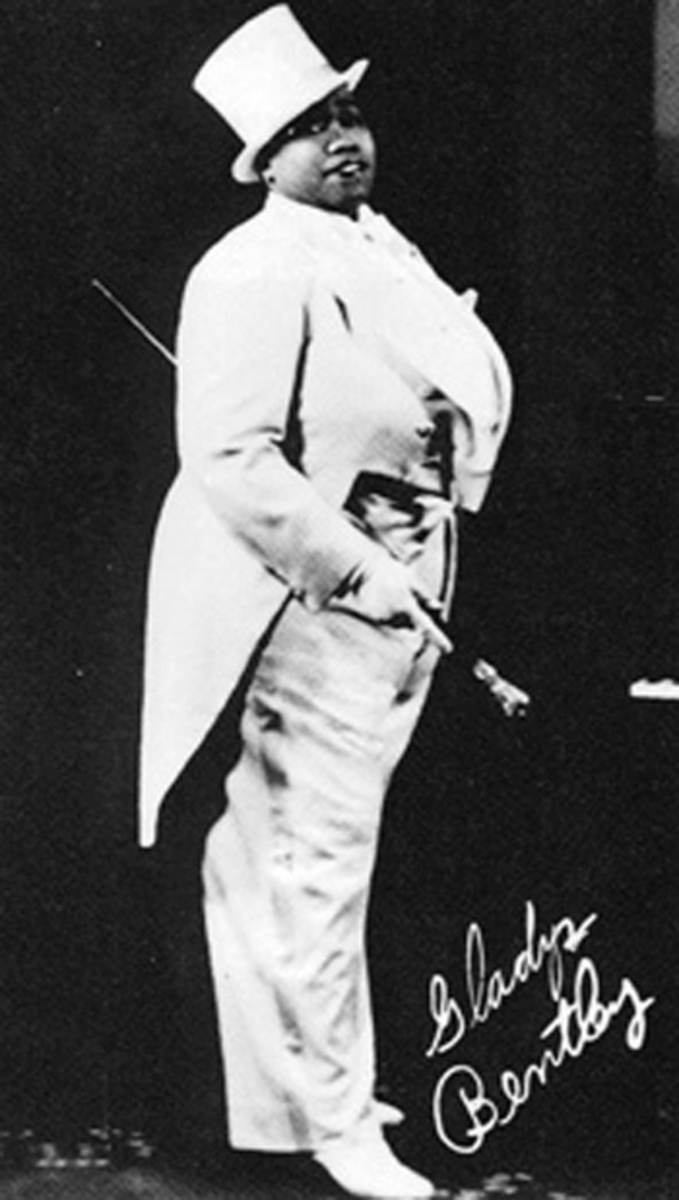
Gladys Bentley was a blues singer during the Harlem Renaissance. She was a 250 pound woman dressed in men's clothes (including a signature tuxedo and top hat), who played piano and sang her own raunchy lyrics to popular tunes of the day in a deep, growling voice while flirting outrageously with women in the audience.

She appeared at Harry Hansberry's "Clam House" on 133rd Street, one of New York City's most notorious gay speakeasies in the 1920s, and headlined in the early thirties at Harlem's Ubangi Club, where she was backed up by a chorus line of drag queens. Bentley was openly lesbian during her early career, but during the McCarthy Era she started wearing dresses, married a man (who later denied that they ever married), and studied to be a minister, claiming to have been "cured" by taking female hormones.

Read the rest at Wikipedia

Friday, July 16, 2010

Music Makes the People Come Together


by Daisy Shaver

There is still a little glitter around my eyes from the weekend. I showered but decided to leave the remnants. I mean, I work at the queer health center!

Last night, a bunch of faeries carried our drums down to the Hudson River. It was blistering hot. For the past 6 years, these drummers have slapped skin to share our beats and dance with the throngs of people that come to the River after the massively long Gay Pride Parade. I love the parade. But this event has become one of the highlights of Pride weekend. The majority of the crowd are African American and Latino young people. Fierce outfits and crazy carrying on.

A handful of us left Club Lum's and ambled onto the river walk. When we arrived to the spot where we usually play, a group of African-American lesbians just wasn't having it--we white boys with our drums. One said, "Hey, this is my spot!" I shouted back, "I thought this was OUR spot," gesturing to us and the crowds. "What these white boys gonna do," she said.

Eddie said, "Not yet Michel, wait." We cooled off. We gathered our energy. We took it all in. Then we began to LAY IT DOWN! Soon the sisters had scooted their chairs around to watch what was unfolding.

I am finding it difficult to put my emotions into words about last evening. Today as I spoke about it, I kept welling up with grateful emotion. First off, there is nothing like the communication between drummers and dancers. We are speaking on a level beyond words. It's feeling. So when we began to hit our groove, people began to gather around us to drink that in. There is this sense of kindred spirit that is beyond compare. A sense of unity develops when the crowds move and shake to the sound coming from you. Black, white, yellow and brown become one!

Pretty soon, a skinny little woman stepped into the circle and began to dance. She became maniacal and trance-like. Her body stiffened, and jerked to our rhythms. Others joined force. When you drum, the dancers only charge you on. When she was ready to take a pause, this gal came up to each of us and looked right in our eyes as she shook her body. She didn't speak. But she communicated thanks in such a deep way with just that look. The same thing happened over and over. They were all women of color. If they weren't looking us in the eye, they were bending over and shaking their ass to the beat right in front of each of us to show they were with us.

Then it just got down right OFF THE HOOK!! Couples, triplets all swinging and bucking. One hot guy was swinging this sassy mama bucking up and down bumping their pelvises together. Dykes were grinding snatch and dry humping like nobody's business. At dusk, two tall drinks of water stepped up to the circle and surveyed the scene. Then one of them began to vogue. I mean VOGUE! The other then stepped in after him. Grrrl! They would drop from standing right to flat on their backs. Stupendous!

White folks just do not get into their bodies this way. We just don't. This event has taught me that each year. It's made me appreciate how white man's religion has drawn us out of sensual pleasure.

This isn't to say the white faeries that danced didn't turn it out either. As a matter of fact, the faeries really have it going on when it comes to dancing together. And we were dancing together with these masses of people. Hundreds of people ambled by, stopped, looked, maybe joined in. And in these moments we all danced a tribal ritual that tied us all up together. We were in church. THIS was our religion.

~~~~~~~~~~~~~~~~~~~~~~

Ode to Sistah Moon Daisy Shaver 1996

Last time I say ya,
Last time I saw ya,
Last time I saw ya
So big Sistah Moon.

You was shinin' strong
On me-n-my drum
Beatin' rhythms so fine
Speakin', groovin', lovin', movin'!

Last time I saw ya,
Last time I saw ya,
I was makin' music
Like I was makin' love.

You were movin' waves
And movin' through us
Reflecting bright like heat
A sound flowing like the tide.

Last time I saw ya
Brothers grooved in cosmic rhythm.
I heard their hearts beat
And saw souls move their hands.

~~~~~~~~~~~~~~~~~~~~~~~~~~~~~~~

I'm kinda weepy as I close this little missive. Sweet little tears of gratitude trickle out. Like Dickie Dworkin said, "Daisy, we are turning the white patriarchy on it's ear!!"

Music will do that.

Thursday, July 1, 2010

Who's That Queer [Fred Schneider]

Brought to you by Pistol Pete


Fred Schneider, born in Newark, New Jersey, is best known as the frontman of the rock band The B-52's, of which he is a founding member.


The B-52's were formed by Cindy Wilson and Kate Pierson with drummer Keith Strickland, guitarist Ricky Wilson (Cindy's older brother) and vocalist Fred Schneider after a drunken night at a Chinese restaurant and played their first gig in 1977 at a St Valentine's Day party for friends. Their sound is marked by the vocals and lush harmonies of Wilson and Pierson, and the generally monotone or spoken-word vocals of Schneider.

Read the rest at Gay for Today...

Thursday, June 17, 2010

Who's That Queer [JD Samson]

Brought to you by Pistol Pete

JD Samson is the stage name of Jocelyn Samson, a member of the Feminist ElecktroPunk band Le Tigre. Samson grew up in Cleveland, Ohio. She came out as a lesbian at age 15. She graduated from Sarah Lawrence College with a degree in film in 2000.


Samson joined Le Tigre in 2000 as a replacement after working as the band's projectionist. She is also a member of the band The New England Roses and a member of electro-punk artist Peaches' live band, The Herms. In 2006, Samson collaborated with Junior Senior on the song "Can I Get Get Get".

JD Samson will be appearing at Chicago's Beauty Bar Friday, June 18th at 10pm.

Read more at Wikipedia.


Thursday, May 6, 2010

Who's That Queer [Luther Vandross]

Brought to you by Pistol Pete


Luther Ronzoni Vandross, Jr was probably the greatest male R&B singer of his generation. During his career, Vandross sold 25 million albums and won eight Grammys including Best Male R&B Vocal Performance four times. He won four Grammy awards in 2004 including the Grammy for Song of the Year for the track Dance With My Father.


His breakthrough to major chart success came as lead singer with Change, and he went on to have a string of million selling hit solo albums, and successful collaborations with other artists, throughout the 80s and 90s.

During Vandross' entire career he was 'dogged' by questions regarding his sexuality. He never married, his name was never romantically linked in the media with women. Although Vandross never explicitly denied being gay, he never publicly acknowledged it either. He generally fielded questions by saying that his 'busy lifestyle' made marriage difficult and indicated that, in any case, 'it was not what he wanted.' Many gay publications have stated that Vandross' gayness was an 'open secret' in the music business, but even now it is rarely spoken of.

Read the rest at Gay for Today.

Thursday, April 29, 2010

Who's That Queer [Jón 'Jónsi' Þór Birgisson]

Brought to you by Pistol Pete


Jón 'Jónsi' Þór Birgisson plays guitar and sings lead vocals for the Icelandic band Sigur Rós.


Sigur RĂłs are an Icelandic post-rock band with melodic, classical, experimental, and minimalist elements. The band is known for its ethereal sound and lead singer JĂłnsi’s falsetto voice. Obscure and highly artistic, the band have nonetheless developed a huge international following without either compromising their integrity or achieving mainstream commercial success. They could best be described as the Icelandic Radiohead.

Brigisson's trademark is playing an electric guitar with a cello bow and using distortion and reverberation to get an ethereal and ambient sound. His vocal style includes the frequent use of falsetto.

Read the rest at Gay for Today.

Monday, March 29, 2010

Ricky Martin Comes Out!


Ricky Martin, whose sexuality was the source of much speculation in his "Vida Loca" heyday, posted a long statement that ended with, "I am proud to say that I am a fortunate homosexual man. I am very blessed to be who I am."

Martin welcomed twin sons via a surrogate in 2008 and has stepped away from the limelight to be a full-time dad.

Read the rest at HuffPo.

Friday, January 22, 2010

"I am the new generation of masturbator."


special thanks to The Bilerico Project for putting this on the LifeLube radar
I am the new generation of masturbator. I've seen it all. Before I make coffee, I've seen more butt holes than a proctologist does in a week... I have masturbated myself out of serious problems in my life. The phone doesn't pick up because I'm masturbating. And I have excused myself at the oddest times so as to not make mistakes. If Tiger Woods only knew when to jerk off. It has a true market value, like gold bullion. [It's] because I want to take a brain bath. It's like a hot whirlpool for my brain, in a brain space that is 100 percent agreeable with itself.
-- John Mayer in the newest issue of Rolling Stone


Thursday, January 7, 2010

Who's That Queer [Billy Tipton]

Brought to you by Pistol Pete


Billy Lee Tipton (born as Dorothy Lucille Tipton; December 29, 1914 – January 21, 1989) was an American jazz musician and bandleader who lived as a man for nearly 50 years. Tipton found modest success as a professional musician, but until his dying moments, the fact that Tipton had been born biologically female was known only to a few people.

Dorothy Tipton was born in Oklahoma City. As a high school student, she went by the nickname "Tippy" and became interested in music, especially jazz. She studied piano and saxophone, but her school had a policy forbidding girls to play in the school band.


In 1933, Tipton began dressing as a man, which allowed Tipton to blend with the other members of the jazz bands with whom Tipton played in small Oklahoma bars. As Tipton began a more serious music career, Tipton adopted her father's nickname, Billy, and more actively concealed her female body by breast-binding and packing. At first, Tipton only presented as male in performance, but by 1940 Tipton was living as a man in her private life as well.

During a performance on tour at King's Supper Club in Santa Barbara, California, a talent scout from Tops Records heard them play and got them a contract. The Billy Tipton Trio recorded two albums of jazz standards for Tops.

After the albums' success, the Billy Tipton Trio was offered a position as house band at the Holiday Hotel in Reno, Nevada, and Tops Records invited the trio to record four more albums. Tipton declined both offers, choosing instead to move to Spokane, Washington, where he worked as a talent broker and the trio was the house band at Allen's Tin Pan Alley, performing weekly.

As noted, early in his career, Tipton cross-dressed only professionally, continuing to present as a woman otherwise. He spent those early years living with a woman named Non Earl Harrell, in a relationship which other musicians thought of as lesbian. The relationship ended in 1942. His next relationship, with a singer known only as "June", lasted for several years.

For seven years, Tipton lived with Betty Cox, who was 19 years old when they became involved. According to Betty, they had a heterosexual relationship. Betty remembered him as "the most fantastic love of my life." Tipton kept the secret of his extrinsic sexual characteristics from Betty by inventing a story that he had been in a serious car accident which had badly damaged his genitals and broken some ribs, and that to protect the damaged chest he had to bind it. From then on, this was what he would tell the women in his life.

After Betty ended their relationship, he quickly became involved with Maryann Catanach, a prostitute. According to Maryann, theirs was a normal sexual relationship, and she did not know that Tipton had female genitals, since he dressed in private, had sex only in the dark, and preferred to touch, not to be touched.

In 1960, he ended this relationship to settle down with nightclub dancer and stripper Kitty Kelly, who was known professionally as "The Irish Venus." Kitty said that they never had sex but had an otherwise normal life. They were involved with their local PTA and with the Boy Scouts. They adopted three sons, John, Scott, and William. After Tipton's death, Kitty gave several interviews about him and their relationship. In early interviews, she said, “He gave up everything... There were certain rules and regulations in those days if you were going to be a musician,” in reference to breaking into the 1920-30's music industry as a woman, and, “No one knew. It was the best-guarded secret since Houdini.” But in later interviews she denied having known that Tipton was a trans man, a denial that sons John and Scott did not believe. William described Tipton as a good father who loved to go on Scout camping trips.


In 1989, at the age of 74, he had symptoms he attributed to emphysema and refused to call a doctor. In actuality he was suffering from a hemorrhaging peptic ulcer, which, untreated, was fatal. It was while paramedics were trying to save Tipton's life, with son William looking on, that William learned that his father was biologically female. Tipton was pronounced dead at Valley General Hospital. The coroner shared the revelation with the rest of the family. In an attempt to keep Billy's secret, Kitty arranged for his body to be cremated. But one of his sons went public with the story.

Two wills were left by Tipton; one handwritten and not notarized which left everything to William Jr. and the second, notarized, leaving everything to Jon Clark. A court upheld the first will, and William inherited almost everything, with John and Scott receiving a dollar each.

Source: Wikipedia

Thursday, December 17, 2009

Who's That Queer [Lou Reed]

Brought to you by Pistol Pete


Lou Reed
is an influential American rock singer-songwriter and guitarist. He first came to prominence as the guitarist and principal singer-songwriter of The Velvet Underground (1965-1973).


An enduring but complicated figure whose shadow stretches back four decades to the very beginnings of the American rock underground, Lou Allen Reed was born on Long Island to a middle-class, suburban family - a family with whom he soon found himself at odds, as they were unable to accept his unconventional attitudes and sexually ambiguous behavior. During his teen years, they went so far as to have him confined in a mental hospital, where he was forced to endure electro-shock treatments and drug therapy as a means to ward off any nascent homosexual tendencies; somehow Reed managed to emerge from this ordeal with his attitudes intact, and, despite his parents' disapproval, continued to pursue his musical interests.

Highly influenced by R&B and early rock music, Reed performed with a number of different bands during his high school years, making his first recording as a member of the doo-wop ensemble The Shades. After high school he moved on to Syracuse University, where his interests broadened to include free jazz and other more experimental forms of music. It was at this time that Reed decided to pursue a career as a writer.

After completing his studies at Syracuse, Reed moved to New York City and took a job as a songwriter at Pickwick Records. His hit-making duties proved less than rewarding, and he soon joined forces with fellow disillusioned employee John Cale to try and create some music that was more worthwhile, eventually enlisting guitarist Sterling Morrison and drummer Angus MacLise and becoming The Velvet Underground in 1965. Later in the year MacLise quit and was replaced by Maureen Tucker, at which time the band began performing in local clubs and cafés; not long after wards they came to the attention of art prankster Andy Warhol, who, intrigued by their unconventional approach, offered to assume management duties for the band.

Warhol subsequently integrated the Velvets into his multimedia project The Exploding Plastic Inevitable, adding German vocalist Nico to the line-up and sending them out on a tour of the US and Canada in 1966. Later in the year, the band's debut was recorded within the space of one or two days; the album was eventually released by MGM in early 1967, sporting a Warhol-designed peelable banana as its cover. The strange mix of styles - and particularly the controversial subject matter dealt with in Reed's lyrics - resulted in an extremely mixed reception for the album, with sales being far from brisk. By the following year both Warhol and Nico were shed, and the band enlisted The Mothers of Invention's producer Tom Wilson to create their second album White Light/White Heat. Public and critical interest remained elsewhere. By this time, the relationship between Reed and Cale had entirely deteriorated, and Cale was fired from the band before sessions for a third album were organized.


After bringing in Doug Yule to replace Cale, Reed recorded two more albums with the Velvets in a markedly different stylistic vein: The Velvet Underground (1969) and Loaded (1970). The personal and professional dynamics of the group remained unstable, however, and in August of 1970 Reed made the decision to quit just prior to the release of Loaded. The next year was spent away from the music industry, living in his parents' house on Long Island and working for his father's accounting firm; in 1971 a contract with RCA finally initiated the launch of his solo career, and an eponymous album followed in 1972. Primarily featuring Velvets-era material, the release accordingly received the same lack of interest that had plagued his previous band.

In the hopes of avoiding the dismal response given to his first solo effort, Reed enlisted the help of long-standing Velvets fans David Bowie and Mick Ronson to create his second offering, Transformer (1972). Given a thorough glam makeover by the pair, the album featured one of his most commercially successful songs (Walk On The Wild Side) and at last provided a bit of forward momentum to his floundering career.

With the arrival of the 1980s, Reed at last managed to gain control of his self-destructive personal habits, with the result that his recorded output became far less erratic. The strong critical momentum generated in the first half of the decade by The Blue Mask (1982), Legendary Hearts (1983) and New Sensations (1984) served to cement his standing as a major American songwriter once and for all, and this status was further reinforced by later releases such as New York (1989) and Magic And Loss (1992).

In distinct contrast to his years with the Velvet Underground, in the 90s and 00s Reed found himself an established and widely-respected member of the music industry. In 2007 Reed rather unexpectedly began performing and touring a mixed media performance of his 1973 Berlin album.

Sources: Gay for Today

Thursday, December 3, 2009

Who's That Queer

Brought to you by Pistol Pete

Peter Ilych Tchaikovsky was a Russian composer of the Romantic era whose music has made an indelible impression on the world, yet many things seemed to have been stacked against him. The importance of Tchaikovsky's homosexuality and its consequences on the personal expression in his compositions cannot be underestimated. Tchaikovsky's gayness in itself has been known to the West for at least 75 years, gathered from the composer's own writings as well as those of his brother Modest, who was also gay. More debatable is how well he accepted his sexuality or was comfortable with it.


His mother died from Cholera when Tchaikovsky was only 14 years old and this great loss affected the boy deeply. As a boy and also in later life, he suffered from various neuroses and experienced periods of deep depression. Although he learned the piano as a boy, Tchaikovsky was initially to study law and his first profession was as a clerk performing administrative functions. It was only at the age of 23 that he made a career change and decided to study composition at the new St Petersburg Conservatory.

Undoubtedly a major contributor to the composer's bouts of depression was his homosexuality. This is not surprising since at that time in Russia, the state considered certain acts to be crimes carrying the death penalty. At one stage Tchaikovsky married a female admirer, perhaps to conceal his true nature, but the marriage was a disaster. It broke up within a short period of time, and Tchaikovsky suffered a breakdown and attempted suicide.

Tchaikovsky has left us a wealth of great music including Symphonies and Concertos, some Operas and many shorter works. He is particularly remembered for his story-telling music, including Romeo and Juliet and the evocative free-flowing ballet music for Swan Lake, The Nutcracker and Sleeping Beauty.


Source: Gay for Today

Thursday, November 19, 2009

Who's That Queer

Brought to you by Pistol Pete


Johnny Mathis was born on October 31, 1935 in Gilmer, Texas, the fourth of seven children to Clem Mathis and his wife, Mildred Boyd, and is of both African-American and Caucasian ancestry. The family moved when he was young to San Francisco, California on Post Street, in the famous Fillmore district where he was raised.


His first album Johnny Mathis: A New Sound In Popular Song was a slow-selling jazz album, but Mathis stayed in New York to play the clubs. His second album was produced by Columbia records vice-president and producer Mitch Miller, who defined the Mathis sound - he preferred him to sing soft, romantic ballads, initially pairing him with arranger/conductor Ray Conniff, and later, Ray Ellis, Glenn Osser and Robert Mersey. In late 1956, Mathis recorded two of his most popular songs - "Wonderful! Wonderful!" and "It's Not For Me To Say." That year MGM signed Mathis to sing the latter song in the 1957 film Lizzie, and shortly afterward he made his second film appearance for 20th Century Fox singing the song A Certain Smile in the film of the same name. He had small acting roles in both movies as a bar singer. This early cinematic visibility in two successful movies gave him mass exposure. Next was his appearance on the very popular Ed Sullivan Show in 1957 and this helped to seal his stardom. Critics called him the velvet voice.

He has received three Grammy awards. In 1979, his hit duet "The Last Time I Felt Like This" from the film Same Time, Next Year was nominated for an Academy Award for Best Original Song. Mathis and Jane Olivor sang the song at the Oscar ceremony. This was his second performance at the Academy Awards. He has taped twelve of his own television specials and made over 300 television guest appearances with 33 of them being on The Tonight Show. Through the years his songs (or parts of them) have been heard in 100 plus television shows and films around the globe. His appearance on the Live by Request broadcast in May 1998 on the A&E Network had the largest television viewing audience of the series. Also in 1989, Johnny sang the opening theme for the ABC daytime soap opera Loving.

In a 1982 Us Magazine article, Mathis was quoted as having said, "Homosexuality is a way of life that I've grown accustomed to." Us Magazine later retracted the statement. After more than twenty years of silence on the subject, Mathis revealed in an interview in 2006 that his silence was due to death threats he received as a result of that 1982 article. On April 13, 2006, Mathis granted a podcast interview with The Strip in which he talked about the subject once again, and how some of his reticence to speak of the subject was partially generational.

Source: Wikipedia

Thursday, November 5, 2009

Who's That Queer

Brought to you by Pistol Pete


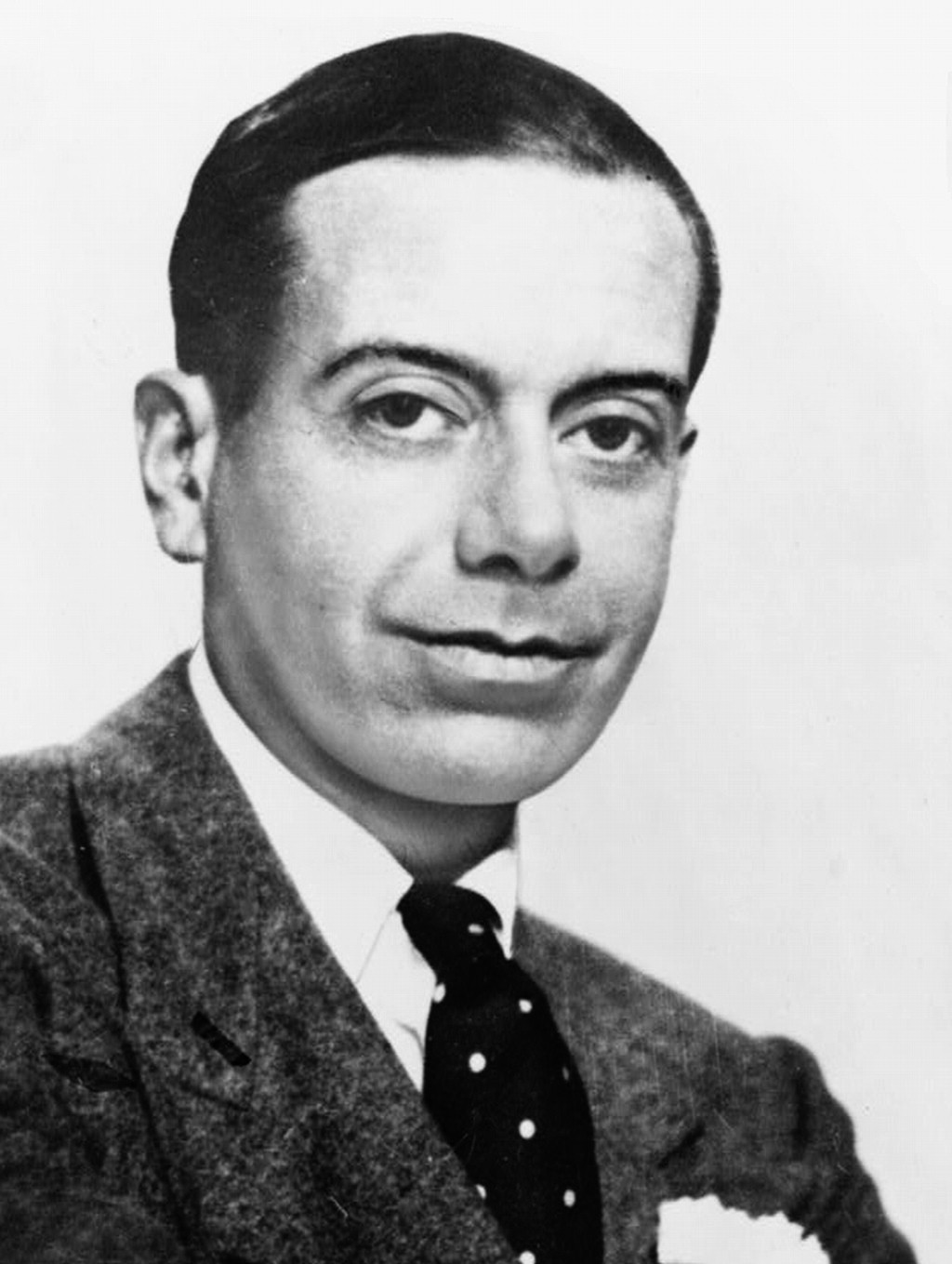
Cole Porter remains one of America's all-time greatest composers and songwriters. His work is characterized by witty and sophisticated lyrics with complex and clever use of rhythm and rhyme.


The 1930s were the golden period for Porter as he enjoyed a string of hit songs, Broadway shows and, eventually, Hollywood musicals. Porter had a gift for self-promotion and attracting and writing for the brightest talents of the age and many songs and shows were written specifically with stars such as Fred Astaire, Ethel Merman and Fanny Brice in mind.

Porter was plainly and openly homosexual, which was not a concern for his almost a decade older wife, Linda Lee Thomas. They both got what they wanted from each other. Linda was no longer interested in sex and was the glamorous wife of a world famous songwriter, who would never physically mistreat her as her first husband is reputed to have done; Cole had a beautiful woman on his arm when the situation warranted it. In those days, it was not uncommon for wealthy gay men to marry wealthy socialtes. Cole and Linda did separate in the early 1930s when Porter's sexuality became more and open during their time living in Hollywood.

He had affairs with Ballet Russes star Boris Kochnon 1925, and reportedly had a long relationship with his constant companion Howard Sturges, a Boston socialite, as well as architect Ed Tauch (for whom Porter wrote Easy To Love) , choreographer Nelson Barclift (who inspired Night and Day), director John Wilson and longtime friend Ray Kelly, whose children still receive half of Porter`s royalties. When in Hollywood, Porter was also a regular at George Cukor's Sunday pool parties - men-only affairs populated by young Hollywood hopefuls and their admirers.

In 1937, Porter was thrown from a horse and his legs badly crushed, effectively crippling him. He endured more than 40 operations on his legs and the constant pain left him with terrible depression for which he received brutal experimental electric shock therapy, although he continued to write. Eventually, ulceration led to his right leg being amputated, and he spent the rest of his long life with an artificial limb.

If you ever see the Hollywood biopic of Porter's life Night & Day (1946) starring Cary Grant and Alexis Smith as Cole and Linda, enjoy it for the music, but the story is so sanitized and romanticized as to be practically fiction.

Source: Gay for Today

Thursday, September 24, 2009

Who's that Queer?

Brought to you by Pistol Peete

Freddie Mercury was born Farrokh Bulsara on September 5, 1946 on the small island of Zanzibar, off the coast of Tanzania. The electric frontman for the rock band Queen was of Indian nationality and his Parsi background has led many to remember Mercury as “Britain’s first Asian rock star."

In April 1970, Mercury joined with guitarist Brian May and drummer Roger Taylor who had previously been in a band called Smile. Despite reservations from the other members, Mercury chose the name "Queen" for the new band. He later said about the band's name, "I was certainly aware of the gay connotations, but that was just one facet of it."


As a songwriter, Mercury composed many international hits including "Bohemian Rhapsody", "Killer Queen", "Somebody to Love", "Don't Stop Me Now", "Crazy Little Thing Called Love", and "We Are the Champions". After the album Queen II was released, the world was conquered by the band’s outrageously fabulous performances and music.

Mercury is noted for his live performances, which were often delivered to stadium audiences around the world. He displayed a highly theatrical style that often evoked a great deal of participation from the crowd. David Bowie, who performed at the Freddie Mercury Tribute Concert and recorded the song "Under Pressure" with Queen said of Mercury, "Of all the more theatrical rock performers, Freddie took it further than the rest...he took it over the edge. And of course, I always admired a man who wears tights. I only saw him in concert once and as they say, he was definitely a man who could hold an audience in the palm of his hand."

Although he cultivated a very flamboyant stage personality, Mercury was a very shy and retiring man in person, particularly around people he didn't know well. He also granted very few interviews. Mercury once said of himself, "When I'm performing I'm an extrovert, yet inside I'm a completely different man."

By 1979, Mercury began to frequently visit gay bathhouses and clubs where he met many short-term partners. By 1985, he began a long-term relationship with a hairdresser named Jim Hutton. According to Hutton, Mercury was diagnosed with AIDS shortly after Easter of 1987. Around that time, Mercury claimed in an interview that he had tested negative for the virus. Despite the denials, the British press pursued the rampant rumors over the next few years fuelled by Mercury's increasingly gaunt appearance, Queen's absence from touring, and reports from former lovers to various tabloid journals.

On 22 November 1991, Mercury called Queen's manager Jim Beach over to his Kensington home, to discuss a public statement. The next day, the following announcement was made to the press on behalf of Mercury:

“Following the enormous conjecture in the press over the last two weeks, I wish to confirm that I have been tested HIV positive and have AIDS. I felt it correct to keep this information private to date to protect the privacy of those around me. However, the time has come now for my friends and fans around the world to know the truth and I hope that everyone will join with me, my doctors, and all those worldwide in the fight against this terrible disease. My privacy has always been very special to me and I am famous for my lack of interviews. Please understand this policy will continue.”A little over 24 hours after issuing the statement, Mercury died on 24 November 1991 at the age of 45.

The following is a quote from Mercury, and if we can learn anything from his spectacular yet short existence, it is this: “The most important thing, darling, is to live a fabulous life. As long as it's fabulous I don't care how long I live.”
Related Posts Plugin for WordPress, Blogger...

select key words

2007 National HIV Prevention Conference 2009 National LGBTI Health Summit 2011 LGBTI Health Summit 2012 Gay Men's Health Summit 2012 International AIDS Conference ACT Up AIDS AIDS Foundation of Chicago Africa BUTT Bisexual Bisexual Health Summit Brian Mustanski Center on Halsted Charles Stephens Chicago Chicago Black Gay Men's Caucus Chicago Task Force on LGBT Substance Use and Abuse Chris Bartlett Coaching with Jake Congress David Halperin David Munar Dr. James Holsinger Dr. Jesus Ramirez-Valles Dr. Rafael Diaz Dr. Ron Stall ENDA Ed Negron Eric Rofes FTM Feast of Fun Feel the love... Friday is for Faeries Gay Men's Health Summit 2010 HCV HIV HIV care HIV drugs HIV negative HIV positive HIV prevention HIV stigma HIV strategic plan HIV testing HIV/AIDS HPV Howard Brown Health Center IML IRMA Illinois International AIDS Conference Jim Pickett LGBT LGBT adoption LGBT culture LGBT health LGBT rights LGBT seniors LGBT youth LGBTI community LGBTI culture LGBTI health LGBTI rights LGBTI spirituality LGV Leon Liberman LifeLube LifeLube forum LifeLube poll LifeLube subscription Lorenzo Herrera y Lozano Lymphogranuloma Venereum MRSA MSM Monday Morning Perk-Up National AIDS Strategy National Gay Men's Health Summit One Fey's Tale Peter Pointers Pistol Pete PnP PrEP President Barack Obama Presidential Campaign Project CRYSP Radical Faerie STD Senator Barack Obama Sister Glo Sisters of Perpetual Indulgence Susan Kingston Swiss declaration Ted Kerr Test Positive Aware Network The "Work-In" The 2009 Gay Men's Health Agenda Tony Valenzuela Trans Gynecology Access Program Trans and Intersex Association Trevor Hoppe Who's That Queer Woof Wednesday You Tube abstinence only activism advocacy african-american aging issues anal cancer anal carcinoma anal health anal sex andrew's anus athlete ball scene bareback porn barebacking bathhouses bears big bold and beautiful bisexuality black gay men black msm blood ban blood donor body image bottom chubby chaser circumcision civil rights civil union communication community organizing condoms crystal meth dating dating and mating with alan irgang depression disclosure discrimination domestic violence don't ask don't tell douche downlow drag queen emotional health exercise female condom fitness gay culture gay identity gay latino gay male sex gay marriage gay men gay men of color gay men's health gay pride gay rights gay rugby gay sex gay youth gender harm reduction hate crime health care health care reform health insurance hepatitis C hiv vaccine homophobia homosexuality hottie hotties how are you healthy? human rights humor hunk immigration international mr. leather internet intimacy leather community leathersex lifelube survey love lube lubricant masturbation mental health microbicides middle music negotiated safety nutrition oral sex physical health pleasure podcast policy politics poppers porn post-exposure prophylaxis prevention prostate prostate cancer public health public sex venues queer identity racism recovery rectal microbicides relationships religion research safe sex semen sero-adaptation sero-sorting seroguessing sex sexual abuse sexual addiction sexual health sexual orientation smoking social marketing spirituality stigma stonewall riots substance abuse treatment substance use suicide super-bug superinfection syphilis testicle self-examination testicular cancer testing top trans group blog transgender transgender day of remembrance transgendered transmen transphobia transsexual universal health care unsafe sex vaccines video violence viral load writers yoga youtube