Showing posts with label hiv vaccine. Show all posts

Wednesday, April 11, 2012

AIDSmeds - Top Stories : Undetectable Viral Load? Not Necessarily in Semen - by Tim Horn

AIDSmeds - Top Stories : Undetectable Viral Load? Not Necessarily in Semen - by Tim Horn


Undetectable Viral Load? Not Necessarily in Semen
by Tim Horn


Undetectable viral loads in blood is not a guarantee that HIV is also undetectable in semen, according to a new study involving 101 HIV-positive men who have sex with men (MSM) conducted in Boston and published online ahead of print by the journal AIDS. Of the 83 men with undetectable virus in blood samples, roughly a quarter of them—21 MSM in total—had semen with detectable HIV.

Though the study conducted by Joseph Politch, PhD, of Boston University School of Medicine and his colleagues didn’t look at whether those with low-but-detectable levels of HIV in their semen were necessarily more likely to transmit the virus than those with undetectable seminal viral loads, the authors nevertheless caution that a risk of ongoing HIV transmission potentially remains in the absence of barrier protection during sexual activity. “Until more information on transmission risk in MSM is available,” they write, “it would be prudent to advise sexually active HIV-infected MSM to use condoms and other risk-reduction strategies throughout all stages of HIV disease regardless of HIV treatment status.”

Politch and his colleagues note that antiretroviral therapy is undoubtedly associated with a reduced risk of HIV transmission during sexual activity. In prefacing their own data, the authors reiterate the results of HPTN 052, which demonstrated that ARV therapy led to a 96 percent reduction in HIV transmission risk among HIV-discordant heterosexual couples, along with a study among MSM conducted over a decade ago concluding that HIV treatment decreases the transmission risk by roughly 60 percent.

Yet, according to the authors, “MSM have experienced a resurgent HIV epidemic in the [ARV treatment] era. Many HIV-infected MSM continue to engage in unsafe sex, and sexually transmitted infections (STIs) or other factors may promote genital HIV shedding and transmission in this population despite [ARV therapy].”

Though the “resurgent HIV epidemic” is undoubtedly multifactorial—roughly 20 percent of those living with HIV, including many MSM, are not aware they are infected and have thus not received personalized care and counseling—Politch’s group set out to explore an important factor associated with HIV transmission: the prevalence of seminal HIV shedding among HIV-positive MSM receiving ARV therapy, and how it relates to a number of clinical, behavioral and biological variables.

The study recruited HIV-positive participants from Fenway Health, a clinic catering to the health care needs of the lesbian, gay, bisexual and transgender community in Boston. Paired blood and semen samples were collected from the 101 study volunteers. Clinical and behavioral data were obtained from medical records and questionnaires. Evidence of genital herpes and genital inflammation were also assessed using laboratory tests.

The men were predominately white (74 percent), and virtually all (97 percent) identified themselves as MSM. The average age of the study volunteers was 43. Eighty percent had been on ARV therapy for more than a year; all had been on HIV treatment for at least three months.

Twenty-seven percent reported only engaging in protected sexual intercourse within the three months before study enrollment and were thus classified as low risk for acquiring a sexually transmitted infection (STI). Seventy-three percent were classified as high risk for having an STI, based on self reports of unprotected sexual intercourse in the past three months.

Nine men, all belonging to the high-risk group, tested positive for an STI within seven days before their official start in the study. Sixty-three percent of the men were positive for genital herpes, or herpes simplex virus-2, HSV-2, antibodies.

Eighteen of the 101 MSMs enrolled in the study had detectable HIV in their blood samples. The average viral load among these men was 560, but it ranged from 80 to more than 600,000. Nine (50 percent) of the men with detectable blood-based viral loads also had detectable HIV levels in their semen.

Eighty-three of the 101 MSM had undetectable levels of HIV in their blood samples. Though most also had undetectable HIV in their semen samples, 21 (25 percent) had detectable seminal viral loads.

Politch and his team note, however, that HIV levels—free-floating HIV-RNA and both HIV-RNA and HIV-DNA in cells—were significantly higher among those with detectable blood-based viral loads, compared with those with undetectable blood-based viral loads. For example, whereas the average free-floating viral load was 4,438 copies among those with detectable blood-based HIV levels, it was 51 copies among those with undetectable blood-based HIV levels.

Still, the authors explained, the prevalence of HIV shedding among those with undetectable blood-based viral loads documented in this study proved higher than has been reported in other studies. “This is likely due to the high prevalence of STIs and genital inflammation in our sexually active MSM cohort.”

Indeed, among the three factors associated with having detectable seminal viral loads among those with undetectable blood-based levels, having an STI was associated with a 29-fold increase in the risk, compared with those who didn’t have an STI. Being positive for HSV-2 was not associated with have a detectable seminal viral load.

Wednesday, January 26, 2011

The 10 Stories to Follow as HIV/AIDS Enters Its Fourth Decade

via Colorlines, by Ramon Johnson

Thirty years into the HIV/AIDS epidemic, and after decades of research disappointments, 2010 saw major breakthroughs that put scientific advances such as microbicides, pre-exposure prophylaxis (PrEP) and vaccines within reach and created a favorable environment for other prevention and treatment efforts. In fact, some experts predict that over the next year, some of these discoveries could change the trajectory of the AIDS epidemic.

So what comes next? Colorlines will be covering the HIV epidemic closely throughout this year, in which the epidemic plunges into its fourth decade. Here, we examine 10 major HIV stories of 2010—and how experts expect them to unfold during 2011.

1. Microbicides March Toward the Market

Could applying a gel to the vagina or rectum one day prevent HIV? Scientists hope so. Last year, South African researchers reported breakthroughs in microbicide research. They found that inserting a vaginal-gel version of an antiretroviral medicine called tenofovir (prescribed in pill form as Viread) could reduce HIV incidence in women by 39 percent—and up to 54 percent in the most careful users.

What to watch: Never have scientists been closer to identifying a viable microbicide than they are today. Next steps include confirming these results. Some experts believe that a microbicide for women could be on the market by 2014. Efforts to develop a rectal microbicide are also under way; however, vaginal and rectal tissue are very different from each other, so this research may take significantly longer***.

Read the rest.

***Note - Rectal microbicide research is indeed a bit, er, behind compared to vaginal microbicides - but it is moving forward nonetheless. There are small trials underway now with sites in Pittsburgh, Boston, San Juan and Birmingham!

Learn more about rectal microbicide research and advocacy at the home of IRMA - International Rectal Microbicide Advocates. Or visit the IRMA blog.

Monday, August 23, 2010

Condoms Aren’t Enough! Will Pills and Lubes Define the Future Of Sex?

More than 100 of the  world's top experts on  human rights and HIV among  sexual minorities led presentations and  workshops in Vienna  on July 17 at BE HEARD,  an all-day  conference event that addressed soaring global rates of HIV  among men who  have sex with men  (MSM). The event preceded  the launch of AIDS 2010, the XVIII International AIDS  Conference (IAC) and had nearly 600 participants.

Our friend IRMA (International Rectal Microbicide Advocates) and led the very interesting session called "Condoms Aren’t Enough! Will Pills and Lubes Define the Future Of Sex? An Overview of New HIV Prevention Tools in Development."

Below are 5 of the presentations - which IRMA is lovingly sharing with LifeLube. The first - directly below - begins with Kenyan researcher Dr. Gaudensia Mutua's talk - "Basic Concepts about AIDS Vaccine Research."


Hosted by the Global  Forum on MSM  & HIV (MSMGF),   BE HEARD focused on challenges and  solutions to  achieving  universal  access to HIV-related prevention, care,  treatment,  and  support  services for sexual minority communities  worldwide.

Friday, July 9, 2010

HIV Vaccine Discovery: Antibodies discovered that block HIV strains


source: GoPride.com

Scientists today have reported a new discovery that provides a promising new direction for developing an effective AIDS vaccine.

According to government researchers, led by the National Institutes of Health, newly found and naturally occurring antibodies can neutralize more than 90 percent of known strains of the AIDS virus in laboratory testing.

"The discovery of these exceptionally broadly neutralizing antibodies to HIV and the structural analysis that explains how they work are exciting advances that will accelerate our efforts to find a preventive HIV vaccine for global use," said Anthony Fauci, director of the National Institute of Allergy and Infectious Diseases.

The antibodies, known as VRCO1 and VRCO2, prevent more HIV strains than any other known antibodies from infecting human cells.

"This is important, encouraging news for the HIV vaccine field," said Jim Picket, Director of Advocacy for the AIDS Foundation of Chicago. "Hopefully this new finding brings us another step closer to a safe, effective, acceptable and accessible HIV vaccine."

Though today's discovery is a potential breakthrough for advancing HIV research and could eventually lead to a vaccine, many HIV researchers and advocates remain cautiously optimistic.

"It's impossible to tell how long we could be from a vaccine, but it's important that research continue on advances that could one day protect people from the virus," Better Existence with HIV (BEHIV) Executive Director Eric Nelson told ChicagoPride.com. "Until then, it's absolutely necessary that people know their status and take steps to protect themselves and their partners. Too many people believe
that there is no longer urgency around this issue."

Pickett added, "We need more prevention options beyond male and female condoms. In fact, our relative lack of options for the prevention of sexual transmission of HIV significantly hampers our efforts to halt this epidemic. An expanded prevention toolbox would include vaccines, oral prevention (pre-exposure prophylaxis also known as PrEP), and lubes, gels, films or enemas that would have anti-HIV properties - known as vaginal and rectal microbicides. All of these things are being developed. To date none have been proven safe and effective."

The findings, reported by the Wall Street Journal, are published today in the online issue of Science.

Wednesday, April 14, 2010

We got iPads and 4G networks - how about an HIV vaccine, hmm?

A Day That Even a Mother Could Love
via Huffington Post, by Johnathon Briggs


For the past 12 years, shortly after Mother's Day, scientists and AIDS activists have commemorated HIV Vaccine Awareness Day. It is likely perceived as an obscure observance by most Americans, but one that deserves our attention given this sobering reality: Twenty-eight years after the discovery of HIV, we still have no effective vaccine.

In a 21st century world of iPods and iPhones, of 3-D televisions and 4G networks, male and female condoms remain the most effective tools we have to prevent the spread of HIV during sexual activity. It seems we have more ways to entertain ourselves than to protect ourselves.

But what if there was a vaccine that could protect you from HIV infection? Or delay illness in people who do become infected? What if there was a microbicide in the form of a cream or gel that could be used vaginally or rectally to protect against HIV?

Read the rest.

Saturday, January 16, 2010

Please show your support for HIV vaccine research!

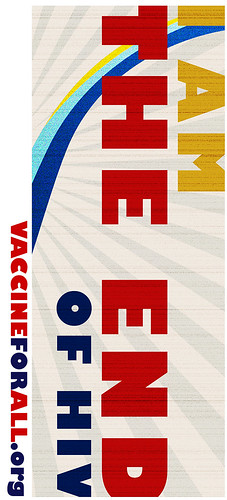
The HIV Vaccine Trials Network is launching a social media campaign to coincide with Martin Luther King’s Day and to publicize the Legacy Project’s new website, www.vaccineforall.org.

Will you help them out? 

It only takes a few minutes and you can do this in the comfort of your home, your office, the local Caribucks, on the beach, on the El, on your four-poster - wherever you got wireless and a device, hons...


1. Go to this link and print out the sign, "I am the end of HIV":

2. Take a photo of yourself holding the sign. (Smiling encouraged.) Here’s a chance to put a face on HIV vaccine research in a fun way.

3. Post the photo on your Facebook or MySpace page. Use it as a profile picture at least through Martin Luther King’s Day (Jan 18).

Another option is to take any of the linked poster images and use it as your FB profile picture

4. Update your status (on FB, Twitter, etc) so that it says something like:

“I am the End of HIV” or
“If we want an HIV vaccine to work for us, we have to work for it” or
“I’ve changed my profile picture to help everyone become aware of the need for support of HIV vaccine research. Please go to http://vaccineforall.org to learn more.”

5. Share your picture on our HVTN Facebook page. (You first need to become a fan and then you can post the picture onto our wall or in the designated photo album.)


Friday, January 8, 2010

Q&A - What's up with the new vaccine trial in Chicago?

We really need the public to engage with us and be in this fight for the long haul... It took over 45 years to find the vaccine for polio!

An exclusive LifeLube interview with Sanford E. Gaylord, 
Community Educator, Project WISH


LifeLube - What HIV vaccine is being tested in the new study just launched in Chicago?

Sanford - At the University of Illinois at Chicago - Project WISH (We’re Invested In Stopping HIV), we launched HVTN 505, September 2009. HVTN stands for the HIV Vaccine Trials Network (www.hvtn.org). There are two types of vaccines that will be used in the study: DNA and Adenovirus vectored vaccines. The DNA vaccine is a synthetic replication of pieces of the HIV virus. It’s made in a laboratory and cannot give anyone HIV infection. Adenovirus vector is a common cold virus that is used to carry synthetic pieces of the HIV virus. This combination of vaccines has been used previously to stimulate the immune system in other studies and has been shown to be well tolerated.

Project WISH has been affiliated with the HVTN since 2001 and we’ve conducted clinical trials in partnership with them since 2004.

-What will the trial tell us?

The purpose of HVTN 505 is to teach us more about how a vaccine can stimulate production of T-cells to help the immune system respond to HIV if a person is exposed. We hope to learn if this vaccine can decrease the viral load of people who become infected with HIV. The lower the viral load, the longer it may take before a person develops symptoms of AIDS. An HIV vaccine that lowers viral load may delay the onset of illness, even if it doesn’t prevent HIV. A lower viral load may also reduce transmission of the virus to others. If the 505 vaccine does lower viral loads, scientists will know they are on the right track with vaccines which stimulate cellular (T-Cell) immunity. 

-Where else is the trial taking place? 

There are a total of 14 sites across the nation. In addition to Project WISH, trial is taking place simultaneously in the following cities: Atlanta, GA, Boston, MA; Birmingham, AL; Los Angeles, CA; Nashville, TN; New York, NY; Philadelphia, PA; Rochester, NY; San Francisco, CA; Seattle WA; and Washington, D.C. Check out www.hopetakesaction.org for a complete listing of sites.

-Who is being recruited for this study and why? How many people are you looking for in Chicago, and nationally?

Men who have sex with men (MSM) and Male to Female Transgender individuals 18-45 years of age who are fully circumcised are being recruited. The MSM population within the U.S. still bears the burden of HIV within our country.

We’re looking to recruit 80 people at Project WISH; nationally, we’re looking to recruit 1,350 people to participate in HVTN 505. 675 study participants will get vaccine and 675 will get a placebo.


- If I were to participate, how much time would it take, and what could I expect?

We’re looking for a 5 year commitment from study volunteers. The DNA vaccine will be given on 3 separate visits and the adenovirus vaccine at month 6. Then we continue to follow people for safety and we continue to provide HIV risk reduction counseling and HIV testing every three months. We’re also looking to see how their body is responding to the vaccine. There will also be physical exams and behavioral risk questionnaires. Each volunteer will receive a stipend of $ 40-95 per visit, depending on the type of visit.

-What are some of the benefits for me to participate in this trial?

This study may help in the search for a preventive HIV vaccine. At this point in the epidemic, we all must do our part so we can create a difference, especially for the generations that follow us all.

Being in this study might be beneficial to some of the study volunteers. The counseling that volunteers receive as part of the study may help them avoid getting HIV infection. The lab tests and physical exams may detect unknown health problems.

-Will this trial find a cure for HIV?

No, but it will advance our prevention efforts. Scientists believe that an effective preventive HIV vaccine is possible and are working to speed up the research process. Developing safe, effective and affordable vaccines are the best hope for controlling and/or ending the AIDS epidemic.

-Why does vaccine research take so long? Shouldn't we have something by now?

Research always requires multiple trials to find the right answer. For example, most of us wouldn’t think twice about taking Tylenol for a headache. Many may not have any idea how many trials it took to find a new pain reliever. Similarly, vaccine research has taken many years for other diseases as well. It took over 45 years to find the vaccine for polio!

I think what is important to remember is that even in trials where the product didn’t work as well as we hoped, we have still learned a great deal. Each trial is helping us to refine and retool our strategies so that we can move forward in our search. We really need the public to engage with us and be in this fight for the long haul.

-What are some of the risks to me as a trial participant?

Most common side effects from the vaccine are mild and include headache, tiredness, injection site pain or a small bump and/or scab at the injection site.

-Can I get HIV from being in this trial?

It is impossible to get HIV infection or develop AIDS from experimental vaccines. They are not made from live HIV, killed HIV, weakened HIV, or HIV-infected cells; they are synthetic replications. The investigational vaccines in this trial cannot cause HIV infection.

-I heard that some people test "false positive" in vaccine trials. What does that mean? How do you know if the positive result is truly false, or if in fact the person has seroconverted?

If you received the vaccine you might appear positive on the most common HIV tests. These tests are designed to look for the presence of antibodies to HIV and not the virus itself. We actually hope that the study vaccines will cause people to create antibodies; that is one indication that the vaccine is stimulating the immune system. This is what people may be referring to as a “false positive.” We encourage our study volunteers to only get their HIV testing done at our clinic during the trial because we can use tests that are able to tell the difference between vaccine-induced antibodies and a true HIV infection.

At the end of the study, volunteers who are showing antibodies from the vaccine will be provided HIV testing for free as long as they test “false positive.” Previous vaccine studies have shown this “false positive” may remain for years or may go away after some time.

-Would you encourage your best friend, or a close relative, to participate in this trial?

That’s a good question! I believe that this trial is well designed and well monitored but each person really needs to decide for themselves. I would encourage people I know to call or go to the website www.hopetakesaction.org and learn more about the study and meet with one of the study staff to get all of their questions answered.

Being in a study isn’t always the best decision for each individual or they may not be eligible for this particular trial, so its important to have all the facts and consider whether this seems like the right thing for you.

Even if people decide not to join the study, they can still help support our efforts in other ways. They can help educate others about vaccine research and help us to break down myths and misinformation that are out there. They may also want to join our Community Advisory Board.

-If I am interested in participating, what are my next steps?

Interested individuals can check out www.hopetakesaction.org for details. If you’re in the Chicago area, contact Project WISH toll free at 800-575-5758 or email us at wish@uic.edu. You can speak with our study staff for more information and see if you are eligible to participate, and learn how you can join us in the effort to stop HIV. 

Friday, November 20, 2009

Got Five Dollars?

Nice little video by Covalent Immunology encouraging people to pony up for vaccine research. The Cast includes Lady Bunny, Justin Bond, Ben Andrews, Angie Pontani, Kristen Renton, Thea Gill, Wilson Cruz, The Pixie Harlots, and Hydeia Broadbent.


Related Posts Plugin for WordPress, Blogger...

select key words

2007 National HIV Prevention Conference 2009 National LGBTI Health Summit 2011 LGBTI Health Summit 2012 Gay Men's Health Summit 2012 International AIDS Conference ACT Up AIDS AIDS Foundation of Chicago Africa BUTT Bisexual Bisexual Health Summit Brian Mustanski Center on Halsted Charles Stephens Chicago Chicago Black Gay Men's Caucus Chicago Task Force on LGBT Substance Use and Abuse Chris Bartlett Coaching with Jake Congress David Halperin David Munar Dr. James Holsinger Dr. Jesus Ramirez-Valles Dr. Rafael Diaz Dr. Ron Stall ENDA Ed Negron Eric Rofes FTM Feast of Fun Feel the love... Friday is for Faeries Gay Men's Health Summit 2010 HCV HIV HIV care HIV drugs HIV negative HIV positive HIV prevention HIV stigma HIV strategic plan HIV testing HIV/AIDS HPV Howard Brown Health Center IML IRMA Illinois International AIDS Conference Jim Pickett LGBT LGBT adoption LGBT culture LGBT health LGBT rights LGBT seniors LGBT youth LGBTI community LGBTI culture LGBTI health LGBTI rights LGBTI spirituality LGV Leon Liberman LifeLube LifeLube forum LifeLube poll LifeLube subscription Lorenzo Herrera y Lozano Lymphogranuloma Venereum MRSA MSM Monday Morning Perk-Up National AIDS Strategy National Gay Men's Health Summit One Fey's Tale Peter Pointers Pistol Pete PnP PrEP President Barack Obama Presidential Campaign Project CRYSP Radical Faerie STD Senator Barack Obama Sister Glo Sisters of Perpetual Indulgence Susan Kingston Swiss declaration Ted Kerr Test Positive Aware Network The "Work-In" The 2009 Gay Men's Health Agenda Tony Valenzuela Trans Gynecology Access Program Trans and Intersex Association Trevor Hoppe Who's That Queer Woof Wednesday You Tube abstinence only activism advocacy african-american aging issues anal cancer anal carcinoma anal health anal sex andrew's anus athlete ball scene bareback porn barebacking bathhouses bears big bold and beautiful bisexuality black gay men black msm blood ban blood donor body image bottom chubby chaser circumcision civil rights civil union communication community organizing condoms crystal meth dating dating and mating with alan irgang depression disclosure discrimination domestic violence don't ask don't tell douche downlow drag queen emotional health exercise female condom fitness gay culture gay identity gay latino gay male sex gay marriage gay men gay men of color gay men's health gay pride gay rights gay rugby gay sex gay youth gender harm reduction hate crime health care health care reform health insurance hepatitis C hiv vaccine homophobia homosexuality hottie hotties how are you healthy? human rights humor hunk immigration international mr. leather internet intimacy leather community leathersex lifelube survey love lube lubricant masturbation mental health microbicides middle music negotiated safety nutrition oral sex physical health pleasure podcast policy politics poppers porn post-exposure prophylaxis prevention prostate prostate cancer public health public sex venues queer identity racism recovery rectal microbicides relationships religion research safe sex semen sero-adaptation sero-sorting seroguessing sex sexual abuse sexual addiction sexual health sexual orientation smoking social marketing spirituality stigma stonewall riots substance abuse treatment substance use suicide super-bug superinfection syphilis testicle self-examination testicular cancer testing top trans group blog transgender transgender day of remembrance transgendered transmen transphobia transsexual universal health care unsafe sex vaccines video violence viral load writers yoga youtube