Showing posts with label religion. Show all posts

Friday, March 2, 2012

[VIDEO] God Loves Gays

via HuffPost Gay Voices, by Jordan Bach

The anti-homosexuality bill known to many as the "Kill The Gays" bill has been put back on the table for consideration in Uganda.

The proposed legislation would deliver a life sentence in prison for any consensual gay sex act, and the death penalty for gay sex acts by a person with HIV.

Driven mostly by religious fervor, the bill is a searing reminder that, for so many human beings around the world who are born gay, life does not "get better."

Upon hearing this news, I felt an almost unbearable sadness for these oppressed men and women. In videos posted online, their deep-rooted shame is palpable, and I see myself in their faces, in their speech, and in their dreams for their lives.

I cannot separate myself from them. I know that whatever is happening to them is very much happening to me, and to every one of us.

This week, I felt a resolve to do something about it. I recorded my first YouTube video with the intention of illuminating the fact that, despite everything we've heard, God loves gay people.

Though it has never been my goal to convince non-believers, I'll point out that one needn't condemn spirituality simply because a handful of religious extremists has misinterpreted holy scripture; that's throwing the baby out with the bathwater.

Instead, I urge gays to look inward and perceive their own very personal love -- that is God, and it will save you and, indeed, the world.


Monday, February 6, 2012

The Relationship Between Faith and Marriage Equality

via HuffPost Gay Voices, by Ross Murray

More than a handful of states are currently debating whether to extend the legal protections marriage brings to gay and lesbian couples and their families.

We are watching with anticipation as states like Washington and Maryland inch closer to treating all families with fairness and equity.

Governors of both of these states have talked about their Catholic faith and their strong relationships with their faith as they pledge their support for marriage equality.

Something is happening, right now, that is calling them to support fairness and equality at this time.

We are in the middle of a watershed moment for LGBT equality.

The time is right for individuals, cities and whole states to start recognizing and respecting the care and commitment of loving gay and lesbian couples.

Over the past few years, as we've seen more states legalize marriage equality, we've also seen public opinion inching upwards. According to several recent polls, a majority of Americans of all creeds and affiliations now support full marriage equality.

And through all of these conversations about LGBT equality and marriage, religion is playing a prominent role. When the movement toward marriage equality started, people of faith were portrayed by the media as being entirely and unilaterally opposed.

But as the conversation has continued, and as more and more people have cited their faith as a reason they support their LGBT friends, neighbors and family members, that perspective is starting to change.

Personally, I applaud the media's attention to the faith perspective on LGBT equality. As a committed Christian and a gay man, I'm excited to see two important aspects of my identity garnering recognition in the media.

Growing up in my small church, I realized that I had an undying love for God and the worshipping community gathered to give glory. I also knew that my being gay was going to be difficult for others in our church.

After reconciling my faith and my sexual orientation for myself, I've worked for years on LGBT inclusion and equality in religious communities. Now, doing the religious work for GLAAD, it is gratifying to see the same faithful conversations about faith, equality and inclusion out in the wider world.

And I know I'm not alone. There are thousands upon thousands of people of faith who are also lesbian, gay, bisexual and transgender (LGBT), and who are committed to their faith and its relationship with their sexual orientation or gender identity.

This is exactly why the way we talk about religion and the LGBT population is so important. It should reflect the caring conversation that is happening in places of worship across the country.

The validation from faith already exists and is growing. Religious communities and people of faith are increasingly welcoming and supportive of LGBT people.

According to a recent research note by the Public Religion Research Institute, majorities within most religious groups favor allowing gay and lesbian couples to marry.

These religious group with a majority of LGBT supporters include Jews, religious people who identify as neither Christian nor Jewish, Catholics (both white and Hispanic) and mainline Protestants.

Even in religious groups that do not have a majority of LGBT support, affirming people are increasing numbers and working toward LGBT equality both inside and outside their denominations.

Although the coverage has improved, we still need the media to better reflect that reality. Instead of sometimes focusing exclusively on religious opposition to LGBT equality, we need more stories that reflect the truth that people are being called to love and support their LGBT friends and family.

Life is much more complex than the "gays versus religion" stereotype that has been so often portrayed in the media.


Read the rest

Thursday, January 19, 2012

Religion, Family, and Gay Teen Suicides

via HuffPost Gay Voices, by Aaron Anson

It breaks my heart to read about yet another gay youth suicide. What's astonishing to me is that I know of three gay suicides in as many months just among my Facebook friends.

That's a whole lot, considering my relatively small number of friends. Granted, I don't know them all personally, but most of us share the common bonds of like-minded values and a respect for human life.

Current events have caused me to start thinking -- a little deeper than before -- about the senselessness of these tragedies.

As I listened to the "It Gets Better" message produced a month ago by Eric James Borges (who recently took his life), I could hear the pain of abandonment in his voice as he spoke about growing up in a deeply religious -- and deeply prejudiced -- home.

This appears to be a common thread among every gay suicide I've had to ponder. Deep in the fabric of the pain that pushes them to take their own lives is hate, more than likely 
"justified" by the misguided religious beliefs of others.

Most media attention tends to focus on peer bullying as a major factor, and I agree with that to an extent. But often overlooked is the impact of the hateful bullying that takes place right in our own homes.

Dogmatic religious beliefs are the most often used defense against acceptance of gays.

That argument lacks the most credibility and is the least tenable. It's hard to fathom a parent who despises and exudes contempt for their own child, but it's happening all the time.

I have the unfortunate privilege of hearing their stories almost daily, and it never gets any easier. The emails are from gay youths thrown into a reparative therapy of the worst kind: rejection by siblings and parents.

Many are left homeless on the street, with all family communications cut off. They're uninvited to family events, and parents feel that their actions are justified by religious dogma -- it's the Christian thing to do.

Rejection exacerbates the self-defeating nature of hate on a universal level, because it was most likely heterosexual relationships that procreated gay children: black or white, pharmacist or drug pusher, president or car thief.

The simple solution would be for "haters" to not procreate. As unrealistic as that is, it would prevent some hate on the secular level of human existence.

Most aren't willing to abstain from sex; it's a price they aren't willing to pay.

My cousin was a teenager when my family first learned he was gay, and you would have thought an airplane had crashed in our backyard.

The malicious, bigoted religious rhetoric that ensued stunk to the heavens. I'm certain it contributed to my remaining closeted for the next 20 years.

When I finally did come out, you would have believed Jesus himself had shown up in the backyard that time. Their rhetoric was condescending, venomous, and loaded with ill intent.

It felt like the weight of the world was upon my shoulders. I've since become immune to the dissent, but the pain that these gay youths endure from those supposedly closest to them is simply unimaginable, and it's because they've been indoctrinated with religious beliefs that condone hate.

There are no winners in this religion-driven massacre of human life. The loss of even just one life is a love story that will never be told. If gays (or others) need any justification for rejecting religion and hate-based teachings, it can be found within the family circle, long before the impact of society.

This burden of judgment and condemnation that awaits at home is horrendous and completely unbearable for many.

Families must accept that using language that dehumanizes gays does not make them virtuous -- and it cannot make their children straight -- contrary to what religious beliefs may have taught them. Even if they can't identify with what it's like to be gay, they can still love their gay son or daughter.


Read the rest

Friday, January 6, 2012

Op-ed: Gays and Mormons, Do Unto Others

via Advocate, by op-ed contributor Mitch Mayne

I think it’s no secret that I’m an openly gay, active Latter-day Saint. In August of last year, I was called to serve as executive secretary in the bishopric of the Bay Ward in San Francisco — as an openly gay man.

Yes, I have been in a monogamous, committed relationship with someone of the same gender.

Yes, I was deemed worthy to hold this post and sustained in the identical fashion any heterosexual man would be.

No, I have not committed to a life of celibacy, nor have I denounced my sexual orientation.

I won’t apologize to the Mormon community for being gay — but I won’t apologize to the gay community for being Mormon either.

A week ago someone sent me a link to Fred Karger’s site The Top 10 Craziest Mormon Beliefs. At first I thought it was a joke (and frankly, still kind of do).

Anyone, anywhere (Mormon or not) can submit “factual Mormon doctrine” to the site, so really there’s little legitimate fact to be found.

It kind of reminds me of the urban myth that was circulating a few years back — about the man who woke up in a bathtub full of ice, only to discover his kidneys had been removed for sale on the black market.

Like the kidney story, most of the content on The Top 10 Craziest Mormon Beliefs is fringe belief stretched to the point of complete urban legend.

The content isn’t really worth a point-counterpoint debate since, quite frankly, there’s such little substance.

But there is something here that is worth addressing, and that is the principle behind why such a site exists in the first place — especially given the remarkably similar histories of persecution shared by the gay and Mormon communities.


Read the rest

Thursday, October 13, 2011

At the Crossroads of being Gay and Muslim

via Advocate, by Amanda D. Quiraishi

During the past decade North America has seen an emergence of politically motivated Chicken Littles running around frantically warning of an imminent takeover by Muslims and their Sharia law.

Insurgent Republican presidential candidate Herman Cain, for example, famously said he wouldn’t allow any Muslim to serve in his Cabinet for fear of the foreign-sounding code of laws.

Religious and political scholars as well as the Muslim mainstream have effectively repudiated such nonsense.

The real story, however, lies with progressive Muslims who are using the protection of secular Western laws to actively reform centuries-old interpretations of their faith.

In May 2009 in Toronto, El-Farouk Khaki, his partner, Troy Jackson, and their mutual friend Laury Silvers founded el-Tawhid Juma Circle, the first mosque created for all gender identities and sexual orientations. And this year two sister circles formed — in Atlanta and Washington, D.C.

Khaki is a longtime activist in the Muslim world, but he knew a place for LGBT people was needed after September 11, 2001.

Khaki found himself called to defend Muslims living in the West against discrimination and prejudice because of terrorism done in the name of Islam.

Yet, despite his dedication in representing Muslims, he soon ran into opposition.

“I found that there isn’t a lot of understanding for someone who is both openly Muslim and openly gay,” Khaki says.

“Many queer or socially progressive Muslims give up their religion because they feel there is no space for them, and often they lose their spirituality in the process. I got tired of people saying ‘we need more inclusive spaces’; ‘we need more female imams.’ Who is stopping you from having these things? If there is no space for you, make the space!”


Read the rest

Tuesday, September 6, 2011

Duchess reflects (rants) on death, ritual, identity, and pink carnations

[LifeLube is bloody thrilled to present Duchess a new, semi-irregular column featuring the ramblings of an English Duchess. This is the second - more to come. Click here for the first.]


Unfortunately we all die, it's a sad reality that comes as part of humanity.

As I don my black twin set and antique pearls to bid another close friend goodbye, I started to reflect on the rituals and language around death and bereavement in our own lesbian, gay, bisexual and trans communities.

Most of the ritual around death is based in religion and it is ironic that many of us return to these faith based rituals to mark the end of life when for the majority of our lives organised religions often isolate and marginalise us because of our relationships and life partners. Although there are smaller groups within these faiths who acknowledge our lives and value us, they are splinters from the main religious tenement and few have structured ceremonies for the bereaved.

As a community we have gone through an almost genocidal onslaught on gay and bisexual men through the HIV epidemic, and many of our trans and lesbian and bisexual sisters and brothers were not left untouched. There were periods in the 80's and 90's where the funerals came so thick and fast it was worse than the new season on Broadway and we ran out of small talk and chit chat as we bumped into each other again and again, laughing, crying, remembering and rejoicing the lives of those we had lost.

But despite all of this death, we are drawn back to the hetero-norms of religion to mark the passing of our lives, we have no language for death and bereavement in our community and hence struggle to find a community paradigm to mark the passing of loved ones.

I was most struck as I tried to simultaneously swallow a dry and tepid cucumber sandwich and shake hands with the bereaved partner that there is no language in our community for the bereaved.

The heterosexual terms of widow and widower are based on the concept of marriage, a luxury of language denied to the vast majority of our community across the world. We have fought long and hard to argue that our relationships have validity and have them recognised in law, but as a community we have yet to develop the language that goes with these life-long partnerships. When a gay man looses his partner of five, ten, twenty years, we just re-classify him as single and expect him to find someone else. There isn't a tick box on the form for 'civil partner bereaved' and yet widower doesn't quite fit - despite the drama queens running for the veil and gin gimlets!

The advent of anti-retrovirals has changed the nature of HIV and AIDS in the western world, yet infection rates continue to rise amongst gay men and as people live longer we are seeing the returns of lives of hedonism full of smoking, drugs and alcohol coming home to roost with strokes, heart attacks and early onset dementia, and frankly there are enough dizzy queens in the world without adding hoards of demented queers to their numbers! As we live into old age and some of us who have been fortunate to find life partners, will find ourselves loosing them, being the one left behind, and we need a new language to describe that state.

At one funeral the pastor stumbled over the re-written core text, where 'he' and 'she' had to be switched to recognise that this was the funeral of one part of a same-sex partnership and despite the best  intentions the wording didn't fit and it all felt a little forced in. Of course the awful choice of floristry didn't help, bright pink carnations are never a good funeral flower, I don't care how camp you are!

Almost every tribal community has a special place for the bereaved, especially the widows, from the dowager empresses of the forbidden city to the white widows of India, these communities recognise the special and unique space occupied by the bereaved.

So what space do we create in our diverse, migrating, fluid and fluctuating community?

How many LGBT community services and organisations run bereavement services?, how many of us have asked about how the local funeral home will recognise and accommodate queer identities?

How often do you see bereavement materials which are LGB and T inclusive in language and imagery?

Now this might just be a personal rant as I am not as young as I used to be and despite surgical interventions and the wonder of botox, I know that unlike Cher, I will not live forever, none of us will (okay I'll give you Joan Rivers and Cher might), so why don't we get the discussion going and find a language, rituals and identity which values our lives and our loves in death as well as in life.


Friday, August 5, 2011

The Guilt Myth

via The Body, By Aless Piper

My very Christian friend won't pray for my friend with AIDS who is currently going through a rough time medically. Yes, I am pissed off. This is a person who will pray -- without hesitation -- for a man with lung cancer who smoked a pack a day (or more) since the age of 12 and is now sixty-odd. But because to my Christian friend's mind anyway, my friend had to have done something to get AIDS, s/he will not pray for him/her. Where's the logic in that one?

Now I'm not too sure if this person would appreciate prayers in the first place. S/he is an atheist, as are most of the people I know with HIV/AIDS. But that's not the point. The point is, my very Christian friend won't even offer to pray for him/her, or even to keep him/her in their thoughts.

I could continue to talk to a wall, but I want to talk it out here instead. Why is that love the sinner hate the sin mentality, which so many Christians boast, oddly absent when it comes to HIV/AIDS in America?

Subscribing to the school of thought that you shouldn't ask a question unless you have a half decent idea of the answer, I have a theory and it all comes down to this: guilt and innocence.
 

Edward explained it to me in 2005: "Some people use it [the knowledge of how someone was infected] to see if they can (morally/based on their value system) accept you. People who were infected through the blood system and secondarily infected are thought to be 'victims' while gay men are thought to be 'deserving' of it. No one deserves HIV. How we become infected is irrelevant."

Would you ask someone with lung cancer how they got it? More important, would it matter?

Read more.

Monday, July 25, 2011

Black and LGBT in the Black Church

via Black Enterprise, By Tomika Anderson

Rigid attitudes around homosexuality in the church, mosque and in communities of color overall may explain the fervor that surrounded embattled Georgia pastor Eddie Long.

After years of publicly denouncing homosexuality—even going so far as to lead a special ministry for gays and lesbians in order to convert them into heterosexuals—Bishop Long was sued last year by four young men who alleged he used his pastoral influence to coerce them into a sexual relationship with him. A national uproar ensued as he scurried to settle with them out of court.

Some argue that had it been women Long had the affairs with, he might have gotten a slap on the wrist. But because his dalliances allegedly involved (underage) men, his feet were put to the proverbial fire.

New York City-based trauma expert and wellness coach Dara Williams says it is the fear of public condemnation that keeps folks—in and outside of the church—from being honest about who they are when it comes to their sexuality. “The black community is very conservative about most sex-related issues,” she says, “and homosexuality is one of them. Sexuality in our community is generally oppressed or not discussed, and we can see through our [collective] rate of HIV infection that this kind of secrecy is literally killing us.”

Read more.

Wednesday, July 6, 2011

What Does The Bible Really Say About Being Gay?

via allvoices.com, Veronica Roberts

And what happens if one does not believe in the Bible? Has a totally different philosophy or religion to the Christian one? Who decides whose 'God,'' Jehovah,' 'Allah,' 'Jah' 'Buddha,' etc. is the real One?

What if one believes in a Supreme Being but does not take the Bible as God's words, literally?

What if the Bible is a scholarly text, written and influence by the time period in which it was compiled? A time when a certain phrase meant something completely different to what some of us interpret it to mean today?

There is overwhelming evidence that life evolved. That the earth and the rest of the Universe was not created in six days. Is not a couple of thousands years old but billions.

'God created Adam and Eve not Adam and Steve.' We all have heard this catchy phrase shouted or written boldly on placards or Tee-shirts everywhere. But was the first human on earth really a male? Or was she female?

It's 2011 and many still live in oppressively patriarchal societies in several parts of the globe. The Adam story certainly fits into that sort of male dominance and control, doesn't it? Give credence and holy justification.

Read more

Friday, June 24, 2011

Homosexuality: Editing the APA Manual, the Bible and the Book of Life

via examiner, By Kevin Probst

In 1973, the American Psychiatric Association (APA) declared that homosexuality was not a disease simply by altering its own 81-word definition of sexual deviance.  Presto, just like that, a new declaration made in a moment of time redefined sexual behavior.  The APA still considers Gender Identity Disorder and Transvestic Fetishism to be mental disorders.  If this seems inconsistent it shouldn’t be a problem for the APA to pick up the black marker and strike a couple more disorders from its manual.

 I’m not a Psychiatrist and I confess that I have very little interest in the field.  I wouldn’t know a mental disorder if it were staring me in the face which is probably evidence that I have a few.  But, I’m taken back by what seemed to be a lack of debate on the issue.  If this was a mental disorder on Monday how could it have simply ceased being a disorder on Tuesday because it was blotted from the book?  If a group of oncologists gather and declare cancer to no longer be a disease does it make it so?

 I’m not in total disagreement with the APA regarding their assessment.  I don’t think homosexuality is a disease.  I think it is but one sinful behavior in a long list of sexual sins condemned by the Word of God.  Also on that list is adultery, fornication, pre-marital sex, etc.  Sexual sin is a sub-category of a larger list of sinful behaviors including theft, lying, idolatry, e.g. the Ten Commandments.  It is true that one of these sins is no more or less offensive to God than another.  Sin is basically choosing to have it our own way rather than submit to the authority of God.  It boils down to pride, or as Old Blue Eyes used to sing, “I did it my way.”

So, why address the sin of homosexuality?  Why not address adultery, or theft or deception?  Christians often feel the need to isolate homosexuality because it is being redefined by the culture.  The success of having homosexuality stricken from the APA’s list of mental diseases was intoxicating to homosexual activists.  Naturally, the next step would be to erase homosexuality from the Bible.  It’s referral to homosexuality as a deviant, sinful behavior is very detrimental to the goal of societal acceptance.  It should be easy, just declare it to no longer be a sin and presto, it shall be so.

Read more.

Monday, May 2, 2011

Black Gay Men, Homophobia and The Black Church

via Black Gay Men's Blog

Black Gay Men’s Blog takes a look at homophobia and the Black Church. How do black gay men, many of whom were brought up Christian, in black churches, balance their homosexuality with the overt homophobia and hypocrisy of the Black Church? The guilt many black gay men, bisexuals and MSM feel is often as a direct or indirect result of the homophobic teachings of the black churches we attend and this homophobia has spilled over into the black community at large. Is it possible for black gay men to truly love, accept and respect themselves, be happy and emotionally balanced and live honest fulfilling lives, while listening to homophobic rhetoric from the pulpit every Sunday, or is the answer to either abandon our Christian faith, or form our own churches?

Read more

Sunday, November 21, 2010

Pope Says Okay to Condoms for Rent Boys

via CNN.com

Pope Benedict XVI's possible shift on condom use is a "significant and positive step forward," the head of the United Nations anti-AIDS campaign said, welcoming the potentially historic remark.


"This move recognizes that responsible sexual behavior and the use of condoms have important roles in HIV prevention," UNAIDS executive director Michel Sidibe said in a statement.

"This will help accelerate the HIV prevention revolution," he said Saturday.
The Roman Catholic Church firmly opposes artificial contraception, including condoms.

The pope caused a firestorm of protest last year when he spoke out against condoms as a way of controlling AIDS during a trip to Africa, the continent hardest hit by the disease.

 
"You can't resolve it with the distribution of condoms," the pope told reporters in March 2009. "On the contrary, it increases the problem."

But he outlined a possible exception in remarks published Saturday.

Read the rest.

Monday, November 8, 2010

Episcopalians Bummed to See Bishop Gene Go

via The Boston Globe, by Janet Walsh

Across the Episcopal Diocese of New Hampshire, congregants and clergy today reacted with heavy hearts to word that Bishop V. Gene Robinson is retiring.

Robinson, 63, whose consecration seven years ago as the first openly gay bishop in the Episcopal Church divided the Anglican Communion worldwide, yesterday announced at the annual convention of the New Hampshire diocese that he plans to retire in January 2013, short of the mandatory 72-year-old retirement age for Episcopal bishops. He cited death threats and the considerable strain that the worldwide rift has placed on him, his family, and the church.

"The fact is, the last seven years have taken their toll on me, my family, and you," Robinson told the convention. "Death threats, and the now-worldwide controversy surrounding your election of me as bishop, have been a constant strain, not just on me, but on my beloved husband, Mark, who has faithfully stood with me every minute of the last seven years."

Read the rest.

NYT: In Efforts to End Bullying, Some See Agenda

via NYT, by Erik Eckholm

 Alarmed by evidence that gay and lesbian students are common victims of schoolyard bullies, many school districts are bolstering their antiharassment rules with early lessons in tolerance, explaining that some children have “two moms” or will grow up to love members of the same sex.

But such efforts to teach acceptance of homosexuality, which have gained urgency after several well-publicized suicides by gay teenagers, are provoking new culture wars in some communities.

Read the rest.

Tuesday, October 26, 2010

Religious Leader Jim Wallis Urges Christians to Stand with Gays and Lesbians

The homophobic proselytizing done from pulpits each Sunday has directly contributed to the verbal, emotional, mental and physical abuse that LGBT youth face each day in school. At least some spiritual leaders are stepping up and defending these kids.

Jim Wallis, founder of Sojourners Magazine and a Christian leader is among them:


I wore purple to commemorate "Spirit Day," in memory of the many young people who have taken their own lives as a result of harassment and bullying inflicted on them because they are gay. I wore purple because I am a follower of Christ.

A bully is a person who habitually intimidates, harasses, or commits violence against those who are smaller, weaker, or more vulnerable because of their "outsider" status. A bully stands in opposition to all of what Christ taught and lived. There is broad opposition within the Christian community to bullying, especially the sort that leads to the deaths we have seen as of late. This sort of harassment is indefensible. And the stories of young kids being so bullied that they take their own lives have been heartbreaking to hear.

Read the rest at HuffPo.

Sunday, October 17, 2010

Rabbi: Homophobia is the abomination


Excerpt:
As an orthodox Rabbi who reveres the Bible I do not deny the Biblical prohibition on male same-sex relationships. Rather, I simply place it in context. There are 613 commandments in the Torah. One is to refrain from gay sex. Another is for men and women to marry and have children. So when Jewish gay couples come to me for counselling and tell me they have never been attracted to members of the opposite sex in their entire lives and are desperately alone, I tell them, "You have 611 commandments left. That should keep you busy. Now, go create a kosher home with a mezuzah scroll on the door. Turn off the TV on the Sabbath and share your challah with many guests. Pray to G-d the prescribed three times a day for you are His beloved children. He desires you and seeks you out."
Read all of it.


Thursday, October 7, 2010

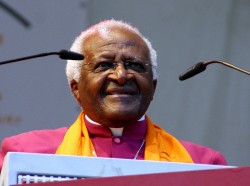
Archbishop Desmond Tutu's Five Best Quotes for Full LGBT Equality

Gay, lesbian, bisexual and transgendered people are part of so many families. They are part of the human family. They are part of God's family. And of course they are part of the African family.


Today marks Archbishop Desmond Tutu's last official day as someone publicly engaged in human rights work. The good bishop, who has been pushing for equality among races, genders and sexual orientations for decades, is set to retire today, capping off a legendary career that has made him a worldwide icon for peace and justice.

Though Archbishop Desmond Tutu may be most closely associated with ending apartheid and championing racial justice and reconciliation in South Africa, the Archbishop has become a leading supporter of full LGBT equality in recent years. Commenting on his Tutu's retirement, even U.S. President Barack Obama noted the work that the Archbishop has done to benefit LGBT rights worldwide.

Read the rest...

Thursday, August 19, 2010

Christian Blog Lists 14 Signs Your Husband is Gay; References Golden Girls and Glee


You can't make this stuff up, folks. Remember to remind your gal pals to watch out for men with gym memberships, interest in pop culture, ties to Asia or trendy clothes - he's a total Nelly! via christwire

1) Secretive late night use of cellphones and computers
Porn addiction is closely associated with homosexuality and a secretive nature implies he’s trying to hide something from you. Be on the lookout for a man who doesn’t want to web surf or answer phone calls in your presence. Texting is another favorite trick used by adulterers. For the sake of trust, a married couple should share everything, including phone logs, email accounts, chat friends and website histories.

2) Looks at other men in a flirtatious way
When you’re out in public, does he spend too much time looking at other men? Is he fond of winking at people? Does he get visibly upset when someone does not return a compliment about his physical appearance?

3) Feigning attention in church and prayer groups
Have you noticed a lack of interest in spiritual issues? Does it ever seem as if he’s just using church as an excuse to spend time around young men? Does he volunteer to mentor in all-male groups?

4) Overly fastidious about his appearance and the home
Natural men have a certain amount of grit about them. They sweat and they smell. Homosexuals often abhor this sort of thing and will also be incredibly particular about the cleanliness of the home. Does your man tweeze his eyebrows, trim his pubic hairs or use face moisturizers? Is he picky about brand name shampoos? Does he spend more time getting ready for a night out than you do?

5) Gym membership but no interest in sports
Gay men use the gym as a place to socialize and to have secret liaisons in the bathrooms. They like to work out their bodies without the competition of sports play. Afterward, they use the showers and steam rooms to engage in sexual activity beyond the prying eyes of women. If your man returns from the gym too exhausted to talk or have sex, that is a worrisome sign.

6) Clothes that are too tight and too “trendy”
Gay men don’t need words to communicate their availability for sex “hook ups.” They silently broadcast the news by showing off their lean, hard bodies in designer clothing labels. If your husband owns skinny jeans and looks at his buttocks in the mirror or if he wears an inordinate number of small-sized t-shirts, it is probably worthwhile to pay more attention to his private activities.

7) Strange sexual demands
Fetishism is a sign that a man is seeking a harder thrill beyond the normal intimacy of heterosexual relations. The woman may not appeal to the deep desires that are coming to the surface as the marriage drags on. If there is a sudden interest in sodomy, sadomasochism, lubricants, role-play, sex toys or other non-traditional intercourse methods, this is clearly an indication of deep emotional abnormalities.

8) More interested in the men than the women in pornographic films
Pornography is a dangerous element in any marriage but there are many Christians who feel watching it does add something to their sexual lives. If you have gone down this road and find that your man perks up at the sight of the men in these sorts of videos, you should be concerned. If he selects films because of specific male actors, this is an obvious sign that he is suffering from a crisis of ego and desire.

9) Travels frequently to big cities or Asia
Some husbands will spend a great deal of money traveling far from home to hide their deplorable same-sex actions. Big cities offer indulgence of every kind. From gay bars and clubs to prostitutes and sex bathhouses, a man seeking encounters can find them easily if he’s so inclined. Is there ever really a good excuse for a husband to visit Thailand or San Francisco without his wife?

10) Too many friendly young male friends
Someone who makes an extra effort to surround themselves with younger men should raise concerns in any community. If this is the case with your husband, ask yourself if he prefers their company to that of women. Do they touch each other or embrace in long hugs? Do they exchange expensive, personal gifts like scarves or cologne?

11) Sassy, sarcastic and ironic around his friends
A man who is secretly engaged in homosexual activity with others may exhibit feminine qualities when they get together in a group. In a sense, he has “let his hair down” and this will be seen in excessive back talk and speaking with one’s hands.

12) Love of pop culture
It’s quite common for young men to enjoy the science fiction end of popular culture, but when your husband becomes overly obsessed with romantic and feminine shows, that is cause for alarm. Gossip websites, Glee and The Golden Girls are three well-documented icons of the gay movement that genuine heterosexual men avoid.

13) Extroverted about his bare chest in public
Does he go shirtless in the back yard or at picnics when other men are around? Does he wear a speedo at the beach? Does it seem like he’s purposely standing right in the middle of a crowd to show off his chest and arm muscles, peppering people with questions about how strong he looks? He may be craving physical affirmation from other men and desperately looking for hints of shared desires in those around him.

14) Sudden heavy drinking
Sometimes people dealing with an unbearable emotional issue like homosexuality will turn to alcohol to hide their distress. Does your man disappear on drinking binges for long hours without answering his cellphone? Is there a strange odor about him when he returns, some strange mix of cigarettes and gel? Does he cry frequently?

Tuesday, March 2, 2010

LifeLuber Talks Sacred Sexuality

Lifelube's own Pistol Pete Subkoviak sat on a panel to discuss sexuality, diversity and spirituality at the Bodhi Spiritual Center in Chicago. The group discussed the hardships of growing up in religions and cultures that do not accept LGBT individuals, how they dealt with the challenges of their differences and how they now celebrate their Sacred Sexuality. Check it out below and hop over to Bodhi's website to see the entire Sacred Sexuality lectures!


Check out Part 2, Part 3 and Part 4!
Related Posts Plugin for WordPress, Blogger...

select key words

2007 National HIV Prevention Conference 2009 National LGBTI Health Summit 2011 LGBTI Health Summit 2012 Gay Men's Health Summit 2012 International AIDS Conference ACT Up AIDS AIDS Foundation of Chicago Africa BUTT Bisexual Bisexual Health Summit Brian Mustanski Center on Halsted Charles Stephens Chicago Chicago Black Gay Men's Caucus Chicago Task Force on LGBT Substance Use and Abuse Chris Bartlett Coaching with Jake Congress David Halperin David Munar Dr. James Holsinger Dr. Jesus Ramirez-Valles Dr. Rafael Diaz Dr. Ron Stall ENDA Ed Negron Eric Rofes FTM Feast of Fun Feel the love... Friday is for Faeries Gay Men's Health Summit 2010 HCV HIV HIV care HIV drugs HIV negative HIV positive HIV prevention HIV stigma HIV strategic plan HIV testing HIV/AIDS HPV Howard Brown Health Center IML IRMA Illinois International AIDS Conference Jim Pickett LGBT LGBT adoption LGBT culture LGBT health LGBT rights LGBT seniors LGBT youth LGBTI community LGBTI culture LGBTI health LGBTI rights LGBTI spirituality LGV Leon Liberman LifeLube LifeLube forum LifeLube poll LifeLube subscription Lorenzo Herrera y Lozano Lymphogranuloma Venereum MRSA MSM Monday Morning Perk-Up National AIDS Strategy National Gay Men's Health Summit One Fey's Tale Peter Pointers Pistol Pete PnP PrEP President Barack Obama Presidential Campaign Project CRYSP Radical Faerie STD Senator Barack Obama Sister Glo Sisters of Perpetual Indulgence Susan Kingston Swiss declaration Ted Kerr Test Positive Aware Network The "Work-In" The 2009 Gay Men's Health Agenda Tony Valenzuela Trans Gynecology Access Program Trans and Intersex Association Trevor Hoppe Who's That Queer Woof Wednesday You Tube abstinence only activism advocacy african-american aging issues anal cancer anal carcinoma anal health anal sex andrew's anus athlete ball scene bareback porn barebacking bathhouses bears big bold and beautiful bisexuality black gay men black msm blood ban blood donor body image bottom chubby chaser circumcision civil rights civil union communication community organizing condoms crystal meth dating dating and mating with alan irgang depression disclosure discrimination domestic violence don't ask don't tell douche downlow drag queen emotional health exercise female condom fitness gay culture gay identity gay latino gay male sex gay marriage gay men gay men of color gay men's health gay pride gay rights gay rugby gay sex gay youth gender harm reduction hate crime health care health care reform health insurance hepatitis C hiv vaccine homophobia homosexuality hottie hotties how are you healthy? human rights humor hunk immigration international mr. leather internet intimacy leather community leathersex lifelube survey love lube lubricant masturbation mental health microbicides middle music negotiated safety nutrition oral sex physical health pleasure podcast policy politics poppers porn post-exposure prophylaxis prevention prostate prostate cancer public health public sex venues queer identity racism recovery rectal microbicides relationships religion research safe sex semen sero-adaptation sero-sorting seroguessing sex sexual abuse sexual addiction sexual health sexual orientation smoking social marketing spirituality stigma stonewall riots substance abuse treatment substance use suicide super-bug superinfection syphilis testicle self-examination testicular cancer testing top trans group blog transgender transgender day of remembrance transgendered transmen transphobia transsexual universal health care unsafe sex vaccines video violence viral load writers yoga youtube