follow lifelube by email

Friday, September 30, 2011

How is Amanda Owens healthy?

I live a stressful life. I'm constantly on the go between two different jobs, being in school full-time, and volunteering for a few organizations. I also like to maintain a happy social life and spend time with my partner.

With all the different balls I'm juggling in my personal and professional life, I like to think that my health is one that is made of glass. When I drop that one particular ball, it shatters, and everything else comes tumbling down. I can't afford to let that happen, and let's face it, neither can you.

Not too long ago, I ran across the crucial idea of self-care. Self-care can mean different things to different people. To say healthy mentally, I wake up 15 minutes early every morning. The small amount makes a big difference. It's a nice pocket of time that helps me not start out the day in a rush and gives me leeway to make up something I forgot.

Another important addition to my daily life is me-time. I set my work aside and relax in a way that I find relaxing, reading for fun or watching a TV show that makes me laugh. It means that I have more work to do during the day, but I feel more prepared knowing that I was able to rest and cant start with renewed purpose and a sense of motivation. I also have incorporated stretching into my everyday. Whenever I feel tense or realize I've been sitting in the same position at work too long, I do a few yoga-like stretches to release the tension and refresh my attitude.

Similarly, this stretching has helped me to stay physically healthy, as well. I've also switched to biking everywhere I go to help with longer commutes and increase my workout time in the week. It's difficult to find time for the gym, but biking to work or school helps me gain some physical activity where I might have instead sat on a city bus.

Going to the gym a few times a week, biking 8-12 miles daily, and walking longer distances has also contributed to sleeping a full night of rest. Before, I would work with this pending sense of obligation that I must be productive all the time, every moment of the day. How was I helping anyone, much less myself, when I was operating at half-health status, chugging along, giving the minimum? Now, I get to bed at a time that would ensure 6-8 hours of sleep and am better able to tackle the 10-15 hour days I have among my different duties.

Another way I feel healthy, mentally and emotionally, is the time I spend cultivating positive and affirming relationships in my life. I came to a place in my life where I wanted the most out of the people I spend time with... quality over quantity.

 Friends who support me in my endeavors, my activism, and who had similar paths and goals have become life-supports. It was in this process that I was lucky enough to meet my someone, and my partner inspires me to be more of me, the best of me, as cliché as it sounds.

Building my community has increased my support system and my family.

These small additions to my busy schedule have improved my health greatly. I feel invigorated. It's also a cycle, I feel, that perpetuates itself. As I started biking, I felt like sleeping a full night and was hungry enough to eat a proper and nutritious meal, that lead to feeling more energized, that made me want to bike more, that continued the cycle of feeling great.

The most important thing I did to stay healthy was to ask myself what I really needed for self-care and what I wanted as a result. Then I took small actions that helped feed larger actions. I started small to become what I wanted a piece at a time.

Amanda Owens
-Chicago


How are you healthy?
Please join the hundreds who have shared their tips.

Tell us HERE. Send a pic to the same place.
And we'll blog it, right here on LifeLube.
Gay men and all allies welcome to participate.

Read past posts.
Learn more about the campaign


Feel the Love... Sister Glo Has Plenty of Time

Love is eternal, so let us give it some time.
~Chris Schwartz

Love is all you need with Sister Glo each Friday on LifeLube.

Ed Negron's Daily Motivation 9-30-11

Friday, September 30, 2011
Today's Gift

Believing that we deserve better is the first step.

Some people say there is magic in believing. Our expectations are powerful; they are self-fulfilling, in fact.  And if our expectations are generally negative, we'll find the circumstances of our lives pretty dismal too.
The good news is that when we expect better experiences, we'll also find them. How does this work? Surely it requires more than just believing. But it really doesn't. When we look for the good in every situation, we quite selectively see it. Making the choice to live this way means we'll regularly see opportunities for opening doors to better lives.

The formula is simple: Our Higher Power's plan for our lives is always for our benefit. Some part of that plan may be difficult to bear at first, but when we remember to believe that it is a positive opportunity, we'll feel its potential for changing our lives.

I will monitor what I believe about every experience I have today. Looking for opportunities will help me see them.

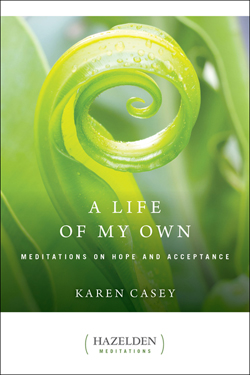
From A Life of My Own by Karen Casey ©:

 Read more Daily Motivations at http://thework-in.blogspot.com

Thursday, September 29, 2011

Racism in the LGBTQ Community

via HuffingtonPost, by Rev. Patrick S. Cheng, Ph.D.

Gay people love to talk about the diversity of our "community." But sometimes our actions fail to measure up to our words.

Recently, the queer Asian community in New York City was outraged by plans for a new gay party to be called "Mr. Wong's Dong Emporium."

The event, conceived by Joey Izrael and the gay rapper Cazwell, was advertised using highly offensive language and stereotypes about Asian Americans, including a "Sum Hung Boys erotic dance troupe" and a "Happy Ending massage den."

To add insult to injury, when members of the queer Asian community spoke up and objected to this party, many non-Asian gay men dismissed these concerns by saying that it was just campy fun and that we needed to "lighten up."

Fortunately, the Gay Asian and Pacific Islander Men of New York (GAPIMNY) refused to be silent. GAPIMNY published an open letter to the party promoters explaining why this party was so offensive to the queer Asian community.

To their credit, the promoters apologized and changed the name and theme of the party. Whether or not this becomes a teaching moment for the broader LGBT community remains to be seen, however.

As an openly gay Asian-American man, I often feel like a stranger in my own queer nation. A number of news articles in recent years have documented the widespread racism against Asians in the gay party scene, as well as in gay cyberspace.

The "Dong Emporium" incident is just one of many racist incidents that have angered the queer Asian community over the years. Twenty years ago, in the spring of 1991, the queer Asian community protested a New York City fundraiser by Lambda Legal that was held at the Broadway musical Miss Saigon, which had used white people in yellowface to play Asian roles.

In 2000, queer Asians were enraged by a Hotlanta circuit party that featured a "Year of the Dragon" theme and used offensive Asian stereotypes like a "china doll" pageant competition, a "fried rice" dance party, and an "ancient Chinese secret: boxers or briefs" event.


Read the rest

Our Aging LGBT Parents

via BayWindow, by Dana Rudolph

How do we help our parents as they age? For adults with non-LGBT parents, there are plenty of resources on how to help parents through the various legal, financial, and emotional issues of growing old. Search the web or your favorite online bookstore for "aging parents," and you’ll be swamped with results.

For adults who wish to help their LGBT parents, however, the resources are far fewer. And while many of the issues older LGBT and non-LGBT people face are the same, some are not.

Let’s not forget: LGBT parents have been choosing to have children together for over 30 years. Those who had children in previous non-LGBT relationships may have had them even before that. Those "children" now in their 30s or older have parents who, if not in their "golden years," are at least starting to turn silver.

Scott French, program manager for the Caring and Preparing program of Services and Advocacy for GLBT Elders (SAGE), said one of the most important things adults with LGBT parents can do is "to have conversations about making sure that your parents have a health-care proxy, a power of attorney, a living will," and a document (called by various names) about what they want done with their bodies after death.

"These are important for everyone, but they’re really important for LGBT older adults, especially if they’re partnered," he said. Unlike opposite-sex spouses, "there is no person who automatically gets to make those decisions" for LGBT older adults.

He also encourages people to talk with their parents about a will. Many people think they don’t need a will if they aren’t wealthy, French said, but noted, "Wills aren’t predicated on somebody who has wealth. They’re essential to be able to dictate what you want to happen to your possessions, whatever they may be."

And for people in same-sex couples, "you don’t always have the same protections, so it’s always better to have it in writing."


Read the rest

Ed Negron's Daily Motivation 9-29-11

Thursday, September 29, 2011
Today's Gift


Life without idealism is empty indeed. We must have hope or starve to death.
—Pearl Buck


Our ideals, the principles that order our lives, are essential to a healing life. Some of us have lived a pattern in which we did not know what we believed. If someone we liked stated a viewpoint, we might wear it for a while like a new shirt - but with no personal commitment. Others of us have indulged in negativism and hopelessness. Life is more fulfilling when we assert our beliefs and give ourselves to them. As human beings, we are unable to perfectly live out our beliefs, but we become whole men by giving our energies to the attempt.

Is beauty in music, art, and nature a worthwhile ideal for us? Are fairness and justice for all people what we value? Are love and brotherhood ideals we hold dear? When we dare assert these values in our lives, they are life giving to us. They mature us. Reaching for what is worthwhile, rather than cursing what is not, gives us a design for making all our choices, and we have hope.

I will dare to meet my negativism with my ideals. My spiritual health will give me life.
From Touchstones: A Book of Daily Meditations for Men©

Read more Daily Motivations at http://thework-in.blogspot.com

Wednesday, September 28, 2011

Woof Wednesday Peekaboo


Daily Motivation 9-28-11

Wednesday, September 28, 2011
Today's Gift
I can honestly say that I was never affected by the question of the success of an undertaking. If I felt it was the right thing to do, I was for it regardless of the possible outcome. —Golda MeirLiving a principled life is what the inner self desires. It's what our Higher Power desires. And it's what the healthier ego desires. Living the program's principles is giving each of us practice in living a principled life, one that is free of guilt for our shortcomings.

Having principles assures direction. We need not ponder long how to proceed in any situation, what decision to make regarding any matter, when we are guided by principles. They offer us completeness. They help us define who we are and who we will be, in any turn of events.

As someone in recovery, we have struggled with self-definition. Often we were as others defined us, or we merely imitated those close by. Sometimes we may slip into old behavior and lose sight of who we are and how we want to live. It's then that the program's principles come immediately to our aid.

There is no doubt about how today should be lived. I will do it with confidence and joy.

From Each Day a New Beginning: Daily Meditations for Women by Karen Casey
Read more Daily Motivations at http://thework-in.blogspot.com/

Tuesday, September 27, 2011

Stop Transmitting Silence: Join us for the conversation

There is a disturbing rise
in the number of cases of STD/STI and HIV/AIDS
in the black community.


What can we do to stop this?

Come hear from elected officials, public health advocates,
faith-based leaders, parents and youth.

Wednesday, October 5th
6pm-8pm

Chicago Urban League
4510 S. Michigan Avenue
Chicago, IL 60653

Refreshments will be served.

Monday, September 26, 2011

Reversing the Alarming HIV Increase Among Black Gay Men, Part 2


The second of a two-part series examining the high rates of new HIV infection among Black gay and bisexual men.

 Part 1 described the new data detailing the dramatic increases in new infections, examined some of the reasons driving the numbers and described the CDC's new social-marketing initiative, designed to encourage testing among Black MSM.

In light of the persistent increase in new infections among MSM (men who have sex with men)--and despite the Centers for Disease Control and Prevention's new testing initiative--a consensus has emerged among prominent Black gay men who have leadership positions in HIV/AIDS policy, prevention and public health: A larger investment is needed from public and private sources, as well as a more "holistic" approach to Black gay men's sexual health.

"It's a question of dollars," says A. Cornelius Baker, senior policy adviser of the Washington, D.C.-based National Black Gay Men's Advocacy Coalition (NBGMAC), which delivered a forceful set of recommendations in response to the CDC's incidence report.

 Across the federal bureaucracy, "there is not a sufficient investment in line with the scope of the epidemic in Black and Latino gay populations," he says.

"The CDC must increase funding to organizations providing services to young MSM and transgender [people] of color from $9 million to $14 million," says Baker, who is also board chair of the Black AIDS Institute.

 "Five years after its initial commitment, the numbers are worse, and their investment remains at $9 million. That makes no sense."

Among NBGMAC's additional recommendations: increased funding, capacity building in Black gay organizations, continuing HIV education for medical professionals, high-level consultations with Black gay men and research on how to lower the viral load in MSM communities of color.


Meet my Partner or Boyfriend?

by Sebastino Aviles

Language is one of the few things in life that we don’t really think about, I mean unless you’re a linguist or something like that, I consider it something that we take for granted.

That being said I’ve noticed that I catch myself changing up my language, depending on different circumstances, such as where I’m at, who I’m with, and what I’m doing.

 I’m sure everyone experiences this phenomenon all the time in their lives but do we really take the time to notice when and why we are doing it?

I believe that my language is reflected on who I am in terms of social constructions such as gender, race/ethnicity, sexuality, class, and age. If I use those social constructions I would describe myself as a young working class gay Latino man.

Language itself is a social construction and as a social construction it is subject to change depending on who is using it. Which brings me to my next point, as a gay man I often monitor my language depending on where I’m at, who I’m with, and who I’m talking to.

My prime example is how I change up my language is when talking to people about a significant other. Depending on who I’m talking to or where I’m at I would either call my significant other my partner or my boyfriend.

If I were to talk to a heterosexual person and I have my significant other with me I would normally introduce him as my partner, however if I’m talking to someone who belongs to the LGBTQ community or identifies as LGBTQ I would introduce him as my boyfriend.

On the other hand if I know the heterosexual person well enough like if they are a family member or a close friend I would introduce him as my boyfriend.

Once again my language would change depending on where I was at, for example if I were in a formal setting like at a reception for some event I would introduce my significant other as my partner, and if I were in an informal setting like a bar or something he would turn back into my boyfriend.

I think for me having two options as to what I call my significant other can be problematic at times because it seems that I am conforming to what other people would find acceptable and thus creating a dichotomy that doesn’t need to be there, but at the same time I feel that having two options is also important because it gives me the choice of choosing how I want to define my relationship and how I want my relationship to be perceived to myself as well as to society.

Saturday, September 24, 2011

I Need a Bi Guy

via Bisexual-Talk, by msarko

Over at Net Insanity, another blog in the Klat network, I run a recurring feature called The Craigslist Files. In that column, I compile and comment on the strangest, most ridiculous posts I can find on the world's craigslist sites. Recently, I came across the following post and felt like I had to comment on it, but Net Insanity wasn't really the place for this particular piece.

 Looking for a bi guy who's dating a woman - m4mw - 31
You know what they say: it's not gay if your balls don't touch. j/k. 
I'm looking for a bi guy who is in a relationship with a woman to hang out with and possibly fool around with.

 A bi guy. Actually. Really. Bi. A bi guy, as in a guy who who actually has has sex with men and women. And you're dating or married to a woman. And she knows that you're bi. 

Looking to hang out, get to know each other, and possibly fool around with if there's a click. 

About me: I'm 31, a professional, work downtown, put in too much at my corporate job, work out when I can, try to get in a happy hour once in a while during the week and live for my weekends.

Oh, and I'm gay. Way gay. Very much in to men. Even when they're into women. And men. 
Why am I looking for a bi guy? I want more guy friends. Not girl-guy friends.

Oh, want to understand other men better, and their relationships with women. Ok, and maybe I'm a little bi myself. I'm not sure. But I'm still in to guys. 

This is more than a little silly and it's indicative of a problem in our society that never really gets addressed when discussing discrimination based on sexual orientation. The man who posted this ad is very clearly bi-curious, except he comes from a rarer angle of bi-curiosity.

He's a gay-identified man who, despite fervent insistence that he only likes other men, is very particular about wanting to engage in sexual acts involving a woman.

 It's only at the end of the ad that he admits he may be "a little bi", only to once again reinforce his homosexual identity to anyone who may be reading.

Now, I can't say whether or not this man is actually bisexual. What he's asking for (a sexual relationship with a man who is physically involved with a woman) is the tiniest of baby steps toward exploring something that scares him.


Read the rest

Friday, September 23, 2011

"Hate No More" in Uganda


The brutal murder of gay activist David Kato has motivated more people to speak out, writes CAELAINN HOGAN

“MY BODY is not a battlefield,” declares one poster on a Kampala street. “Uganda belongs to all who live in it,” reads another. On walls across a country known for its condemnation of homosexuality, a simple yet powerful appeal is being made: hate no more.

The Hate No More campaign, launched on August 10th, is a courageous four-month initiative to raise awareness and end discrimination. In addition to the nationwide poster campaign, LGBT activists are engaging in direct dialogue with religious leaders, NGOs, police, health providers and politicians.

“These people exist among you,” says Joshua Muhanguzi of Freedom and Roam Uganda, the organisation spearheading the campaign. “They’re your brothers, your sisters, your parents. So stop the hate.”

In the same month, following widespread international pressure, the Ugandan cabinet finally rejected the 2009 Anti-Homosexuality Bill proposed by MP David Bahati.

While homosexuality is already illegal in Uganda, the Bill sought the death penalty for “aggravated homosexuality” and threatened three years’ imprisonment for those who failed to report a known homosexual within 24 hours.

As well as suffering verbal and physical abuse, many LGBT people in Uganda are expelled from school and disowned by their families because of their sexuality. Many are denied medical and counselling services.

“Lesbians have been forced into marriage to cover up their sexuality,” says Joanitah Abang, programmes manager for Freedom and Roam Uganda.

“Others have been raped by family members and friends to cure them of the ‘disease’.”
Campaigning in her home district of Lira, Abang received positive responses from the community, including the police. Local radio stations, however, accused the campaign of recruiting people to homosexuality.

“They claimed I was given money to recruit people; the whole place is on fire, they want to kill me,” she says. “I just tell people, whatever you do, you cannot break me.”

The brutal murder of gay activist David Kato in January was a harsh reminder of the high risks Ugandan activists face, but his death has motivated more people to speak out.


Read the rest

Conversion [lucky to know]

This is the first in a wonderful new series of intensely personal posts via the CROWOLF blog that we are delighted to share with our LifeLube family. As CROWOLF explains, "this is the first of a series of articles that Marc will be writing for my site on his recent conversion to being HIV positive.  Finding out this information can be a life changing event, and it’s not difficult at all to find yourself thrown into the deep end of the pool and unable to tread water.  Everything from finding a medical service provider, learning the in’s and outs of being covered under the Ryan White Care Act, a medical regiment, and having “the chat” with your partner that you’re positive can be overwhelming. Marc feels that sharing this new path he’s on will have a two-fold positive impact: he’ll be able to sort things out in his own head as he writes things down, and maybe someone reading this change in his life will benefit from realizing they’re not alone." 
by Marc Alexander (not his real name)

There is no good way to find out that you are HIV positive, but how I found out was particularly bad. It was early in the morning on Friday September 1st. I had just gotten home from dropping my mom off at U-Haul where she was picking up a truck that would take my furniture down to my new apartment. It had been three and a half months since I had graduated from college and I had recently finished my second week of graduate classes. I was looking forward to my birthday only a few months away. I had just let the movers hired to pack the truck into the apartment to survey what needed to be moved and we were simply waiting for my mom to come home. I had lost my keys and gotten a loan refund check in the mail from my grad school. That was when my doctor called.

I had known in the back of my mind that something was up when I didn’t get a quick negative from my tests. My doctor didn’t know if I had already moved to my new place, so he broke his established protocol and told me over the phone instead. I had known that there was something strange going on with my blood work because it had been almost five days since I got tested and I hadn’t heard back yet. Normally I get the all-clear call within two days. I had become a bit worried, but I had just pushed it to the back of my mind. The fear came flooding back, however, when I heard my doctor on the phone.

He told me that the test was back and the results were not good. When he said that, it felt like something heavy had fallen from my head deep into my gut. Like an elevator crashing. I immediately responded, “Oh god, what do I have?” I was impatient to hear it, in a way, and frightened to death of what the results were. I ran through in my head the full list of STDs I had been tested for and their symptoms and treatments. I was less concerned about HIV than I was ones that could actually cause huge immediate problems. My biggest fear was syphilis. But in the mere moments before my doctor spoke again, I had managed to worry about everything.

Then it came: “You tested positive for HIV.”

I remember that moment with vivid clarity, can still feel everything I felt. The chairs had all been taken outside for the movers to put in the truck, I couldn’t sit down. I stumbled a bit. It felt like a thin slit had been cut below my chest, between the bottom of my ribs, and someone was slowly and methodically pulling my intestines through. It honestly felt like something was being pulled from my body. I pressed my hand to where the sensation was coming from and entered the denial stage of grief. My first thought was that I was dreaming, but I knew that wasn’t true. Then I began to question if it was a false positive, but I had my blood drawn and a Western Blot test done, something I have never known to be wrong. I felt crippled and like my entire life had shrunk down to keeping my composure and trying to stay clear while on the phone with my doctor. I asked him questions I already knew the answer to, but I had started to doubt everything I knew about HIV.

My doctor wanted me to come in that day and see him, but I had a busy day of moving before me and my mom had walked in the door. Seeing her walk in was a reminder that there were other people who were going to be affected by my conversion. I knew I was going to have to be strong and not let the news cripple me. I would have my break down later, but my mom needed me to be strong and help with the move. She needed me to keep it together. But she also needed to know in case I broke down during the move. She needed to know so that she could help me deal with the news.

My mom and I walked outside away from the movers and I told her I had just been diagnosed as HIV positive. Understandably, her first reaction was, “What?” But the second thing she said to me was, “Thank god you get tested as often as you do.”

Somehow my mom had said the very thing that I needed to hear at that moment. Earlier that summer she had been surprised at my habit of getting tested every three months, thinking it was a little excessive, but now she was praising me for doing so, for being brave enough to know. She helped me realize something very important in that moment. I am lucky to know, and I am happy to know. I’m not happy to have converted, but I am better off knowing the truth. I know the fear of the virus that can cripple people. Plenty of people will say that they don’t care what their status is, but that isn’t true. They do care; they are just frightened of the answer. But now that I know, I can be sure that I take precautions in my life. I can protect myself from opportunistic infections and stop myself from spreading the virus. A lot of the reason for the spread of HIV is lack of testing and education about testing. As far as I know, everyone I had sex with in the past six months knew their status, and knew their status was negative. Clearly one of them was either lying or doesn’t know. That means whoever infected me could be infecting others and getting sicker and sicker, all because they don’t know.

I am happier knowing. Now I know what I have to do and I can get on top of the virus. I have the tools in front of me and the support I need. I can do what needs to be done. I’m lucky. How many people are there now who are untested and don’t know what is happening to their immune system? It is frightening to think that something could be breaking you down without you being aware. I know, and I can use that fear to fuel my drive to live.

To be continued….


Feel the Love.... Sister Glo Don't Judge

If you judge people, you have no time to love them.
~Mother Theresa

Love is all you need with Sister Glo each Friday on LifeLube.

Thursday, September 22, 2011

Officer X No More


What a fascinating time to be a gay man in the U.S. military. This time last year, I was sure the “Don't Ask, Don't Tell” (DADT) policy was here to stay for the next 2 to 3 years.

These initial words from my first post on Battleland are as true today as they were when I first Photoshopped a hastily-taken picture from my iPad, and created an iconic silhouette.

As of today, Officer X is no more. With a Velcro riiiip I can now remove that name tape from the chest of my proverbial blogger flight suit and replace it with one that says “Karl Johnson”.

A 25 year old -- who flies U.S. Air Force C-17 cargo jets and has a degree in mechanical engineering from Syracuse University -- may seem like an unlikely candidate to blog for TIME, or wear the hat of an activist.

At first the idea of writing for Battleland was nothing short of intimidating, but the decision of whether or not to accept was easy: the opportunity to give a voice to those of us who have been voiceless for years, as a matter of federal law, was too good to pass up.

Being the mind behind the OX silhouette has been an eye-opening experience. I've thoroughly enjoyed reading every comment, every email, every tweet, and trying my best to keep up with the responses. My only regret in this whole process is that I didn't start sooner.

At the moment this blog goes live I will be walking out my front door to start my first day at the squadron out of the closet. Around that same time the article I wrote in this week's print edition of TIME magazine will hit the stands.

I don't know how long it will take for this tale to get back to me, or how I will react when finally confronted. That uncertainty doesn't scare me any more.

 It's time to man up and do as I had promised myself in May when I started blogging: lead from the front. Yup, it's still a fascinating time to be a gay man in the U.S. military.

Monday, September 19, 2011

Visual AIDS presents: RALLY THE TEAM


Play Smart reception, panel discussion & signing
Thursday, September 29 from 6-8 PM
at Leslie Lohman Art Gallery


Visual AIDS
presents RALLY THE TEAM on Thursday, September 29 from 6-8 PM for a spirited discussion with artists and community activists about the current score of HIV Prevention and Safer Sex campaigns, including Play Smart.  Panelist include:

Demetre Daskalakis is an assistant professor at NYU School of Medicine.  He is the founding director of the NYU/Bellevue Men’s Sexual Health Project (M*SHP) and Project 36:00, programs that provide HIV and STI preventive services.

Working off a biomedical model, Dr. Daskalakis has integrated community based action with research and clinical care.

Ted Kerr is a Brooklyn based artist and writer whose work focuses on queerness and HIV. In 2011 he was the artist in residence at the Institute for Art, Religion & Social Justice at Union Theological Seminary under the tutelage of AA Bronson.

In Canada, Kerr was a founding member of Exposure: Edmonton's Queer Arts and Culture Festival and was the first Artist in Red, a creative residency program at HIV Edmonton. He also served on the National Advisory board of the What It Takes - Gay Men's Health Campaign in 2009.

Luna Luis Ortiz is a photographer, activist, teacher and Community Health Specialist with the Institute for Gay Men's Health at GMHC. Infected with HIV at 14 in 1986, Ortiz began to focus on photography to express his voice.

His photographs and installations have been exhibited nationally, and his story has been featured on MTV, VH1, Telemundo, LOGO, MSNBC, PBS and the HIV Stops with Me campaign.  Ortiz has work on several HIV campaigns, including I Love My Boo, My Ballroom Life, and Play Smart.

Moderated by
Nelson Santos, Associate Director, Visual AIDS.

Followed by a Play Smart reception and trading card signing with photographers:
Michael Alago, Mike Harwood, Luna Luis Ortiz, Paul Mpagi Sepuya and the Play Smart models.

Play Smart safer sex trading cards, produced by Visual AIDS, is an honest and straight-forward approach to promote harm reduction, HIV testing and post-exposure prophylaxis. Play Smart is distributed for free and packaged with trading cards, stickers, condoms and lube.

The back of each trading card features information to help you learn more and play smart. For more info, visit The Body: Visual AIDS  

Free and open to the public

Hosted at

Leslie-Lohman Art Gallery

26 Wooster Street,


The Safety Spectrum: Negotiating Strategies and HIV Risk


The vast majority of gay men, HIV-positive and negative, make some effort to moderate their risk of transmitting or acquiring HIV, Dr Limin Mao of the University of New South Wales in Australia told the Tenth AIDS Impact conference.

The results of three annual surveys show that the decisions faced by gay men are much more complex than the decision whether or not to use a condom.

Choices range in terms of the likely degree of protection from HIV they offer: from avoiding sex or anal sex altogether to at least avoiding unprotected anal sex with someone known to have the opposite HIV status.

Using condoms 100% of the time for anal sex is still the most popular single strategy, the study found, but only a third of HIV-negative men and a quarter of HIV-positive men now do this.

Taken as a whole, strategies involving basing whether to have unprotected anal sex on a partner's HIV status (serosorting) are now at least as popular as consistent condom use.

The study found a clear difference between serosorting practices according to participants' HIV status. The second most popular safer-sex strategy for HIV-negative men was to restrict unprotected sex to an HIV-negative regular partner – a strategy that has been called 'negotiated safety'.

HIV-positive men were less likely to restrict unprotected sex solely to their primary partner; instead the most popular strategies were to limit unprotected anal sex, both with regular and casual partners, to other HIV-positive partners – or at least to try and exclude having it with regular and casual partners not known to be HIV positive.

The study involved three successive Gay Community Periodic Surveys which took place in eight metropolitan locations in Australia between 2007 and 2009.  Before now, national and international surveys have asked gay men whether they use condoms and, more recently, about their and their partners' HIV status.

But this survey also asked whether, in the previous six months, the respondents' safer-sex behaviour was different between regular or casual partners; and it divided the HIV-positive men into those with an undetectable and detectable viral load.

One hundred per cent condom use was still the most popular strategy, but a minority one, being practised by 33.8% of the HIV-negative men, 25.5% of HIV-positive men with an undetectable viral load and 22.5% of HIV-positive men with a detectable viral load.


Read the rest


VIDEO: Coming out in a Cuban Family

via Towleroad, by Nathan Manske

On the Tour, I especially loved hearing stories where I learn even a little about new cultures. That's why I was excited when Nicholas, who grew up in Little Havana in Miami, wanted to share his story.

With Nicholas's story, I never knew where it was going until the very end. The way he sets up Cuban culture, the workplace discrimination, then finally the moment when he tells his parents...you're waiting to find out if it ends happily or not right up until the last bit of his story.

Friday, September 16, 2011

Chicago GLHF 2011 Inductees

Eleven individuals and four organizations will be inducted in November into the Chicago Gay and Lesbian Hall of Fame, the country's only known government-sponsored hall of fame that honors members of the lesbian, gay, bisexual, and transgender (LGBT) communities.

The inductees were selected by a subcommittee composed of former inductees, which reviewed nominations submitted by members of the public.

 The names were released by the Hall of Fame Committee of the Chicago Commission on Human Relations' Advisory Council on Lesbian, Gay, Bisexual and Transgender Issues, a municipal government agency, in conjunction with the recently formed � 501(c)(3) support organization, Friends of the Chicago Gay and Lesbian Hall of Fame.

The chosen nominees will be inducted at the Chicago Gay and Lesbian Hall of Fame's annual ceremony, which will take place on the evening of Wednesday, November 9, at the Chicago History Museum,1601 N. Clark St., Chicago. The event will be free and open to the public.

"It makes us proud that, even 20 years after our first ceremony, there are still important figures from the past and a constantly growing list of current Chicagoans whose accomplishments and community contributions merit being honored by the Hall of Fame," said Lourdes Rodriguez, co-chairperson of the Hall of Fame Committee and of the Friends of the Chicago Gay and Lesbian Hall of Fame.

"Though municipal budget problems have restricted government financial support for the Hall of Fame this year, we are grateful that individual Chicagoans have stepped forward to assist us, through Friends of the Chicago Gay and Lesbian Hall of Fame, in maintaining a needed and historically significant institution," said Gary Chichester, the other co-chairperson of the committee and of the Friends organization.

The Chicago Gay and Lesbian Hall of Fame was established in 1991 under the auspices of the Advisory Council, with support from the Chicago Commission on Human Relations and then-Mayor Richard M. Daley.

Its purpose is to recognize the achievements of LGBT Chicagoans, their contributions to the development of the city, and the help they have received from others.

In 2011, it marks its 20th anniversary, holds its 21st annual induction ceremony, and enjoys continuing status as an official recognition by city government of Chicago's LGBT residents and their allies.

Those inducted fall into one of three categories: Individual, Organization, or Friend of the Community. Nominees represent all of Chicago's sexual-minority communities, including LGBT Chicagoans, past, present, living, and dead, as well as those who have supported or assisted them.


Read the rest and see the list of inductees

Feel the Love with Sister Glo Takes Responsibility

Gravitation is not responsible for people falling in love.
~Albert Einstein

Love is all you need with Sister Glo each Friday on LifeLube.

Thursday, September 15, 2011

Sexual Liberation and its effect on Gay Monogamy

Folks of all sexual orientations who are in committed relationships have become more monogamous over time, or that's what a study that was published Family Process found.

There are some hinky things in the reporting on this piece at USA Today. For instance, the only heterosexual couples mentioned are married, but gay couples who are committed but have no formal union were also recorded.

Additionally, the reporting conflates cheating with sex outside of the relationship, even though many couples have an understanding that allows for outside relationships.

In fact, nonmonogamous cultural norms in gay male culture go a long way toward explaining why they're far more likely to have sex outside of a committed relationship than everyone else. 

Still, even with those caveats in place, the results of this survey are stunning. The rate of sex outside of the marriage has dropped for every category of people studied dramatically between 1975 and 2000.

Twenty-eight percent of straight men in 1975 had sex with a woman outside of their marriage, but in 2000, it was only 10 percent. For straight, married women, the rate dropped from 23 percent to 14 percent. For gay men, 83 percent to 59 percent, and for lesbians, 28 percent to 8 percent.

The USA Today article focuses mainly on gay couples and how the mainstream acceptance of homosexuality has a lot to do with increasing rates of monogamy.

There's a lot to think about there, since it is true that cultural acceptance has introduced far more stability into the lives of gay people, and the gay marriage movement has also increased the pressure to value monogamy.


Read the rest

Monday, September 12, 2011

"A Day with HIV in America" Take Your Best Shot!

via PRNewswire

Positively Aware magazine sponsors 2nd annual photo essay to be published in Nov/Dec 2011 issue

Whether you're HIV negative or positive, live with HIV or care for someone with HIV, Positively Aware, is asking people to share their stories through the lens of a camera on one, single day, September 21.

The second annual A Day with HIV in America will capture the collective portrait of those living with HIV to help remove the stigma of HIV and to advance a community of care and support.

Positively Aware, a leading magazine devoted to HIV treatment, is inviting people across America to snap a digital photograph at any time over the course of Wednesday, September 21.

Participants can record a portrait, time with friends and family at work or play, or any moment in the day that helps the world better understand how HIV affects their lives. Photos are to be submitted by September 26 on the A Day with HIV in America web site.

Follow A Day with HIV in America's Facebook page or on Twitter @A_Day_With_HIV to see updates and selected photographs, and to share the site and its vision with friends to help spread the word.

"We're asking all Americans affected by HIV to share with all of us an image of their life living with HIV," said Jeff Berry, editor of Positively Aware.

"Their vantage points captured over a single day will create a rich photographic tapestry of hope, strength and support that will help tear away the stigma of living with HIV in America today."

The final photos selected for the photo essay of A Day with HIV in America will be announced in October 2011 and will be published in the November/December issue of Positively Aware magazine.

 Positively Aware will also premiere the photos at the U.S. Conference on AIDS, November 10-13 in Chicago, Ill.

To learn more about this year's project, see last year's winners and to make your photo submission, visit, A Day with HIV in America.
Read the rest.


Related Posts Plugin for WordPress, Blogger...

select key words

2007 National HIV Prevention Conference 2009 National LGBTI Health Summit 2011 LGBTI Health Summit 2012 Gay Men's Health Summit 2012 International AIDS Conference abstinence only ACT Up activism advocacy Africa african-american aging issues AIDS AIDS Foundation of Chicago anal cancer anal carcinoma anal health anal sex andrew's anus athlete ball scene bareback porn barebacking bathhouses bears big bold and beautiful Bisexual Bisexual Health Summit bisexuality black gay men black msm blood ban blood donor body image bottom Brian Mustanski BUTT Center on Halsted Charles Stephens Chicago Chicago Black Gay Men's Caucus Chicago Task Force on LGBT Substance Use and Abuse Chris Bartlett chubby chaser circumcision civil rights civil union Coaching with Jake communication community organizing condoms Congress crystal meth dating dating and mating with alan irgang David Halperin David Munar depression disclosure discrimination domestic violence don't ask don't tell douche downlow Dr. James Holsinger Dr. Jesus Ramirez-Valles Dr. Rafael Diaz Dr. Ron Stall drag queen Ed Negron emotional health ENDA Eric Rofes exercise Feast of Fun Feel the love... female condom fitness Friday is for Faeries FTM gay culture gay identity gay latino gay male sex gay marriage gay men gay men of color gay men's health Gay Men's Health Summit 2010 gay pride gay rights gay rugby gay sex gay youth gender harm reduction hate crime HCV health care health care reform health insurance hepatitis C HIV HIV care HIV drugs HIV negative HIV positive HIV prevention HIV stigma HIV strategic plan HIV testing hiv vaccine HIV/AIDS homophobia homosexuality hottie hotties how are you healthy? Howard Brown Health Center HPV human rights humor hunk Illinois IML immigration International AIDS Conference international mr. leather internet intimacy IRMA Jim Pickett leather community leathersex Leon Liberman LGBT LGBT adoption LGBT culture LGBT health LGBT rights LGBT seniors LGBT youth LGBTI community LGBTI culture LGBTI health LGBTI rights LGBTI spirituality LGV LifeLube LifeLube forum LifeLube poll LifeLube subscription lifelube survey Lorenzo Herrera y Lozano love lube lubricant Lymphogranuloma Venereum masturbation mental health microbicides middle Monday Morning Perk-Up MRSA MSM music National AIDS Strategy National Gay Men's Health Summit negotiated safety nutrition One Fey's Tale oral sex Peter Pointers physical health Pistol Pete pleasure PnP podcast policy politics poppers porn post-exposure prophylaxis PrEP President Barack Obama Presidential Campaign prevention Project CRYSP prostate prostate cancer public health public sex venues queer identity racism Radical Faerie recovery rectal microbicides relationships religion research safe sex semen Senator Barack Obama sero-adaptation sero-sorting seroguessing sex sexual abuse sexual addiction sexual health sexual orientation Sister Glo Sisters of Perpetual Indulgence smoking social marketing spirituality STD stigma stonewall riots substance abuse treatment substance use suicide super-bug superinfection Susan Kingston Swiss declaration syphilis Ted Kerr Test Positive Aware Network testicle self-examination testicular cancer testing The "Work-In" The 2009 Gay Men's Health Agenda Tony Valenzuela top Trans and Intersex Association trans group blog Trans Gynecology Access Program transgender transgender day of remembrance transgendered transmen transphobia transsexual Trevor Hoppe universal health care unsafe sex vaccines video violence viral load Who's That Queer Woof Wednesday writers yoga You Tube youtube