Showing posts with label lesbian. Show all posts

Monday, March 5, 2012

Lesbophobia in a Gay Bar: A Personal Account

via HuffPost Gay Voices, by Zach Stafford

The other night I went to a gay bar on Christopher Street in New York City and left feeling like a broken piece of a larger, broken gay community that doesn't seem to be whole.

As I walked into the bar, I was excited to see drag bingo being played on a moderately busy Sunday evening, and an array of different kinds of people.

This was New York to me, the New York you always hear about: fun, vibrant, diverse.

My friends decided to stand next to a group of people in front of the drag queen who was moderating bingo, and we befriended them instantly. This group, like mine, was a mixture of lesbians and gay men.

While my friends, new and old, played bingo alongside the other bar-goers, I moved to the restroom for a moment. During this break from bingo, I suddenly heard the drag queen yell over the mic, "Hey, I know you're lesbians and all, but this is a gay bar!" among a few other hateful comments.

I let that my brain absorb what had happened, and I thought, "Wait, did a man impersonating a woman just yell at women for being in a 'gay' bar?"

When I got back to my friends, I saw that the lesbians of the group were clearly pissed off and confused; one friend pulled a bartender over to ask him why they were being targeted by the drag queen's hateful remarks when they were paying customers just wanting to play bingo.

The bartender looked at us and responded, "I can't kick you all out, but I can say that you all should probably leave. You're not going to get served anymore."

This stunned all of us, and in complete anger one of my friends started yelling at the bartender that she was being denied service because she was a lesbian.

She said, "I am staying and finishing my drink. You will just have to deal with me being here, a paying customer playing bingo." The bartender shrugged the statement off, rolled his eyes, and walked behind the bar.

By this time, a gaggle of older gay men who had been watching this happen began yelling things at us: "This is a gay bar! Go home, lesbians!" "Why do you have to be here?" "Don't you people have your own bar?" I decided to talk to these men.

I approached two of them, but one looked at me and said, "You should leave here, too. You don't belong, either!" This came off as racist to me, and I responded accordingly to the older white man: "Sir, you should be careful with how you word that sentence; you're at risk of sounding racist along with already being misogynistic."

He glared at me and once more said, "Leave!" while grabbing my half-full drink, trying to pull it away from me, as the bartenders watched in apparent support of his actions. At that moment I pulled back, yelling, "Excuse you, I am not done yet, and do not touch me!"

I drank the rest of my beverage and slammed down my drink in front of them, but once again, they insisted that I leave along with my lesbian friends.

Finally, I looked at the bartender with hopes of help, but he just shook his head at me. His only response was, "Don't provoke them." With that statement I went for my coat and my friends, who had each been individually cornered by a combination of staff and the older regulars who frequented the bar. We left, defeated.

With the letters L, G, B, and T we see different identities being pushed in tandem in order to present a united front. At times this has caused controversy and turmoil within the "gay" community, but with recent advancements in legal rights, we seemed to be piecing together a more equal future and even beginning to look more whole.

But I want to point to this moment above and ask us, as a community, to look within our own group and recognize the ways in which we are fragmenting each other.

The incident that I went through is not rare, and many of my lesbian friends can point out past moments in which they were harassed for being in a gay bar.

Although I understand the importance of having certain spaces for certain groups, we should not be subjecting women within our own community to the same discrimination that we are fighting against, whether we happen to be in a gay-male bar or not.


Read the rest

Friday, February 3, 2012

What Cynthia Nixon is Teaching Us About Sexuality

via HuffPost Gay Voices, by Joe Kort, Ph.D

When actress Cynthia Nixon declared that for her, being gay is a choice, she received much negative backlash from the gay and lesbian community.

I don't see her revelation as negative as much as I appreciate her giving us an opportunity to discuss a very complex concept of sexuality.

Most people -- gay and straight alike -- prefer to believe that you are either gay or straight. Bisexuals are seen as "bi now, gay later."

And those who are "heteroflexible" -- heterosexual but enjoying gay sex everyone once in a while -- are almost always seen as latent homosexuals, especially if they are males.

The truth is that it is not this simple at all.

To best understand how complicated this is, we need to be able to differentiate four terms that are often confused: sexual orientation, sexual preference, sexual fantasies, and sexual behavior. Contrary to common usage, they aren't always in alignment.

Sexual orientation encompasses one's sexual and romantic identity, in which thoughts, fantasies, and behaviors work together in concert.

It's the alignment of affectional, romantic, psychological, spiritual, and sexual feelings and desires for those of the same or opposite sex.

Sexual orientation doesn't change over time; it is fixed (although some women experience fluidity in sexual orientation; more on that below).

One's sexual behaviors and preferences might change, but like one's temperament, one's orientation remains mostly stable.

The term also refers to how someone self-identifies, not how others may categorize him or her. Some people self-identify as straight, while others self-identify as gay or lesbian, bisexual, or questioning.

It's important to ask how they self-identify, regardless of whom they have sex with.

Sexual preferences refer to sexual acts, positions, and erotic scenarios that someone prefers and finds erotic to have while engaging in sexual activity.

The term takes into account what individuals like to do and get into sexually, not necessarily with whom they like to do it.

Preferences and erotic interests can change over time, as one becomes more open or closed to certain thoughts and behaviors.

Sexual fantasies are any thoughts that one finds arousing. They can encompass anything -- sexual positions, romantic encounters, body parts, clothing and shoe fetishes, even rape fantasies.

Sexual fantasies aren't necessarily acted out. In fact, in many cases, they aren't. Straight men and women sometimes fantasize about having sex with members of the same sex and even watch porn and find it sexually arousing.

This is similar to lesbians who enjoy watching gay male porn. Lesbians who enjoy gay male porn movies report that it is not about the men in the porn but about the mutual and externalized sexual desire and power balance that exists between them, which is not usually seen in heterosexual erotica.

Sexual behaviors are any behaviors intended to pleasure oneself and/or one's sexual partner. It doesn't necessarily reflect one's orientation.

For example, gay men have sex with women all the time, and it doesn't reflect heterosexuality or bisexuality.

Men who are imprisoned engage in sexual behaviors with other men, but they do so out of sexual necessity, not because of erotic interest in other men.

They desire the sexual release it achieves, and the sex of the partner is secondary.

Men and women are different when it comes to reasons for having sex with the same sex. For straight men having sex with men, same-sex encounters aren't about romance or sexual attraction and desire but about sexual and physiological arousal -- "getting off" with another who's male and accessible.

They don't sexually desire or get aroused by looking at other men, only by the sexual act.

Women in heterosexual porn are not engaging in sex for their own pleasure only; they often are doing it for the pleasure of the straight men watching them, and because they are being paid.

Straight men in gay porn are the second highest-paid actors next to women, giving them a reason to engage in gay sexual behaviors.

But if they don't actively desire other men, how do they get to the point of having sex with them? These men typically want to bond with and get affection from other men.

Their behavior may reflect a desire to experiment, to engage in something that's taboo, or to express inner psychological conflicts involving their sexual feelings and desires that have nothing to do with having a gay or bisexual identity.

Young adults are showing us that they can be sexual with the same sex and the opposite sex while not labeling themselves or each other as the older generations do.


Read the rest

Monday, July 25, 2011

Homophobia in Sports: The Other Don’t Ask Don’t Tell

via Black Enterprise, By Andreas Hale

Amaechi is recognized as the first NBA player to be openly gay and released a memoir Man in the Middle in 2007. The book and Amaechi were met with mixed results from active NBA players. Some applauded his courage while others scrutinized the notion that there was a gay man amongst them.

Players like Tim Hardaway expressed how they wouldn’t be willing to accept a gay player as a teammate.But Amaechi’s former teammate and now retired NBA player Troy Hudson understands both the locker room mentality and sympathizes with Amaechi and other gay athletes who remain silent.

“Little things like taking a shower in the locker room would make them uncomfortable,” Hudson says when asked why players are apprehensive about having a gay teammate in the locker room. “I think that if an athlete is gay it makes it hard for him to be part of the team. The biggest concern is that they will lose friendship and brotherhood with their teammates.”

Another rationale is that some feel they may be perceived as gay by association. “It’s not just that you are not gay, but you aren’t even going to be close to being gay,” says Khalid Salaam, Slam magazine Senior Writer. “Not because you’re against it. Rather, our culture doesn’t allow you to exist comfortably in it until you get much older.”

On the other side of the coin are the struggles of the lesbian community in sports, which are nearly polar opposites of their male counterparts. A reverse sexism comes into play for female athletes who are oftentimes assumed to be gay simply because of their physical prowess. When Swoopes, who is frequently referred to as the “female Michael Jordan,” revealed that she was gay in 2005, the news came and went without nearly as much buzz as if a male athlete were to do the same.

 It’s a double standard based on presumed gender roles that show no signs of changing anytime soon.

Read more.

Tuesday, July 5, 2011

25% of Americans are gay or lesbian (or so people think)

via Psychology Today, By Dr. Brian Mustanski

How many Americans are gay, lesbian, bisexual, or transgender? 

It's not actually the case that 25% of Americans identify as gay or lesbian, but according to a recent Gallup poll that's the belief of the average American adult.

More specifically, over half of Americans (52%) estimate that at least one in five Americans are gay or lesbian, including 35% who estimate that more than one in four are. Thirty percent put the figure at less than 15%.

According to the poll, Americans with lower income, less education, those who are younger (age 18-29), and women gave higher estimates of the proportion.  Democrats, liberals, and those who say they are socially liberal were also more likely to give higher estimates than those at the other end of the spectrum, although these differences were small.

This poll likely leads a lot of people to ask, how many people are gay, lesbian, bisexual, and transgender?  Fortunately, my colleague Dr. Gary Gates recently issued a report summarizing what we know about the demographics of sexual orientation.  Dr. Gates is a Distinguished Scholar at the Williams Institute at the UCLA School of Law.

While it is challenging to arrive at an exact number, increasing numbers of national surveys have been including questions about sexual orientation.


Read more.

Tuesday, June 28, 2011

Pentagon Confirms New DADT Discharges

via The Advocate, By Andrew Harmon

The Pentagon confirmed Monday that more service members have been discharged under “don’t ask, don’t tell” pending certification of the policy’s repeal, with one individual’s discharge approved as recently as Thursday.


A total of four airmen have been discharged under the policy in the last several weeks, Pentagon spokeswoman Eileen Lainez confirmed Monday.


One of those individuals is Airman First Class Albert Pisani, who spoke to The Advocate earlier this month of his voluntary separation under “don’t ask, don’t tell,” which defense officials approved on April 29.

Air Force spokesman Maj. Joel Harper told The Advocate that the discharges of three additional service members — two female staff sergeants and one male second lieutenant— have been approved since an April 29 discharge. Harper declined to say whether Pisani was the April 29 discharge, citing confidentiality reasons.


Read more.

Tuesday, June 14, 2011

Adoptions by Gay Couples Rise, Despite Barriers

via The New York Times by Sabrina Tavernise

Growing numbers of gay couples across the country are adopting, according to census data, despite an uneven legal landscape that can leave their children without the rights and protections extended to children of heterosexual parents.

Same-sex couples are explicitly prohibited from adopting in only two states — Utah and Mississippi — but they face significant legal hurdles in about half of all other states, particularly because they cannot legally marry in those states.

Despite this legal patchwork, the percentage of same-sex parents with adopted children has risen sharply. About 19 percent of same-sex couples raising children reported having an adopted child in the house in 2009, up from just 8 percent in 2000, according to Gary Gates, a demographer at the Williams Institute on Sexual Orientation Law at the University of California, Los Angeles.

“The trend line is absolutely straight up,” said Adam Pertman, executive director of the Evan B. Donaldson Adoption Institute, a nonprofit organization working to change adoption policy and practice. “It’s now a reality on the ground.”

That reality has been shaped by what advocates for gay families say are two distinct trends: the need for homes for children currently waiting for adoption — now about 115,000 in the United States — and the increased acceptance of gays and lesbians in American society.

The American family does not look the same as it did 30 years ago, they argue, and the law has just been slow to catch up.

Read more.

Monday, August 30, 2010

Gay is Good for Kids!

Image of the idealized version of a lesbian couple with child

A new study published in the prestigious journal Pediatrics followed a group of children born to lesbian mothers for nearly 25 years to chart their psychological health and development. Previous studies have found no significant differences in psychological health between children reared by lesbian or heterosexual parents. This led the American Academy of Pediatrics to issue a report in support of same-sex parents raising children.

Read the rest at the Sexual Continuum.

Thursday, August 26, 2010

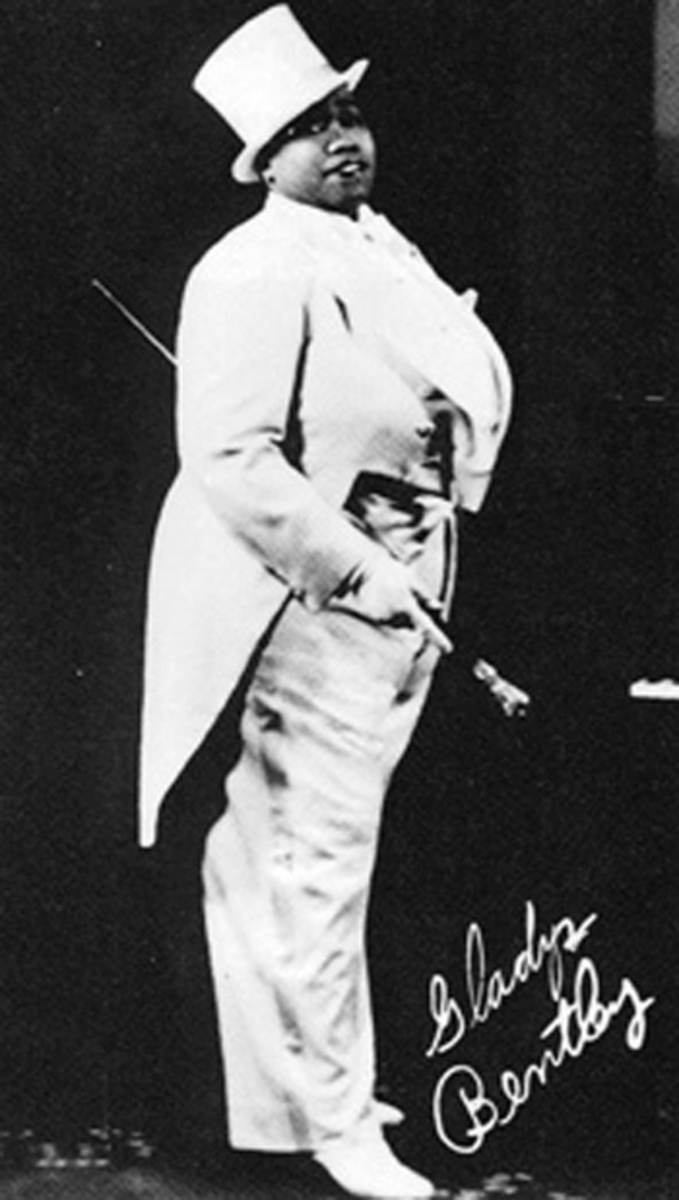
Who's That Queer [Gladys Bentley]

Brought to you by Pistol Pete

Gladys Bentley was a blues singer during the Harlem Renaissance. She was a 250 pound woman dressed in men's clothes (including a signature tuxedo and top hat), who played piano and sang her own raunchy lyrics to popular tunes of the day in a deep, growling voice while flirting outrageously with women in the audience.

She appeared at Harry Hansberry's "Clam House" on 133rd Street, one of New York City's most notorious gay speakeasies in the 1920s, and headlined in the early thirties at Harlem's Ubangi Club, where she was backed up by a chorus line of drag queens. Bentley was openly lesbian during her early career, but during the McCarthy Era she started wearing dresses, married a man (who later denied that they ever married), and studied to be a minister, claiming to have been "cured" by taking female hormones.

Read the rest at Wikipedia

Thursday, June 17, 2010

Who's That Queer [JD Samson]

Brought to you by Pistol Pete

JD Samson is the stage name of Jocelyn Samson, a member of the Feminist ElecktroPunk band Le Tigre. Samson grew up in Cleveland, Ohio. She came out as a lesbian at age 15. She graduated from Sarah Lawrence College with a degree in film in 2000.


Samson joined Le Tigre in 2000 as a replacement after working as the band's projectionist. She is also a member of the band The New England Roses and a member of electro-punk artist Peaches' live band, The Herms. In 2006, Samson collaborated with Junior Senior on the song "Can I Get Get Get".

JD Samson will be appearing at Chicago's Beauty Bar Friday, June 18th at 10pm.

Read more at Wikipedia.


Friday, June 11, 2010

How is Anne Statton healthy? [lady-style]

I’m famous for these dark green drinks.


I follow a plant-based diet of living and raw foods.  This is kind of scary for my colleagues and co-workers who see me drinking a jar of dark green smoothie every morning.  I’m kind of famous for it!

I always get asked what’s in it, but almost never why I do it.  The drink is made up of celery, cucumber, parsley, spirulina, coconut water, spinach or dandelion greens and mango.  The sweetness of the mango offsets the savory of the vegetables.  The plant-based diet has really changed my life.  Switching over to this diet helped me to lose over 80 pounds, drop my allergy and asthma daily medications as well as a reflux drug.  The food has everything I need!  I know it’s not for everyone but it really helps me to feel great every single day.

I recently had surgery and my green drinks helped me to recover faster and to detox all the anesthesia and drugs from the hospital.  Now, I’m training for a triathlon and I intend to succeed! 

My spiritual practice also helps me to stay healthy.  I’m a Nichiren Buddhist (SGI-USA) and I chant every day for happiness and peace around the world.  Keeping a focus on peace through the happiness of each individual helps me to remember that we are all in this together and that we must all win together.


-- Anne Statton [lady,ally]
Chicago


How are you healthy?
Join in the conversation.

Tell us HERE. Send a pic to the same place.
And we'll blog it, right here.
Gay men and all allies welcome to participate.

Read past posts.
Learn more about the campaign
 

Thursday, June 10, 2010

Who's That Queer [Vernita Gray]

Brought to you by Pistol Pete


Vernita Gray is the one of Chicago's preeminent LGBT leaders. She acts as a GLBT Liaison and Hate Crime Specialist at the Cook County State's Attorney's Office and is involved in addressing problems faced by GLBT seniors. She serves on the Task Force on Aging, the GLBT advisory committee to the AARP.has served Chicago's lesbian and gay community with distinction for over 20 years. She was an early activist serving lesbians and gay men in Chicago's African American community since the late 1960's.


After attending Woodstock and learning of the existence of the "gay liberation" movement she returned to Chicago and began organizing support groups at local colleges, and with friends, organized and hosted in her home support groups for lesbians. In 1969 she participated in the development of a telephone hotline at her home for members of Chicago's gay and lesbian community. With her well known sense of humor, the hotline telephone number was FBI-LIST. Interest in the support groups and hotline was so intense that Grey eventually had to vacate her apartment to obtain a modicum of privacy and peace of mind.

Given the the hostility in the African American community towards lesbians and gay men her activities were undertaken at some personal risk. Gray was instrumental in forming the first Lesbian Caucus of the nascent Gay Liberation organization in the early 1970's and the first Chicago lesbian newspaper Lavendar Woman.

Vernita was inducted into the Chicago Gay and Lesbian Hall of Fame in 1992. She will be speaking at Stonewalled: A benefit for AFC on June 18th at the Beauty Bar.

Thursday, May 6, 2010

Thursday, April 22, 2010

Who's That Queer [Marisa Demeo]

Brought to you by Pistol Pete


Marisa Demeo, is an openly gay District of Columbia magistrate judge. In the past she has worked as a lobbyist and advocate for Hispanic causes. On April 20th, 2010, Judge Demeo was confirmed by the United States Sentate to a 15-year term on the Washington D.C. Supreme Court.


Judge Marisa Demeo was born in Washington, D.C. and raised in Dale City, Virginia. She graduated from Princeton University in 1988, where she received her Bachelor of Arts degree in Politics with a concentration in Latin American studies. She went on to receive her Juris Doctor from New York University School of Law (NYU) in 1993, where she served on the Law Review.

After graduating from law school, Ms. Demeo served with distinction as an Honors Program trial attorney in DOJ’s Civil Rights Division Employment Litigation Section, where she prosecuted public employers for pattern or practice employment discrimination in federal courts around the country and received two awards for her work. In 1997, she left DOJ to work for the Mexican American Legal Defense and Educational Fund (MALDEF), a national Latino civil rights organization, where she advocated on immigrants’ rights issues. In 2004, Ms. Demeo joined the United States Attorney’s Office for the District of Columbia (USAO) as an Assistant United States Attorney, then in 2007 became a magistrate judge.

In March 2009, President Obama appointed Demeo to the DC superior court, but Senate Republicans, spearheaded by Sen. Jim DeMint, blocked a vote on her appointment for more than a year. On April 20th, 2010, Demeo's appointment was confirmed by a 66-32 vote.

Thursday, October 29, 2009

Who's That Queer

Brought to you by Pistol Pete


Audre Lorde was born in New York City to Caribbean immigrants Frederick Byron Lorde and Linda Gertrude Belmar Lorde, who settled in Harlem. Nearsighted to the point of being legally blind, and the youngest of three daughters, Lorde grew up hearing her mother's stories about the West Indies. She learned to talk while she learned to read, at the age of four, and her mother taught her to write at around the same time. She wrote her first poem when she was in eighth grade.


After graduating from Hunter College High School, Lorde attended Hunter College from 1954 to 1959 and graduated with a bachelors degree.

In 1954, she spent a pivotal year as a student at the National University of Mexico, a period she described as a time of affirmation and renewal: she confirmed her identity on personal and artistic levels as a lesbian and poet. On her return to New York, Lorde went to college, worked as a librarian, continued writing and became an active participant in the gay culture of Greenwich Village. Lorde furthered her education at Columbia University, earning a master's degree in library science in 1961.

Lorde's poetry was published very regularly during the 1960s — in Langston Hughes's 1962 New Negro Poets, USA; in several foreign anthologies; and in black literary magazines. During this time, she was politically active in civil rights, anti-war, and feminist movements. Her first volume of poetry, The First Cities (1968), was published by the Poet's Press and edited by Diane di Prima, a former classmate and friend from Hunter College High School. Dudley Randall, a poet and critic, asserted in his review of the book that Lorde "does not wave a black flag, but her blackness is there, implicit, in the bone."

Her second volume, Cables to Rage (1970), which was mainly written during her tenure at Tougaloo College in Mississippi, addresses themes of love, betrayal, childbirth and the complexities of raising children. It is particularly noteworthy for the poem "Martha", in which Lorde poetically confirms her homosexuality: "[W]e shall love each other here if ever at all."

Later books continued her political aims in lesbian and gay rights, and feminism. In 1980, together with Barbara Smith and Cherrie Moraga, she co-founded Kitchen Table: Women of Color Press, the first U.S. publisher for women of coloor. Lorde was State Poet of New York from 1991 to 1992.

Source: Wikipedia

Thursday, October 15, 2009

Who's that Queer?

Brought to you by Pistol Pete


Representative Barbara Jordan (D-Texas) was the first African-American woman elected to Congress from a southern state. She was known as an outstanding orator and Constitutional scholar.She served as a congresswoman in the United States House of Representatives from 1973 to 1979.


Jordan campaigned for the Texas House of Representatives in 1962 and 1964.Her persistence won her a seat in the Texas Senate in 1966, becoming the first African American state senator since 1883 and the first black woman to serve in that body. Re-elected to a full term in the Texas Senate in 1968, she served until 1972. She was the first African-American female to serve as president pro tem. of the state senate and served one day, June 10, 1972, as acting governor of Texas.

In 1972, she was elected to the United States House of Representatives, becoming the first black woman from a Southern state to serve in the House. She received extensive support from former President Lyndon Johnson, who helped her secure a position on the House Judiciary Committee. In 1974, she made an influential, televised speech before the House Judiciary Committee supporting the impeachment of President Richard Nixon.

Jordan was mentioned as a possible running mate to Jimmy Carter in 1976, and that year she became the first African-American woman to deliver the keynote address at the Democratic National Convention. Her speech in New York that summer was ranked 5th in "Top 100 American Speeches of the 20th century" list and was considered by many historians to have been the best convention keynote speech in modern history until the 2004 keynote by Barack Obama. Despite not being a candidate Jordan received one delegate vote (0.03%) for president at the convention.

In 1973, Jordan began to suffer from multiple sclerosis. She had difficulty climbing stairs, and she started using a cane and eventually a wheelchair. She kept the state of her health out of the press so well that in the KUT radio documentary, Rediscovering Barbara Jordan, former president Bill Clinton stated that he wanted to nominate Jordan for the United States Supreme Court, but by the time he could do so, Jordan's health problems prevented him from nominating her.

Jordan's companion of close to 30 years was Nancy Earl. Jordan met Earl, an educational psychologist who would become an occasional speech writer in addition to Jordan's partner, on a camping trip in the late 1960s. Jordan never publicly acknowledged her sexual orientation, but in her obituary, the Houston Chronicle mentioned her long relationship with Earl, interpreted to confirm her being a lesbian. However, Jordan biographer Mary Beth Rogers, author of "Barbara Jordan: American Hero," found no conclusive evidence to suggest that the former senator was a lesbian. After Jordan's initial unsuccessful statewide races, advisers warned her to become more discreet and not bring any female companions on the campaign trail.


Source: Wikipedia


Related Posts Plugin for WordPress, Blogger...

select key words

2007 National HIV Prevention Conference 2009 National LGBTI Health Summit 2011 LGBTI Health Summit 2012 Gay Men's Health Summit 2012 International AIDS Conference ACT Up AIDS AIDS Foundation of Chicago Africa BUTT Bisexual Bisexual Health Summit Brian Mustanski Center on Halsted Charles Stephens Chicago Chicago Black Gay Men's Caucus Chicago Task Force on LGBT Substance Use and Abuse Chris Bartlett Coaching with Jake Congress David Halperin David Munar Dr. James Holsinger Dr. Jesus Ramirez-Valles Dr. Rafael Diaz Dr. Ron Stall ENDA Ed Negron Eric Rofes FTM Feast of Fun Feel the love... Friday is for Faeries Gay Men's Health Summit 2010 HCV HIV HIV care HIV drugs HIV negative HIV positive HIV prevention HIV stigma HIV strategic plan HIV testing HIV/AIDS HPV Howard Brown Health Center IML IRMA Illinois International AIDS Conference Jim Pickett LGBT LGBT adoption LGBT culture LGBT health LGBT rights LGBT seniors LGBT youth LGBTI community LGBTI culture LGBTI health LGBTI rights LGBTI spirituality LGV Leon Liberman LifeLube LifeLube forum LifeLube poll LifeLube subscription Lorenzo Herrera y Lozano Lymphogranuloma Venereum MRSA MSM Monday Morning Perk-Up National AIDS Strategy National Gay Men's Health Summit One Fey's Tale Peter Pointers Pistol Pete PnP PrEP President Barack Obama Presidential Campaign Project CRYSP Radical Faerie STD Senator Barack Obama Sister Glo Sisters of Perpetual Indulgence Susan Kingston Swiss declaration Ted Kerr Test Positive Aware Network The "Work-In" The 2009 Gay Men's Health Agenda Tony Valenzuela Trans Gynecology Access Program Trans and Intersex Association Trevor Hoppe Who's That Queer Woof Wednesday You Tube abstinence only activism advocacy african-american aging issues anal cancer anal carcinoma anal health anal sex andrew's anus athlete ball scene bareback porn barebacking bathhouses bears big bold and beautiful bisexuality black gay men black msm blood ban blood donor body image bottom chubby chaser circumcision civil rights civil union communication community organizing condoms crystal meth dating dating and mating with alan irgang depression disclosure discrimination domestic violence don't ask don't tell douche downlow drag queen emotional health exercise female condom fitness gay culture gay identity gay latino gay male sex gay marriage gay men gay men of color gay men's health gay pride gay rights gay rugby gay sex gay youth gender harm reduction hate crime health care health care reform health insurance hepatitis C hiv vaccine homophobia homosexuality hottie hotties how are you healthy? human rights humor hunk immigration international mr. leather internet intimacy leather community leathersex lifelube survey love lube lubricant masturbation mental health microbicides middle music negotiated safety nutrition oral sex physical health pleasure podcast policy politics poppers porn post-exposure prophylaxis prevention prostate prostate cancer public health public sex venues queer identity racism recovery rectal microbicides relationships religion research safe sex semen sero-adaptation sero-sorting seroguessing sex sexual abuse sexual addiction sexual health sexual orientation smoking social marketing spirituality stigma stonewall riots substance abuse treatment substance use suicide super-bug superinfection syphilis testicle self-examination testicular cancer testing top trans group blog transgender transgender day of remembrance transgendered transmen transphobia transsexual universal health care unsafe sex vaccines video violence viral load writers yoga youtube