In light of the latest round of daunting HIV numbers from the CDC regarding gay black men, we want to share this lovely video about strength and resilience from our friends in Atlanta. Being black and gay aint all a horror show - despite what the headlines say over and over and over. Sure, there are real challenges, but they are only part of the story.

Showing posts with label friendship. Show all posts
Showing posts with label friendship. Show all posts
Thursday, August 4, 2011


Tuesday, January 11, 2011
Young gay men talk to their friends about sexual health, but they don’t always get the best advice
via Aidsmap, by Roger Pebody
“If you really know the person then you don’t really have to worry about [STDs]… Cause if you really know the person, you know that they don’t have anything cause you know them for a long time."
 Young gay men in California frequently discuss sexual risk with their best friends, new research shows. While these conversations have the potential to encourage and influence safer sex behaviour, many of the conversations are based on faulty assumptions, such as that ‘knowing’ your partner well is enough to protect against HIV infection. Moreover, the advice given by female best friends is often different from that offered by gay male best friends.
Reporting their findings in the journal Health Education Research, Matt Mutchler and Bryce McDavitt recommend that HIV prevention interventions should help young people have more constructive conversations with friends about sexual health and sexual risk taking.
Read the rest.
“If you really know the person then you don’t really have to worry about [STDs]… Cause if you really know the person, you know that they don’t have anything cause you know them for a long time."

Reporting their findings in the journal Health Education Research, Matt Mutchler and Bryce McDavitt recommend that HIV prevention interventions should help young people have more constructive conversations with friends about sexual health and sexual risk taking.
Read the rest.
Thursday, November 5, 2009
The "Work-In" - The "I" Word
 by Ed Negron, a former drug user, turned gangbanger, turned drug dealer, turned own best customer, turned addict, turned recovering addict (still there), turned activist, turned business manager, turned student, turned Substance Abuse Counselor, turned better and happier person, turned someone who can love and be loved (Love you Patrick), turned blogger. Check out Ed's own blog here.
Featured (almost) Every Thursday on LifeLube --- check out all of Ed's "Work-In's" here.
Intimacy was a topic of the night with of a group for men I facilitate. I was surprised at what I heard and saw that night. There was a big charge in the room. The conversation got heated up, no pun intended, as each man gave their interpretation of intimacy. One man said it doesn’t exist in the gay community because all men are dogs and just want to fuck like they’re in a porn video. Another man said after being married for 4 years the intimacy is gone. One thing that all the interpretations had in common was they were all about sex.
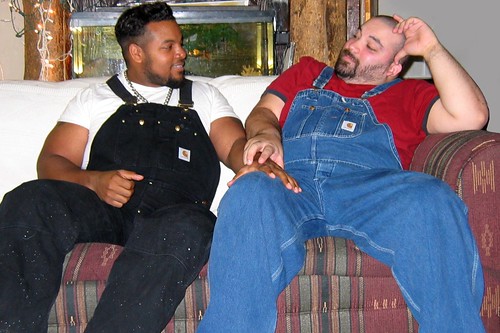
Today, the word intimacy has taken on sexual connotations. But it is much more than that. It includes all the different aspects of our lives - the physical, emotional, mental, sexual, but also the social and spiritual aspects as well. Intimacy means sharing of one’s total self, firm commitment with another person, mutually supportive, understanding and accepting of each other. Yes it does take some work. It involves trusting someone else, being vulnerable, selflessness, and honesty just to name a few things. This is why it is easier for most people to be physically or sexually intimate with someone than to be intimate in any of the other areas. So let’s move away from the physical and sexual for a while.
I’m not going to get into why it is difficult for gay and bi men to be intimate because that’s all we hear and see. You can Google it and find all the negative stuff out there. I want to continue to keep it on the positive side. Because being gay or bi does not always lead to a life of gloom and doom. My blog is about reclaiming who we are and dispelling what society would have us believe about ourselves.
Let’s talk about social intimacy. Some of your close friends will reach this level. The people you spend time with, go to the movies, shopping or share common interests form social intimacy. We all need this from time to time, especially if you are in a relationship. It helps you keep your own unique identity. Social intimacy in your relationship also means to find enough in common with the other person so that you will enjoy your time together.
Reaching mental or intellectual intimacy is the first true test of a relationship and where you first begin to trust your partner with your deeper self. This is where you share your hopes, fears, opinions and beliefs without fear of being judged or chastised. This is where trust, vulnerability and honesty are put the test. Your closest friendships will also achieve this level of intimacy. Intellectual intimacy will tell you more about the real person in front of you and give you a solid insight to the person behind the public image they portray.

Now we get into one of the most critical ingredients to a long-term healthy relationship, emotional intimacy. Lots of couples never make it to emotional intimacy because it’s here where we must accept the person for whom he or she is without reservation, flaws, irrationality and all. At this level, you feel comfortable sharing yourself without fear of repercussions. You both feel comfortable expressing and sharing their anger, happiness, secrets, sensual side and sexual feelings with each other. You know you are loved and love your partner no matter how either of you feel or act. It's about trust and letting another see us at our worst and our best. Who do you first call or go to when something exciting or bad happens to you? For me the first person I call is my partner Patrick. This may steer you into the direction of spiritual intimacy.
Spiritual intimacy is where you find your soul mate. This is where we look beyond the physical and mental being of a person. It means loving the other person as you love yourself, becoming one spirit. You will now have an unconditional love for your partner. C.S. Lewis, author of The Chronicles of Narnia, describes it as a deep bond involving the experience of another person which he calls a “kindred soul.” He suggests that kindred souls are people that see the same truth or better yet, care about the same truth. C.S. Lewis, The Four Loves. We can also experience this with a friend who follows our same journey. Finally we can get back to physical and sexual intimacy.
First let’s talk about physical intimacy. Physical intimacy in the relationship is also a very important component of your happiness in that relationship. Many people think that physical intimacy and sexual intimacy are one in the same, but they are not. Physical intimacy can occur when two people hold hands or just setting on the couch together watching a good movie. Because intimacy is when two people become one with each physical intimacy can also happen when you gaze into each others eyes from across a crowd room. At that moment when the world doesn’t seem to matter it’s just about you and the other person.
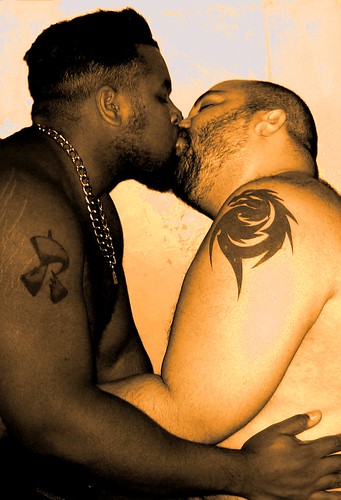
Now to the most popular form of intimacies - sexual intimacy. Sexual intimacy and fulfillment is something we all long for, yes having sex like you are in a porn video is fun but it can still leave you feeling unfilled. Sexual intimacy involves the full range of sensual awareness including touch, kiss, looks, expressions of endearment, communication, and of course, sex and orgasm. To get here you look inward and explore your attitudes and habits related to sexual intimacy - and let go of old constrictions about sex. Become aware of each other feelings around sex including fear, wants and needs. Communication and awareness are the keys to bringing pleasure to a relationship.
We don’t have to be afraid of the “I” word any more. We are all capable of being intimate. Let yourself experience it and sharing it. One way to get over the fear is to talk about it.
Next week, Wednesday, Nov. 11th, the wonderful folks at LifeLube.org, Project CRYSP, and the Feast of Fun are hosting a special gay men’s health forum (and live podcast) at the Center on Halsted.
We're Taking Pleasure Back
When did gay sex automatically equate to penetration?
Why do our conversations about gay men's sexuality consistently focus on disease and risk?
Join us to discuss ways gay men can explore our desires and be intimate, sexual, sensual, lusty and loving with each other - without any worries of risk and/or disease. Let's think creatively and expansively - and learn about some research on pleasure as well.
Featured panelists include Gary Harper from DePaul University, activist and spoken word artist Keith Green (also Project PrEP director) and Samuel R. Galloway, a sex educator from Tulip Toy Gallery (also from the University of Chicago.)
As always, Fausto Fernos and Marc Felion of the Feast of Fun will host the proceedings, and will be recording the event for a podcast.
Doors open for nibbles at 6:00p, program begins promptly at 7p.
The event is FREE, but RSVP's are required. Please RSVP today.
(Usual disclaimer applies, with emphasis: The suggestions on this blog are just that “SUGGESTIONS.” My words cannot heal your pain and or addictions. Nor can I change your life. Only you can.)
Visit my blog at thework-in.blogspot.com or to read daily motivations visit http://backtothebasicsplease.com/wordpress
If you are not sure how to begin your work-in or need some guidance please feel free to post a comment or email me directly at thework-in@hotmail.com, I will response as soon as I can.
“Every time you don't follow your inner guidance, you feel a loss of energy, loss of power, a sense of spiritual deadness." -- Shakti Gawain
Monday, September 21, 2009
My lover, my friend, my...

via Toronto Star, by Brent Ledger
They were not the same people, the stranger and the future friend. In fact, they were lovers, posing as roommates and already on their way to something even more tenuous, which meant it was an awkward first meeting, but somehow the second guy and I became friends and have remained so ever since.
It may sound a strange way to meet people but it's not so unusual in the gay world.
It's so not unusual that I sometimes fear my life has gone mainstream. Just the other night, a very campy gay character on the second-generation TV mystery Inspector Lewis explained a longstanding friendship by saying "Clumsy one-night stand ... which turned into a lifelong friendship."
Friends don't get much attention these days. Yet until the rise of the gay marriage brigades, and the subsequent devaluing of non-sexual relationships, friendship may have been the key gay relationship. Lord knows what David and Jonathan were up to in the Old Testament, but they certainly were tight.
Wednesday, August 26, 2009
How Facebook Ruins Friendships

via Wall Street Journal, by Elizabeth Bernstein
Excerpt:
One of the big problems is how we converse. Typing still leaves something to be desired as a communication tool; it lacks the nuances that can be expressed by body language and voice inflection. "Online, people can't see the yawn," says Patricia Wallace, a psychologist at Johns Hopkins University's Center for Talented Youth and author of "The Psychology of the Internet."
But let's face it, the problem is much greater than which tools we use to communicate. It's what we are actually saying that's really mucking up our relationships. "Oh my God, a college friend just updated her Facebook status to say that her 'teeth are itching for a flossing!'" shrieked a friend of mine recently. "That's gross. I don't want to hear about what's going on inside her mouth."
That prompted me to check my own Facebook page, only to find that three of my pals—none of whom know each other—had the exact same status update: "Zzzzzzz." They promptly put me to "zzzzzzz."
This brings us to our first dilemma: Amidst all this heightened chatter, we're not saying much that's interesting, folks. Rather, we're breaking a cardinal rule of companionship: Thou Shalt Not Bore Thy Friends.
"It's called narcissism," says Matt Brown, a 36-year-old business-development manager for a chain of hair salons and spas in Seattle. He's particularly annoyed by a friend who works at an auto dealership who tweets every time he sells a car, a married couple who bicker on Facebook's public walls and another couple so "mooshy-gooshy" they sit in the same room of their house posting love messages to each other for all to see. "Why is your life so frickin' important and entertaining that we need to know?" Mr. Brown says.
Monday, June 29, 2009
I Love You, Man (as a friend)

via New York Times, by Douglas Quenqua
WELCOME to the flip side of homophobia.
“I’m flattered, and I think it’s hilarious,” Kris Allen told People.com recently, responding to the news that his former roommate and runner-up on “American Idol,” Adam Lambert, had a crush on him.
Mr. Lambert, who favors black eyeliner and leather pants, had told Rolling Stone that Mr. Allen, an aw-shucks Christian from Arkansas, was “the one guy that I found attractive in the whole group on the show — nice, nonchalant, pretty and totally my type — except that he has a wife.”
This all went down in the same interview in which Mr. Lambert finally confirmed the long-simmering rumor that, yep, he’s gay.
Mr. Allen’s cool, self-assured response to being the object of his gay roommate’s affection doesn’t exactly qualify him as a civil rights hero, not at a time when straight men march against Proposition 8 in California and the most anticipated gay-themed film of the year, “Brüno,” is coming from a straight (if highly waxed) comedian.
But do give him credit for overcoming one of the most common deal-killers in friendships between straight and gay men: the awkward crush.
The kinship between gay men and straight women is familiar to the point of cliché (see: “Sex and the City,” “Will and Grace,” Kathy Griffin’s audience, etc.), but friendships between gay and straight men have barely registered on the pop culture radar, perhaps because they resist easy classification. For every sweeping statement one can make about such friendships, there is a real-life counter example to undermine the stereotypes. And as with all friendships, no two are exactly alike.
But as America’s openly gay minority becomes more visibly interwoven into society — a 2007 poll by the Pew Research Center found that 4 out of 10 respondents had a close friend or family member who was a gay man or a lesbian — the straight world becomes more aware of the gay world. Although male friends of opposite orientations can face formidable obstacles — sexuality, language, peer pressure, inequality — there seems to be more mutual appreciation and common ground.
“The younger generation understands the spectrum and fluidity of sexuality much more than generations of the past,” said Tom Bourdon, director of the Lesbian, Gay, Bisexual, Transgender Center at Tufts University. “Most liberal-minded straight guys today could say they have gay friends, and people wouldn’t bat an eye.”
Subscribe to:
Posts (Atom)


