Showing posts with label science. Show all posts

Tuesday, February 1, 2011

New Study Shows that Transsexuals' Brains are Different

Differences in the brain's white matter may hold the key to identifying transsexual people before puberty. Doctors could use this information to make a case for delaying puberty to improve the success of a sex change later.

Antonio Guillamon's team ran MRI scans on the brains of 18 female-to-male transsexual people who'd had no hormone treatment and compared them with those of 24 males and 19 females.

They found significant differences between male and female brains in four regions of white matter – and the female-to-male transsexual people had white matter in these regions that resembled a male brain.

Read the rest.

Thursday, November 4, 2010

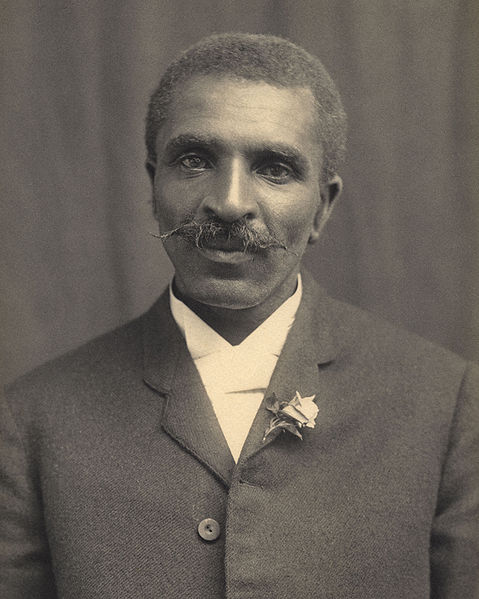
Who's That Queer? [George Washington Carver]

Brought to you by Pistol Pete

George Washington Carver was a groundbreaking agricultural scientist, known for discovering innovative uses for peanuts, sweet potatoes and clay. A black man born during the Civil War, Carver overcame racism to establish himself as a preeminent scientist and renowned academic. Throughout his career rumors about his sexuality ran rampant, and he ultimately left his estate to a close personal and professional partner, Austin Curtis.


Carver never married or expressed interest in dating women, and rumors circulated about his sexuality at Tuskegee Institute while he was an employee. In particular, his enjoyment of giving “therapeutic” peanut oil massages to and engaging in horseplay with handsome men was seen as unusual. Late in his career, Carver established a life and research partnership with another male scientist—Austin W. Curtis, Jr.. The two men kept details of their lives discreet, and as such historians know little about how these men understood their relationship. Nonetheless, the fact that Carver willed his assets to this man (consisting of royalties from an authorized biography by Rackham Holt) testifies to the importance of each other in their lives.

Read the rest.

Thursday, October 21, 2010

Who's That Queer? [Lynn Conway]

Brought to you by Pistol Pete


Lynn Conway is an American computer scientist, electrical engineer, inventor, trans woman, and activist for the transgender community.

Conway is notable for several technical achievements, including the Mead & Conway revolution in VLSI design, which incubated an emerging electronic design automation industry. She worked at IBM in the 1960s and is credited with the invention of generalised dynamic instruction handling, a key advance used in out-of-order execution, used by most modern computer processors to improve performance.

Conway was recruited by IBM Research in Yorktown Heights, New York in 1964. She was soon selected to join the architecture team designing a multiple-issue out-of-order dynamic instruction scheduling while working there. The Computer History Museum has stated that "the ACS machines appears to have been the first superscalar design, a computer architectural paradigm widely exploited in modern high-performance microprocessors.

After learning of the pioneering research of Dr. Harry Benjamin in transgender treatment and realizing that a full gender transition was now possible, Conway sought his help and became his patient. After suffering from severe depression over her situation, Conway contacted Dr. Benjamin, who agreed to counsel her and prescribe hormones. Under Dr. Benjamin's care, she began preparing for transition.

Although she hoped to be allowed to transition on the job, IBM fired Conway in 1968 after she revealed to them that she was transsexual, and was planning on transitioning to a female gender role.

Read the rest at Wikipedia.

Sunday, October 17, 2010

Collection of Gay Brain Research to be Published


Via Towleroad.

With Republican New York gubernatorial candidate Carl Paladino's gay "brainwashing" scandal bringing up the always controversial question of whether homosexuality's a choice, Harvard neuroscientist Simon LeVay's celebrating the publication of his new book, Gay, Straight, and the Reason Why: The Science of Sexual Orientation, which sheds more light on that very inquiry.

According to LeVay, “When I conducted my initial findings in 1991 and wrote ‘The Sexual Brain’ in 1993, there was no science to really talk about,” remarked LeVay. “The new book details the weight of the evidence, which is a lot stronger now, and bolsters my initial conclusion that homosexuals have a predisposition to being gay.”

Read more about LeVay's new book.

Friday, October 1, 2010

Brain Disorders Occur in One in Four HIV-Positive People According to New Study


Brain disorders may be almost commonplace among people infected with HIV, the virus that causes AIDS, a startling new Canadian study has found.

One quarter of HIV-positive patients who took part in a 10-year Alberta study also suffer from neurological disorders, reports Chris Power, a neurology professor at the University of Calgary. The percentage of middle-aged Canadians with neurological disorders is just five per cent.


Read more.

Friday, May 21, 2010

International Microbicides Conference Gets Underway in Pittsburgh


Article from the Pittsburgh Tribune-Review covering the Microbicides 2010 conference:

Despite advances in the treatment of HIV, experts warn that the global fight against the disease has a long way to go.

"For every person you put on treatment in the developing world, another two or three people get infected," said Dr. Ian McGowan, a leading investigator at Microbicide Trials Network, based at Magee-Womens Research Institute and the University of Pittsburgh in Oakland. "The figures are still depressing."

More than 33 million people are living with HIV, and doctors diagnose about 2.5 million cases a year globally, according to UNAIDS, the United Nations' AIDS-fighting agency.

Over the next four days, the Microbicide Trials Network, or MTN, will host an international gathering of HIV experts aimed at discussing ways to prevent the disease. The International Microbicides Conference, to be held at the David L. Lawrence Convention Center, Downtown, is co-chaired by McGowan and Sharon Hillier, the network's principal investigator and a world-known microbiologist.

Read the rest...

Monday, July 27, 2009

House Permits Needle Exchange Program Funding

The House voted Friday to lift a ban on using taxpayer dollars for needle exchange programs intended to prevent the spread of HIV and other diseases.

The vote to lift a longstanding ban on federal aid for such programs — in place since 1988 — came after a brief but passionate debate on an amendment by Rep. Mark Souder, R-Ind., to keep the ban in place. His amendment failed by a 211-218 vote.

See how your Representatives voted on the Souder Amendment here.


Rep. Mark Souder

Souder said HIV is spread chiefly through sexual activities and that needle exchange programs don't have a proven record of success (LL note: this is BS). According to Souder "providing needles acts as a way for drug users to sustain and support their intravenous drug use and does not address the primary illness of the drug addiction."

But Rep. Lucille Roybal-Allard, D-Calif., said the scientific evidence is indisputable and that needle exchange programs put addicts into contact with social services agencies, opening the door for them to seek treatment.

"Needle exchange is not about promoting drug use," said moderate Democrat Alan Mollohan of West Virginia. "It is in fact about preventing disease."

The vote came as the House approved, by 264-153, a massive spending bill for health, labor and education programs for the upcoming budget year, cementing big spending increases for a wide swath of social programs.

Read the full article here.

Thursday, November 20, 2008

Whitewashing Research?

Do scientists self-censor in politically charged grant applications?


If you study prostitutes, would you tell the NIH?
via Scientific American

Half of scientists whose federally funded research — most of it about sex and AIDS — was subjected to extra scrutiny by the National Institutes of Health (NIH) in 2003 after conservative members of Congress questioned its merits say they now censor wording in their grant applications that might raise "red flags" at the agency, according to a new survey.

Five years ago, Rep. Patrick Toomey (R-PA) proposed a bill amendment that would have pulled funding for five grants. The legislation failed by a 210 to 212 vote, but after that, members of a House and Senate committee asked NIH Director Elias Zerhouni to explain the “medical benefit” of those and five additional grants. Because of a clerical error, those ten grants turned into about 250 grants by 157 investigators that Zerhouni ordered reviewed.

That review led to Zerhouni to say the research was valid in a January 2004 letter to members of Congress, and no funding was pulled.

Still, the scientists were still skittish in the years after. When 82 of them were surveyed in 2005 and 2006, more than half said they leave out words in their funding requests such as "gay," "lesbian," "bisexual," "sexual intercourse," "anal sex," "homosexual," "homophobia," "AIDS," "bare-backing," "bath-houses," "sex workers," "needle exchange" and "harm reduction," according to the survey published in this week's PLoS Medicine.

Read the rest here.

Wednesday, May 9, 2007

Just Say No—To Bad Science


No one is saying that researchers cheat, but how they design a study of sex education can practically preordain the results.

By Sharon Begley
Newsweek
May 7, 2007 issue

When Doug Kirby sat down recently to update his 2001 analysis of sex-education programs, he had 111 studies that were scientifically sound, using rigorous methods to evaluate whether a program met its goals of reducing teen pregnancy, cutting teens' rates of sexually transmitted diseases and persuading them to practice abstinence (or, if they didn't, to use condoms).

He also had a pile of studies that were too poorly designed to include. It measured three feet high.

For us civilians, it's hard to grasp how much of science is subjective, and especially how much leeway there is in choosing how to conduct a study. No one is alleging that scientists stack the deck on purpose. Let's just say that depending on how you design a study you can practically preordain the outcome. "There is an amazing array of things people do to botch a study," says Rebecca Maynard of the University of Pennsylvania.

For instance, 153 out of 167 government-funded studies of bisphenol-A, a chemical used to make plastic, find toxic effects in animals, such as low sperm counts. No industry-funded studies find any problem. It's not that the taxpayer-funded scientists are hallucinating, or that the industry scientists are blind. But here's a clue: many industry studies tested this estrogenlike chemical on a strain of rat that is insensitive to estrogen. That's like trying to measure how stress affects lactation ... using males.

Choosing the wrong methodology can lead science, and the public, astray. Early studies of hormone therapy compared women who chose to take estrogen pills and women who did not. The studies concluded that the pills prevent heart disease.

Wrong. Women who chose to take hormones after menopause were healthier and more plugged into the medical system than women who did not. Differences in the women, not the effect of hormones, explained the difference in heart disease.

Which brings us to sex ed. In April, scientists released the most thorough study of abstinence-only programs ever conducted. Ordered up by Congress, it followed 2,000 kids, starting in grades 3 through 8, in rural and urban communities who had been randomly assigned to an abstinence-only program or not. Result: kids in abstinence-only "were no more likely to abstain from sex than their control group counterparts ... [both] had similar numbers of sexual partners and had initiated sex" at the same age.

Earlier studies gave abstinence-only glowing evaluations, as social conservatives publicized. The Heritage Foundation, for one, claimed in 2002 that abstinence-only had been proven "effective in reducing early sexual activity."

But this is not a case of dueling studies, with no way to tell which to believe. If you dig into the earlier studies' methodology, you can see how they reached their conclusions.

Many evaluated programs where kids take a virginity pledge. But kids who choose to pledge are arguably different from kids who spurn the very idea. "There's potentially a huge selection issue," says Christopher Trenholm of Mathematica Policy Research, which did the abstinence study for the government. "It could lead to an upward bias on effectiveness."

Claims for abstinence-only also rest on measurements not of sexual activity, but attitudes. The Bush administration ditched the former in favor of assessing whether, after an abstinence-only program, kids knew that abstinence can bring "social, psychological, and health gains." If enough answered yes, the program was deemed effective. Anyone who is or was a teen can decide if knowing the right answer is the same as saying no to sex.

Other studies relied on kids' memory. But up to half of kids forget whether they took a virginity pledge, or pretend they never did. Those who fall off the abstinence wagon are likely to "forget" they pledged, while those who remain chaste might attribute it to a pledge they never made. Both factors inflate the measured efficacy of pledge programs.

A study of another abstinence program found it did a phenomenal job of getting girls to postpone their first sexual encounter. One problem: it evaluated only girls who stayed in the program, says Maynard. Girls who had sex were thrown out.

In a related strategy, some studies of true sex ed, not the just-say-no variety, follow kids for only a few months, says Kirby of ETR Associates, a research contractor. But to see any difference between kids who took the class and those who did not, you have to let enough time go by for kids (in the latter group, one hopes) to have sex and get pregnant. A short time horizon may miss a program's effectiveness.

Authors of the problematic studies say they did the best they could with the time and money they had. OK, but as Trenholm says, "there is such a thing as good science and less good science." And you really can tell the difference.

Related Posts Plugin for WordPress, Blogger...

select key words

2007 National HIV Prevention Conference 2009 National LGBTI Health Summit 2011 LGBTI Health Summit 2012 Gay Men's Health Summit 2012 International AIDS Conference ACT Up AIDS AIDS Foundation of Chicago Africa BUTT Bisexual Bisexual Health Summit Brian Mustanski Center on Halsted Charles Stephens Chicago Chicago Black Gay Men's Caucus Chicago Task Force on LGBT Substance Use and Abuse Chris Bartlett Coaching with Jake Congress David Halperin David Munar Dr. James Holsinger Dr. Jesus Ramirez-Valles Dr. Rafael Diaz Dr. Ron Stall ENDA Ed Negron Eric Rofes FTM Feast of Fun Feel the love... Friday is for Faeries Gay Men's Health Summit 2010 HCV HIV HIV care HIV drugs HIV negative HIV positive HIV prevention HIV stigma HIV strategic plan HIV testing HIV/AIDS HPV Howard Brown Health Center IML IRMA Illinois International AIDS Conference Jim Pickett LGBT LGBT adoption LGBT culture LGBT health LGBT rights LGBT seniors LGBT youth LGBTI community LGBTI culture LGBTI health LGBTI rights LGBTI spirituality LGV Leon Liberman LifeLube LifeLube forum LifeLube poll LifeLube subscription Lorenzo Herrera y Lozano Lymphogranuloma Venereum MRSA MSM Monday Morning Perk-Up National AIDS Strategy National Gay Men's Health Summit One Fey's Tale Peter Pointers Pistol Pete PnP PrEP President Barack Obama Presidential Campaign Project CRYSP Radical Faerie STD Senator Barack Obama Sister Glo Sisters of Perpetual Indulgence Susan Kingston Swiss declaration Ted Kerr Test Positive Aware Network The "Work-In" The 2009 Gay Men's Health Agenda Tony Valenzuela Trans Gynecology Access Program Trans and Intersex Association Trevor Hoppe Who's That Queer Woof Wednesday You Tube abstinence only activism advocacy african-american aging issues anal cancer anal carcinoma anal health anal sex andrew's anus athlete ball scene bareback porn barebacking bathhouses bears big bold and beautiful bisexuality black gay men black msm blood ban blood donor body image bottom chubby chaser circumcision civil rights civil union communication community organizing condoms crystal meth dating dating and mating with alan irgang depression disclosure discrimination domestic violence don't ask don't tell douche downlow drag queen emotional health exercise female condom fitness gay culture gay identity gay latino gay male sex gay marriage gay men gay men of color gay men's health gay pride gay rights gay rugby gay sex gay youth gender harm reduction hate crime health care health care reform health insurance hepatitis C hiv vaccine homophobia homosexuality hottie hotties how are you healthy? human rights humor hunk immigration international mr. leather internet intimacy leather community leathersex lifelube survey love lube lubricant masturbation mental health microbicides middle music negotiated safety nutrition oral sex physical health pleasure podcast policy politics poppers porn post-exposure prophylaxis prevention prostate prostate cancer public health public sex venues queer identity racism recovery rectal microbicides relationships religion research safe sex semen sero-adaptation sero-sorting seroguessing sex sexual abuse sexual addiction sexual health sexual orientation smoking social marketing spirituality stigma stonewall riots substance abuse treatment substance use suicide super-bug superinfection syphilis testicle self-examination testicular cancer testing top trans group blog transgender transgender day of remembrance transgendered transmen transphobia transsexual universal health care unsafe sex vaccines video violence viral load writers yoga youtube