Showing posts with label Africa. Show all posts

Monday, February 13, 2012

South Africa Leads the Continent on Gay Rights

via theatlantic, by John Campbell

Unfortunately, much of sub-Saharan Africa is homophobic. Recent legislation, some proposed, some passed, condemns gay marriage and sometimes outlaws gay sexual activity.

Nigeria, Uganda, and Liberia all have such legislation pending or passed, often with the provision of draconian penalties. Such legislation appears to be very popular.

The exception is South Africa, with a constitution that provides among the most comprehensive protection of individual rights in the world.

Last week, a regional court magistrate sentenced four men convicted of murdering a 19-year old lesbian in 2006 to eighteen years in prison, with four years suspended. The sentencing was widely hailed by the human rights community.

The trial and sentencing took place in Khayelitsha, a grim township outside of Cape Town and an area of severe social deprivation.

Certainly there is homophobia in South Africa. The Zulu King, Goodwill Zwelithini, was quoted in the South African press as saying, "Traditionally, there were no people who engaged in same-sex relationships. There was nothing like that and, if you do it, you must know that you are rotten."

But, the acceptability of homophobia in South Africa appears to be low. Following outcry, the Zulu Royal Household issued a public statement saying that the king was a victim of a "reckless translation" of his remarks from Zulu to English.

The household spokesman said, "At no stage did His Majesty condemn gay relations or same sex relations."

Meanwhile, in Uganda, where a particularly draconian piece of anti-gay legislation is working its way through parliament again, former South African president Thabo Mbeki said publicly that what consenting adults do in private "is really not the matter of law."

He also recalled that the apartheid regime in South Africa had prohibited sexual relations across the color line, and that it provided the police with the authorization "to raid peoples' bedrooms."


Read the rest

Friday, February 10, 2012

Legalized Hate in Uganda?

via HuffPost Gay Voices, by Kerry Kennedy

On Tuesday, Feb. 7, hours before the Ninth Circuit ruled "Prop 8" unconstitutional in the state of California, raucous cheers rang out in the Ugandan Parliament as legislators reintroduced a controversial bill that would in effect legislate hate against the Ugandan lesbian, gay, bisexual, transgender, and intersex (LGBTI) community.

The proposed bill, known as the Anti-Homosexuality Bill (AHB), would compel families, doctors, and counselors to report on all those suspected of being members of the LGBTI community, and would impose criminal sanctions, possibly even the death penalty, for those who fail to turn in their fellow citizens.

Combined with other proposed legislation before the Parliament, like portions of the HIV/AIDS Prevention Control Bill, the AHB would also hinder Uganda's HIV-prevention efforts, contributing to the alarming rise in HIV infection rates.

This poses a serious threat to the rights and freedoms of all Ugandans and is a clear violation of international law. It denies LGBTI citizens their rights to health care, education, and work.

It creates an atmosphere of hate, intolerance, and fear. It criminalizes the actions of civil society organizations and individual citizens who work to defend the legal rights of their fellow Ugandans.

And it puts the imprimatur of the law behind discrimination based on sexual orientation or gender identity.

This is a blatant suppression of the rights of all Ugandans and an attempt to curtail the freedoms of speech and assembly of a vibrant civil society in Uganda.

The bill's supporters claim to be acting in the name of protecting Ugandan children -- playing on the common prejudice that equates homosexuality with pedophilia.

In fact, the bill places children squarely in harm's way. The bill calls on Ugandan families to betray trust and turn in their siblings and children.

The bill would have doctors break confidentiality and deny care to Ugandans. In fact, this bill would disrupt Ugandan families, increase the HIV prevalence in the country, and set a frightening precedent for the silencing of rights advocacy of any group deemed undesirable by politicians.

Moreover, the bill's possible passage into law is not the only threat to Ugandans. The reintroduction of the bill imminently threatens the safety of the LGBTI community and the safety of anyone assumed to be LGBTI.

Vigilante violence and hate speech amplified by sensationalist media and homophobic rhetoric by religious leaders is all too real today in Uganda.

Across the country, LGBTI people already face physical attacks and rape, extortion by neighbors, and arbitrary arrest by police.

If we support the human and civil rights of our LGBTI citizens in the United States, we must also vigorously advocate against the passage of this bill and act to stop state-sanctioned homophobia from taking root in any country.

If we support human rights, we cannot ignore legalized brutality against any group of our global community.


Read the rest

Monday, February 6, 2012

Artist Thomas Allen Harris on Black Gay Identity

via Advocate, by Neal Broverman

The varied issues of Africans and African-Americans is the point of "AfroPoP: The Ultimate Cultural Exchange," an innovative series that airs on the documentary channel WORLD and is hosted by The Daily Show's Wyatt Cenak.

Each episode is really a full-length documentary telling a different story, from the effort to get Africans hooked on solar energy to a profile on the queen of Calypso music.

Sunday's episodic film, That's My Face, is directed by Thomas Allen Harris, a prolific gay artist and producer who's shown work at the Whitney Biennial and won Guggenheim and Sundance fellowships.

Harris spoke to us about his Brazilian-based film, his childhood in Africa, and some of the projects he's working on through his company, Chimpanzee Productions.

The Advocate: Can you talk about "AfroPoP" and your film in it?
Harris: "AfroPoP" is a series being produced by the National Black Programming Consortium, a part of the minority consortium of PBS.

They’ve had this series for the last three years where they pick a certain number of films for the show. This year there are four different films, and my film, That’s My Face, is one of them. (Click here to find out where "AfroPoP" is airing near you.)

In the movie, I go to the Bahia region of Brazil. I was looking for another way of experiencing myself, kind of like a spiritual journey that Gertrude Stein and James Baldwin had when they went to Europe.

I lived in Europe and knew what that was like, so I went to Brazil. I was looking for what being black in the Americas was like outside of the U.S.

Brazil has more African-Brazilians than the U.S. has African-Americans. It’s also been interesting to me because I partly grew up in East Africa.

The Black-Brazilians were able to keep a lot more of their African roots through language and, most importantly, through religion.

I was very intrigued by their religious practices, some of which are very welcoming to gays and lesbians. It’s very different than what you hear in the press about what’s going in regards to the persecution of gays and lesbians in Africa.

Had you been to Bahia before?
I had been there before so I had experienced it. The time I went to make That’s My Face was the beginning of December.

From December all the way to February in the south coast of Bahia are all these public festivals that are inspired by these African deities and also Carnivale.

I was really doing my search in the middle of all this spectacular stuff. These Bahia festivals are very different than the Carnivale in Rio.

The latter is sort of a show and the Carnivale in Bahia takes over the whole city—all the shops close, with the exception of places selling beer and food.

It becomes a whole different world. Everything was sped up during the festival because the drums play all the night. In Brazil, the drums weren’t outlawed when Africans were brought over, like they were in the U.S.

So people in the U.S. weren’t able to pass on certain aspects of religion and communication. The drum is an important part of religious expression.

Through the drums, people start dancing and enter this trance. It’s transformative, and you’ll see that in the film.

You lived in Tanzania as a child. What do you remember of that time?
I remember people living close to the land. I went to a national school, with the local Tanzanians. We had to clean the toilets and work on the farm.

It was an African socialist country at the time, so the kids had to clean and cook.

When I was growing up there, intimacy between men was permissable.

With my friends, we could walk down the streets holding hands. Even if you hold your hands with brother in the U.S., you could get killed.

There's a very narrow way of how men can act in the U.S. What was also interesting, is that the capital of Tanzania, Dar es Salaam, is so cosmopolitan.

I had friends from India, Uganda, the Philippines, England, China. It was very different than the picture we have in our minds of Africa. It made me really want to see the world and played into me wanting to go to Brazil.

The U.S. and the U.K. have started applying pressure on African nations to end the criminalization of homosexuality. Do you think that’s helping?
It’s really important that the West get clear and articulate that attacks on gays and lesbians are human rights violations. The marriage equality effort here, it legitimizes the struggle in Africa, and also in Eastern Europe and the Middle East.

These countries are using gays and lesbians as scapegoats. In Africa, it’s not simply the African leadership that makes the violent crimes possible, it’s the missionaries who say homosexuality is an evil import from the West.


Read the rest

Friday, February 3, 2012

'Gay Rights are Human Rights'

via boxturtlebulletin, by Jim Burroway

A video appeared on YouTube yesterday showing Kenya’s Chief Justice Willy Mutunga declaring that “gay rights are human rights.” The remarks were delivered on September 8, 2011 at a groundbreaking ceremony for FIDA Uganda, a Ugandan organization of Women Lawyers. FIDA Uganda was among the organizations which denounced the Anti-Homosexuality Bill.

The Chief Justice’s speech in Uganda is interesting for three reasons. First, his call for recognizing that “gay rights are human rights” actually pre-dates an identical declaration from US Secretary of State Hillary Clinton by two full months.

Secondly, the woman wearing lavender you see seating herself at the beginning of the video is Uganda’s Speaker of Parliament Rebecca Kadaga, who played an important role in reviving the Anti-Homosexuality Bill in October.

And finally, Uganda and Kenya close neighbors, sharing a common history as part of Britian’s East African colonies, and they maintain extensive political and economic ties.

Much of Uganda’s imports and exports flow through the Kenyan port of Mombasa, and the two countries are part of a larger emerging common market, the East African Community.

The situation for LGBT people in Kenya is generally much better than in Uganda, although there have been instances of mob violence against suspected gay people in recent years.

Mutunga has an interesting history. In the early 1980s as a student, he was politically active against Kenyan president/dictator Daniel Arap Moi, which led to his detention and exile to Canada.

When Kenya turned to multi-party elections in 1991, he returned home and became part of Kenya’s “Young Turks, advocating for human rights in the country.

He continued to work in human rights positions throughout most of the next two decades. After Kenya reorganized under a new constitution following the disputed 2007 which broke down into nationwide violence, Mutunga was named to the country’s new High Court in 2011.
We have fought and succeeded in demanding our rights of movement and association  although we can’t take them for granted.
We should see less of the workshopping in hotels, less of the flipcharts and the [?], as we now move to the countrysides and make sure our people own and protect the human rights and social justice messages.
The other frontier of marginalization is the gay rights movement. Gay rights are human rights. Here I’m simply confining my statement to the context of human rights and social justice paradigm, and avoiding the controversy that exists in our constitutions and various legislation. As far as I know, human rights principles that we work on, do not allow us to implement human rights selectively.
We need clarity on this issue within the human rights movement in East Africa, if we are to face the challenges that are spearheaded by powerful political and religious forces in our midst.
I find the arguments made by some of our human rights activists, the so-called “moral arguments” simply rationalizations for using human rights principles opportunistically and selectively.
We need to bring together the opposing viewpoints in the movement of this issue for final and conclusive debate.
I thank the FIDA movement, membership, leadership, and its national, regional and global network for the honor bestowed on me. I’m very proud of this honor and I will never take it for granted.


Read the rest

Monday, January 30, 2012

UN Secretary Calls Out African Homophobia

via Advocate, by Neal Broverman

United Nations Secretary General Ban Ki-Moon urged African nations to end government-sanctioned discrimination and violence against LGBT people.

Speaking at the African Union summit on Sunday in Addis Ababa, Ethiopia, Ban Ki-Moon called the discrimination a violation of the UN's universal declaration of human rights.

"One form of discrimination ignored or even sanctioned by many states for too long has been discrimination based on sexual orientation or gender identity," he said, according to Agence France Presse.

"Confronting these discriminations is a challenge, but we must not give up on the ideas of the universal declaration of human rights."

The U.S. and the U.K. have begun pressuring some African nations, with threats of reduced aid, to reign in some of their virulent antigay policies.


Read the rest

Monday, January 2, 2012

Gay Men Being Trafficked in Kenya

via Advocate, by Diane Anderson-Minshall

Gay and bisexual men in Kenya are being lured into sex trafficking rings in the United Arab Emirates, Qatar, and Saudi Arabia, according to a new report in African LGBT magazine, Identity.

Identity magazine says that the men attending Kenyatta University are particularly targeted, offered jobs as airline attendants or office workers,and given visas and passports (thanks to officials who've been bribed to help facilitate the travel arrangements).

Some of the men have reported violent sadistic sexual abuse at the hands of their captors.

Many countries, including Qatar, have no anti-trafficking legislation and remain on the U.S. Department of State watch lists for showing no progress in identifying victims of trafficking and prosecuting the perpetrators.

While Kenya did pass anti-trafficking legislation last year, homosexuality is still illegal in both the Arab states as well as Kenya, so the men are unable to report abuse to police.


Read the rest

Monday, January 31, 2011

Monday Morning Perk-Up [The male beauty contest judged by women]


Make-up, flirting, bling outfits. But this beauty contest has a twist - the men dress up, the women pick the winners. What does the Wodaabe people's pageant tell us about male beauty?

Read all of the article and see the photos of these male beauties here.

Thursday, January 27, 2011

Ugandan LGBT Activist Assassinated

Beyond words.


via Justice for Gay Africans Society

The news today that David Kato, a staunch and prominent Human Rights activist in Uganda is a big threat and raises newer fears. David dedicated his life to fighting for the rights of gay African people in Uganda right up to his death earlier today.

Information available stated that a man came in a vehicle, went into his house, hit him [twice] on the head and went back into his car and left. An undoubtedly hate crime. Could we argue that this isnt inspired by homophobia? David died on the way to the hospital.

Such is the life of gay people across many African countries and such is the ease with which anyone can attack them. For this assailant in Uganda, he had the boldness to do this horrible crime in broad daylight at 1pm [as reported] because he has the confidence that rarely would anyone care? Yes, after all, he is ‘cleansing the land’

Read the rest.

Read coverage from Human Rights Watch.

Read President Obama's statement on the murder.

Read statement from Secretary of State Hillary Clinton.


Thursday, October 7, 2010

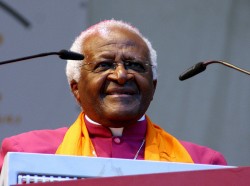
Archbishop Desmond Tutu's Five Best Quotes for Full LGBT Equality

Gay, lesbian, bisexual and transgendered people are part of so many families. They are part of the human family. They are part of God's family. And of course they are part of the African family.


Today marks Archbishop Desmond Tutu's last official day as someone publicly engaged in human rights work. The good bishop, who has been pushing for equality among races, genders and sexual orientations for decades, is set to retire today, capping off a legendary career that has made him a worldwide icon for peace and justice.

Though Archbishop Desmond Tutu may be most closely associated with ending apartheid and championing racial justice and reconciliation in South Africa, the Archbishop has become a leading supporter of full LGBT equality in recent years. Commenting on his Tutu's retirement, even U.S. President Barack Obama noted the work that the Archbishop has done to benefit LGBT rights worldwide.

Read the rest...

Saturday, October 24, 2009

"The Final Solution"? Gay Ugandans Could Face Death Penalty Under New Law

"Oh, the gayuganda blog is one of the things which are illegal, as per that bill. I am furiously promoting homosexuality on this blog, complaining about a law like this. So, 5 years in prison, and my (non existent) bank balance will be set back by 100M Uganda shillings…! And the people who dare to give us condoms and lubricant for sex… Or, if you dare to have an HIV prevention programme for homosexuals in Uganda... or even try to teach safer sex. Well, the penalties are stiff. Very stiff. Jail, and jail and other things."

via RH Reality Check, by Amie Newman

In Uganda, the blogger known as the GayUgandan is calling it "the final solution."

Though homosexual acts are already illegal in that country, a new bill would penalize homosexuality with tougher penalties - along the lines of life imprisonment and the death penalty. Yes, you read that right. The "Anti-Homosexuality" Bill imposes stricter definitions for "homosexual behavior", extending the definition according to the blog Box Turtle Bulletin, from sexual activity to "merely touch[ing] another person with the intention of committing the act of homosexuality", and harsher sentences for what the Ugandan Parliament is calling "aggravated homosexuality." It sounds more like aggravated, fearful heterosexuals with hate in their heart. But "aggravated homosexuality"? What is that?

 According to the BBC, "aggravated homosexuality" would warrant the death penalty for "repeat offenders" and includes such "crimes" as having sex when you're HIV positive, having sex with a partner who has a disability, or when your partner is under 17 years old. 

Read the rest.

Monday, July 20, 2009

Alarming African Gay Male HIV Rates Highlight Need to Fight Homophobia


HIV rates among gay men in some African countries are 10 times higher than among the general male population, says research in medical journal the Lancet.


The report said prejudice towards gay people was leading to isolation and harassment, which in turn led to risky sexual practices among gay communities. But the risks are not limited to gay men, as many of the infected also have female sexual partners. The report called for greater education and resources in the fight against HIV.

The Oxford University researchers found that the prevalence of HIV/Aids among gay men in sub-Saharan African has been "driven by cultural, religious and political unwillingness to accept [gay men] as equal members of society".

Lead researcher Adrian Smith told the BBC there was "profound stigma and social hostility at every level of society concerning either same-sex behaviours amongst men, or homosexuality".

"This has the consequence that this group becomes extremely hard to reach," he said.

Read the rest here.

Thursday, March 26, 2009

A New “Benedict Arnold” Heralds Salvation for Africa


By Pete Subkoviak

There is a reason why I consider myself a recovering Catholic – his name is Benedict. Now don’t get me wrong, I think there are many wonderful Catholic organizations, priests and laity doing important work out there. My beef isn’t with the do-gooders, it’s with the leadership.

The growing rift between the realities of a people and the priorities of their leaders is apparent in the Roman Catholic Church. For us in the United States, the disillusion stems from the Church’s war on science and human sexuality, as well as its hidden sexual abuse scandals and misogynistic nature. Oh, and that pesky vow of poverty that few bishops, cardinals and popes feel the need to adhere to. Proselytizing yes, but skimping on gold-plated décor? I think not.

For impoverished nations, the Church’s misguided leadership has larger implications than fewer worshippers in the pews. Take, for instance, the AIDS-ridden African continent where millions of lives are at stake.

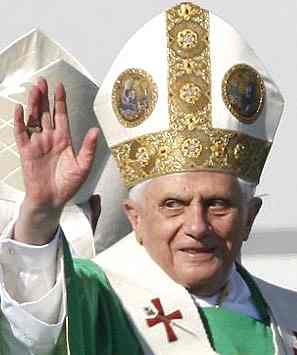
Last week while in Cameroon, Pope Benedict XVI claimed that condoms are not only ineffective, but contribute to the spread of HIV. “You can't resolve it with the distribution of condoms," the pope told reporters. "On the contrary, it increases the problem." The pope said a responsible and moral attitude toward sex would help fight the disease. The Catholic Church rejects the use of condoms as part of its overall teaching against artificial contraception. The Vatican instead advocates fidelity in marriage and abstinence from premarital sex as key weapons in the fight against HIV/AIDS.

Let’s put these statements in context with the current pandemic. Three-quarters of all AIDS deaths worldwide in 2007 were in sub-Saharan Africa, where some 22 million people are infected with HIV — accounting for two-thirds of the world's infections, according to UNAIDS. About 5% of the African population is infected with HIV. In Namibia, South Africa, Zambia and Zimbabwe around 15-20% of adults are infected with HIV. In Botswana, Lesotho and Swaziland, the national adult HIV is between 23-26%. Only one in five HIV-positive Africans has access to the medicines they need; generations are becoming too disabled to work and cannot provide an income for their families, and eventually their children are being orphaned, left alone in a world where the deck is stacked against them.

Pope Benedict favoring religious dogma over the health and wellbeing of his followers, and all of God’s children, is un-Christ-like (and totally not pro-life) as far as I’m concerned. What Catholics need here is a little more honesty and a little less guilt. Saying condoms don’t prevent HIV/AIDS is like professing food doesn’t prevent hunger. When used properly and consistently, condoms are about 98% effective at preventing HIV, other STDs and unwanted pregnancy. Now I’m all for promoting abstinence and fidelity, but tone must take reality into account.

The reality is that most people do not remain abstinent forever. The most recent study on the impact of abstinence-only education from Johns Hopkins researcher Janet Rosenbaum was conclusive. Comparing teens who took a pledge of abstinence with teens of similar backgrounds who did not, she found absolutely no difference in their sexual behavior, or the age at which they began having sex, or the number of their partners. In fact, the only difference was that the group that promised to remain abstinent was significantly less likely to use birth control, especially condoms, when they did have sex.

And many people do not practice monogamy – whether their partners know it or not. In fact, a 2005 US Health Resources and Services Administration report found that 85% of women with HIV in India were infected through heterosexual contact and over 90% reported a single lifetime partner, generally their spouse.

Is it any different in Africa? Well, take the case of Annet Nyakisiki of Uganda. She was a virgin at the time of her marriage, but her husband was not. There is no way to know exactly when he contracted the AIDS virus, but he did. He subsequently passed it on to her, and all four of their children would eventually be born with the disease. Dr. David Serwadda, director of the Institute of Public Health at Makerere University in Kampala says, "Increasingly, people assume that marriage is a safe institution. But there are also extramarital relationships. Married women don't see why they are at risk, yet they are very much at risk." Should individuals really have to suffer the consequences of their partner’s infidelity just to adhere to the Church’s moral standards?

This is precisely why a band of progressive young folks has launched a grassroots campaign known as “Love the One You’re With”, which encourages love, respect and yes, abstinence as a valid CHOICE, while promoting condom education and acceptance right here in Chicago. The bright pink safe-sex kits and promotional materials are meant to highlight the morality of safer sex to the city and nudge local, state, and federal officials to expand condom promotion and distribution as a science-based response to the HIV and STD epidemics in the region.

There are some problems that religion simply cannot solve, just as there are some evils that science cannot remedy. An individual can adhere to their own religious beliefs, but they will never be able to control a partner’s fidelity or HIV-status. We can strive for a utopian society where all are chaste until marriage, but we must deal with reality. In many areas of the world, 25% of the population is HIV-positive. We cannot play Russian roulette with their lives for morality’s sake. That, in and of itself, is immoral.

[Pete Subkoviak is a policy associate at the AIDS Foundation of Chicago. He advocates for sound policies related to HIV/AIDS and works to improve the overall health and wellness of the LGBT community.]

Friday, March 20, 2009

Pope's condom comments are "dangerous and irresponsible"


Such outrageous comments are not appropriate coming from the highest office in the hierarchy of the Catholic Church.

20 March 2009 (Geneva, Switzerland) - Pope Benedict XVI ‘s comments on the role that condoms play in preventing the further spread of HIV are irresponsible and dangerous, says Julio Montaner, President of the International AIDS Society (IAS).

On March 17, 2009, while traveling to Cameroon, the Pope addressed the media, calling AIDS “a tragedy that cannot be overcome by money alone, that cannot be overcome through the distribution of condoms, which can even increase the problem”. This is the first time that Pope Benedict has directly spoken out against the use of condoms. While the historic stance of the Roman Catholic Church against contraception use is widely known, Benedict’s predecessor John Paul II never spoke out publicly against the use of condoms to prevent HIV infection.

“There is not a shred of evidence to suggest that condoms can increase HIV transmission – absolutely the contrary,” said Dr. Montaner. “Male and female condoms, used correctly and consistently, can reduce the risk of sexual transmission of HIV by 80-90 percent.”

IAS Executive Director Craig McClure further condemned the Pope’s remarks. “This is the first trip to Africa by Pope Benedict, a continent that has been ravaged by AIDS. As of 2006, according to the Vatican, over 17% of the total African population practices Catholicism. The numbers are growing each year. Catholics throughout Africa rely on the spiritual guidance of the Pope. To suggest that condom use contributes to the HIV problem is not merely contrary to scientific evidence and global consensus, it contributes to fueling HIV infection and its consequences - sickness and death. Such outrageous comments are not appropriate coming from the highest office in the hierarchy of the Catholic Church.”

Dr. Montaner added, “While condoms are not the only solution to combating HIV, they are a critical, cheap and cost-effective element of a comprehensive approach to HIV prevention. Instead of spreading ignorance, the Pope should use his global position of leadership to encourage young people, who are our future, to protect themselves and others from HIV infection using all the tools we have at our disposal, including condoms. His remarks are insulting to the tireless efforts of committed scientific, public health and human rights leaders around the world to protect the poorest of the poor from HIV infection.”

-----

The IAS is the world’s leading association of HIV professionals, with more than 13,000 members from 188 countries working at all levels of the global response to HIV/AIDS. IAS members represent scientists, clinicians, public health and community practitioners on the frontlines of the epidemic. The IAS is the lead organizer of the biennial International AIDS Conference and the IAS Conference on HIV Pathogenesis, Treatment and Prevention, which will be held in Cape Town, South Africa in July 2009.


Saturday, January 10, 2009

Senegal: Free AIDS Activists


Eight-Year Sentences in Threatening Conditions for 9 Accused of ‘Indecent and Unnatural Acts’

The men were arrested only days after Senegal served as the host for the 15th International Conference on AIDS and STIs (sexually transmitted infections) in Africa (ICASA). Presentations at this conference pointed out the apparent contradiction in some countries, such as Senegal, which target HIV/AIDS-prevention efforts at populations of men of who have sex with men but continue to criminalize same-sex relations. Advocates working in HIV and AIDS prevention point out that such an approach necessarily drives the targeted populations underground and mitigates the efficacy of HIV intervention efforts.

These charges will have a chilling effect on AIDS programs. Outreach workers and people seeking HIV prevention or treatment should not have to worry about police persecution. Senegal should drop these charges and repeal its sodomy law.
-
Scott Long, director of Human Rights Watch's lesbian, gay, bisexual,and transgender rights program

Wednesday, October 31, 2007

A world away?


AIDS / The impact of HIV from Congo to Canada

by Shawn Syms for Xtra.ca

"In the early days of the epidemic in North America, when only gay men and heroin addicts had HIV it was easy to shun people with the disease: these were marginalized groups, easily isolated."

-Stephanie Nolen in 28: Stories of AIDS in Africa

Zackie Achmat went from fighting apartheid to fighting for his life. After he tested positive the gay activist formed the Treatment Action Group in 1998 to demand affordable medication for three million people living with HIV in his country. Achmat announced he would "not take expensive treatment until all ordinary South Africans can get it on the public health system." He became a national hero.

Achmat is profiled in Stephanie Nolen's 28: Stories of AIDS in Africa. Nolen, who identifies as queer, is the Globe and Mail's Africa correspondent. She's written about AIDS since 2003. Her choice of 28 stories is symbolic, representing the estimated millions of Africans living with HIV.

A moving and intelligent book, 28's great strength is a freedom from moralism. In her introduction Nolen gives the most straightforward description I've read of how HIV operates in the body, how it's believed to have first manifested among humans and the trajectory of the virus across the continent and around the world.

Blaming others is a universal aspect of the response to HIV. In North America the onset of the epidemic among queers and IV drug users was interpreted as a morality play. Many of Nolen's interviewees express disbelief they could be touched by that "white man's disease," an export from America, which, at worst, was thought to affect prostitutes and the poor.

Read the rest.

Friday, August 31, 2007

Debunking Myths: A focus on African men who have sex with men


Image above is from a safe sex campaign targeting African men who have sex with men in the UK. Click it to read the excellent report from the African HIV Policy Network - "Debunking Myths: A focus on African men who have sex with men."


Related Posts Plugin for WordPress, Blogger...

select key words

2007 National HIV Prevention Conference 2009 National LGBTI Health Summit 2011 LGBTI Health Summit 2012 Gay Men's Health Summit 2012 International AIDS Conference ACT Up AIDS AIDS Foundation of Chicago Africa BUTT Bisexual Bisexual Health Summit Brian Mustanski Center on Halsted Charles Stephens Chicago Chicago Black Gay Men's Caucus Chicago Task Force on LGBT Substance Use and Abuse Chris Bartlett Coaching with Jake Congress David Halperin David Munar Dr. James Holsinger Dr. Jesus Ramirez-Valles Dr. Rafael Diaz Dr. Ron Stall ENDA Ed Negron Eric Rofes FTM Feast of Fun Feel the love... Friday is for Faeries Gay Men's Health Summit 2010 HCV HIV HIV care HIV drugs HIV negative HIV positive HIV prevention HIV stigma HIV strategic plan HIV testing HIV/AIDS HPV Howard Brown Health Center IML IRMA Illinois International AIDS Conference Jim Pickett LGBT LGBT adoption LGBT culture LGBT health LGBT rights LGBT seniors LGBT youth LGBTI community LGBTI culture LGBTI health LGBTI rights LGBTI spirituality LGV Leon Liberman LifeLube LifeLube forum LifeLube poll LifeLube subscription Lorenzo Herrera y Lozano Lymphogranuloma Venereum MRSA MSM Monday Morning Perk-Up National AIDS Strategy National Gay Men's Health Summit One Fey's Tale Peter Pointers Pistol Pete PnP PrEP President Barack Obama Presidential Campaign Project CRYSP Radical Faerie STD Senator Barack Obama Sister Glo Sisters of Perpetual Indulgence Susan Kingston Swiss declaration Ted Kerr Test Positive Aware Network The "Work-In" The 2009 Gay Men's Health Agenda Tony Valenzuela Trans Gynecology Access Program Trans and Intersex Association Trevor Hoppe Who's That Queer Woof Wednesday You Tube abstinence only activism advocacy african-american aging issues anal cancer anal carcinoma anal health anal sex andrew's anus athlete ball scene bareback porn barebacking bathhouses bears big bold and beautiful bisexuality black gay men black msm blood ban blood donor body image bottom chubby chaser circumcision civil rights civil union communication community organizing condoms crystal meth dating dating and mating with alan irgang depression disclosure discrimination domestic violence don't ask don't tell douche downlow drag queen emotional health exercise female condom fitness gay culture gay identity gay latino gay male sex gay marriage gay men gay men of color gay men's health gay pride gay rights gay rugby gay sex gay youth gender harm reduction hate crime health care health care reform health insurance hepatitis C hiv vaccine homophobia homosexuality hottie hotties how are you healthy? human rights humor hunk immigration international mr. leather internet intimacy leather community leathersex lifelube survey love lube lubricant masturbation mental health microbicides middle music negotiated safety nutrition oral sex physical health pleasure podcast policy politics poppers porn post-exposure prophylaxis prevention prostate prostate cancer public health public sex venues queer identity racism recovery rectal microbicides relationships religion research safe sex semen sero-adaptation sero-sorting seroguessing sex sexual abuse sexual addiction sexual health sexual orientation smoking social marketing spirituality stigma stonewall riots substance abuse treatment substance use suicide super-bug superinfection syphilis testicle self-examination testicular cancer testing top trans group blog transgender transgender day of remembrance transgendered transmen transphobia transsexual universal health care unsafe sex vaccines video violence viral load writers yoga youtube